Reference to Video AI for Marketing: How Brands Are Turning Static Assets Into Scroll-Stopping Video


There’s a moment most marketing managers and business owners in the UK have lived through at some point: you’re staring at a folder of brand assets — product photos, campaign images, logo files, brand illustrations — knowing that video content is what the algorithm rewards, what your audience actually watches, and what your competitors are posting, and yet the gap between those static files and a finished video feels enormous.
Shooting new video is expensive and slow. Hiring a production company for every content need isn’t sustainable. And the internal team, however talented, doesn’t have the bandwidth to produce video at the pace that social platforms seem to demand. Something has to give — and increasingly, that something is the assumption that video has to be produced from scratch every time.
Reference-to-video AI offers a different starting point entirely: use what you already have.
What Reference to Video AI Actually Does
The capability is more specific than general AI video generation, and that specificity is what makes it genuinely useful for marketing and brand work. Rather than generating a video from a text description alone — which can produce technically impressive but visually generic output — reference-to-video generation uses an existing image, visual asset, or style reference as the creative anchor. The AI generates motion and video treatment that’s informed by and visually consistent with the source material you provide.
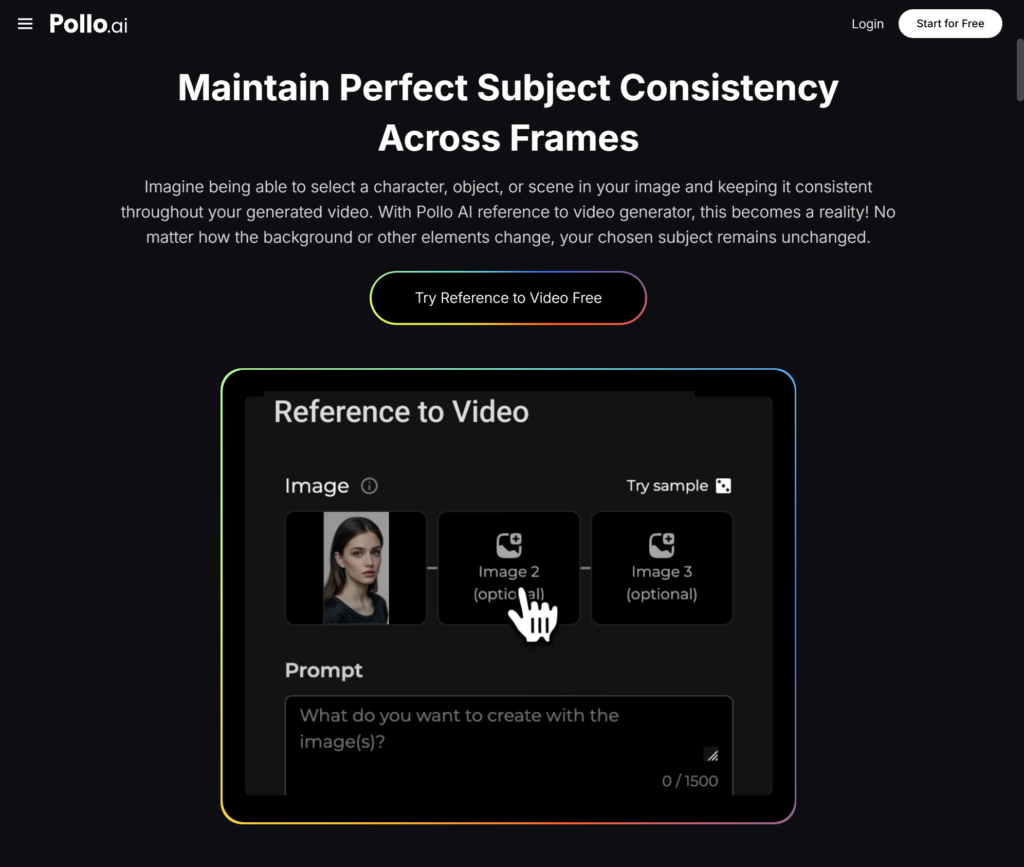
Pollo AI’s dedicated reference to video AI tool inside its Creative Studio is built around this workflow. For UK businesses that have already invested in brand photography, campaign imagery, or product visuals, this means those existing assets become the starting point for video production rather than sitting unused while video gets produced independently. The result is video content that shares the visual language of your existing brand materials — which is precisely what brand consistency requires — rather than AI-generated video that looks like it could belong to any company.
Pollo AI’s multi-model approach within the Creative Studio means different reference materials and different video objectives can be matched to the generation model that handles each best, all under one shared credit system. For marketing teams managing both creative and commercial content needs, that flexibility across a single platform reduces the tool sprawl that tends to accumulate when different content types get handled by different subscriptions.
Why Reference-Based Generation Matters for Brand Work
The quality problem with AI video generation for brand use isn’t usually technical — current models produce impressive output across a range of styles. The problem is brand relevance. A video generated purely from a text prompt, however detailed, reflects the model’s interpretation of that description. A video generated from a brand reference image reflects the actual visual identity of the brand.
For UK businesses with established brand guidelines — and many do, even smaller ones — this distinction matters considerably. The difference between “AI video that looks professional” and “AI video that looks like our brand” is the difference between content that could appear on anyone’s social feed and content that builds brand recognition. Reference-to-video generation is what makes the second outcome reliably achievable without a designer interpreting brand guidelines at every step.
This is particularly relevant for seasonal campaign content, product launch materials, and the kind of evergreen promotional video that needs to feel consistent with everything else a brand publishes rather than like a one-off AI experiment.
Marketing Studio: From Brand Asset to Campaign-Ready Video
Generating video from a brand reference is one step in a workflow that often ends with a piece of content going into a paid or organic campaign. Pollo AI’s Marketing Studio extends the reference-to-video capability into that campaign context — producing advertising and promotional video formats within the same platform, calibrated for platform specifications and the pacing requirements of social advertising rather than just visual quality in isolation.
For UK marketing teams running Meta, TikTok, or YouTube campaigns alongside organic social, having the creative generation and the campaign-format production within the same platform — on shared credits — means the workflow from brand reference to publishable ad creative doesn’t require moving between multiple tools or rebuilding context at each handoff.
Bylo AI and Knowing Your Options
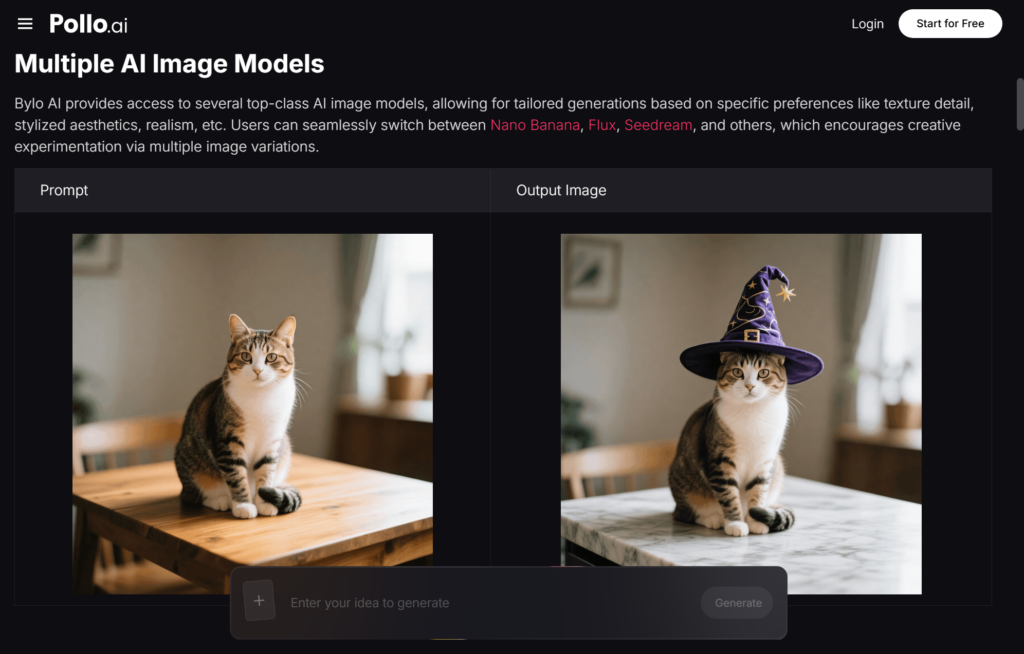
Understanding the wider landscape of AI image and video tools helps marketing teams make more deliberate decisions about which capabilities belong in their production workflow. Bylo AI offers AI image generation with its own model approach and aesthetic range — worth exploring for teams whose primary need is generating original imagery from text descriptions rather than transforming existing visual references into video. For brands that need both original image generation and reference-based video production, understanding which tool addresses which production challenge helps you build a workflow that uses each capability where it performs best.
Building a Reference-Based Video Workflow for UK Marketing Teams
The practical starting point for most UK marketing teams is an audit of existing brand assets — what photography exists, what campaign imagery has been produced, what visual materials already carry the brand’s identity. That inventory is the raw material for reference-to-video production, and most established brands have more of it than they initially realise.
From there, the workflow is straightforward: identify which assets have the strongest visual impact as reference material, generate video variations using those references, review for brand consistency and platform fit, and publish. The gap between “we have static assets” and “we have video content” closes considerably when the production step is AI-assisted rather than manually produced.
For a UK business content landscape where video expectations continue to rise and production budgets don’t always rise with them, that gap closure is where reference-to-video AI earns its place in a real marketing operation rather than just an experimental one.