Best Lightweight eMTBs in 2026: 7 Top Models Compared

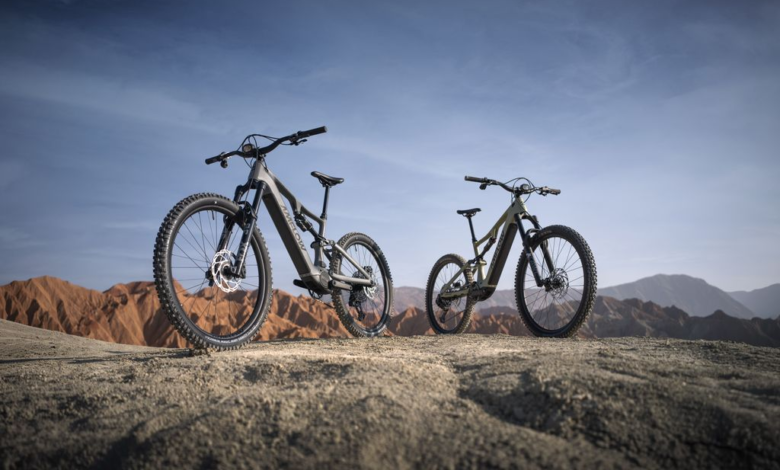
Lightweight electric mountain bikes have changed dramatically. The category was once dominated by low-torque motors and compact batteries, but riders can now choose between genuinely light trail bikes and increasingly powerful models that remain close to the 20 kg mark.
That creates more choice, but it also makes direct comparisons more difficult. A sub-19 kg light-assist bike will usually feel closer to a conventional mountain bike, while a slightly heavier model may offer considerably more torque, battery capacity and climbing support.
The best option depends on where and how you ride. Fast cross-country routes reward low weight and efficient suspension, while technical trails may justify stronger brakes, more travel and a larger battery.
Here are ten of the best lightweight electric mountain bikes to consider in 2026.
The Best Lightweight eMTBs at a Glance
- Specialized Turbo Levo SL 2 Comp Carbon – best overall
- Amflow PX Carbon Pro – best lightweight full-power option
- Scott Lumen 920 – best for fast trail and cross-country riding
- Canyon Spectral:ONfly CF 9 – best for playful handling
- Mondraker Neat RR SL – best lightweight enduro bike
- Orbea Rise SL – best balance of range and natural assistance
- Trek Fuel+ EX 9.8 XT Di2 Gen 2 – best mid-power all-rounder
- Pivot Shuttle SL/AM – best lightweight Bosch all-mountain bike
- Whyte ELyte 150 Works – best for demanding UK trails
- Focus JAM² SL 8.8 – best practical long-travel option
1. Specialized Turbo Levo SL 2 Comp Carbon – Best Overall
The Specialized Turbo Levo SL 2 Comp Carbon is one of the most balanced choices for riders who want meaningful assistance without losing the lively character of a trail bike.
Its Specialized SL 1.2 motor produces 50 Nm of torque and up to 320 watts of power. Energy comes from a 320 Wh internal battery, while the complete bike weighs approximately 18.83 kg in an S4 frame. An optional range extender can be added for longer rides.
Those figures place the Levo SL firmly in the light-assist category. It will not accelerate up a technical climb like a full-power machine, but it rewards active pedalling and makes it easier to control traction on loose surfaces, roots and tight switchbacks.
The Levo SL is also more versatile than many cross-country-focused lightweight models. Its trail-oriented chassis and adjustable setup make it suitable for flowing singletrack, rocky descents and occasional bike-park use without making the bike feel excessively planted or cumbersome.
Specialized’s broad dealer network and extensive range of compatible components add to its appeal as a bike intended for regular use rather than occasional fair-weather rides.
Best for: Riders who want natural assistance and balanced trail handling.
Why it stands out: It combines a sub-19 kg weight with the suspension capability and geometry of a modern trail bike.
2. Amflow PX Carbon Pro – Best Lightweight Full-Power Option
The Amflow PX Carbon Pro approaches lightweight design differently. Instead of reducing motor output and battery capacity, it combines a powerful drive system and 700 Wh battery with a complete-bike weight of 20.6 kg in size M.
Its Avinox M2S motor weighs 2.59 kg and delivers up to 150 Nm in Boost mode. The carbon frame weighs approximately 2.4 kg, helping keep the complete package significantly lighter than many traditional full-power electric mountain bikes.
That combination makes the PX Carbon Pro an interesting eMTB for riders who want strong support on steep climbs but do not want the slow direction changes and heavy feel associated with some larger electric enduro bikes.
The 700 Wh battery also gives the bike greater built-in capacity than most light-assist competitors. Fast charging is useful for riders completing multiple sessions or topping up the battery during a longer stop.
Another distinctive feature is the adjustable chassis. The PX platform allows changes to the head angle, bottom-bracket position and chainstay length, making it possible to favour agility, stability or climbing clearance according to the terrain.
At just over 20 kg, the PX Carbon Pro is not the lightest bike in this list. Its advantage is the amount of motor performance and battery capacity it provides for that weight.
Best for: Steep terrain, repeated climbs and riders moving down from a heavier full-power bike.
Why it stands out: It delivers full-power performance without moving far beyond the 20 kg category.
3. Scott Lumen 920 – Best for Fast Trail and Cross-Country Riding
The Scott Lumen 920 is built for riders who value speed, efficient climbing and precise handling more than maximum suspension travel.
It weighs approximately 18.5 kg and uses the latest TQ HPR60 motor, which delivers up to 60 Nm of torque. A 360 Wh internal battery is combined with an included 160 Wh range extender, providing greater flexibility than lightweight bikes that require the extender to be purchased separately.
Scott gives the Lumen 140 mm of suspension travel. That is sufficient for most natural trail riding while retaining a more direct and efficient feel than bikes equipped with 160 or 170 mm suspension.
The TwinLoc system allows the rider to change the suspension behaviour from the handlebar. This is particularly useful on routes that alternate between smooth climbs, undulating singletrack and rougher descents.
Its lightweight tyres and cross-country-influenced riding position make the Lumen responsive under acceleration. Riders intending to use it on sharp rocks or aggressive enduro trails may prefer heavier tyre casings, although that will increase the overall weight.
Best for: Long, fast trail rides and riders with a cross-country background.
Why it stands out: The combination of 18.5 kg, 60 Nm and an included range extender makes it unusually versatile for an efficiency-focused bike.
4. Canyon Spectral:ONfly CF 9 – Best for Playful Handling
The Canyon Spectral:ONfly CF 9 is designed for riders who want assistance on the way up without changing how they ride on the way down.
Its TQ HPR50 motor produces 50 Nm and 300 watts of peak support. The drive unit weighs 1.85 kg and is paired with a 360 Wh battery weighing 1.83 kg. The complete bike weighs approximately 18.8 kg.
Unlike many bikes at this weight, the Spectral:ONfly provides 160 mm of front travel and 150 mm at the rear. It also uses a mixed-wheel layout, combining a 29-inch front wheel with a 27.5-inch rear wheel.
The smaller rear wheel helps the bike change direction quickly and gives the rider more clearance when moving behind the saddle. A 64-degree head angle adds stability without making the front end feel excessively long or difficult to position.
The internal battery can be supplemented by an optional 160 Wh range extender, increasing total capacity to 520 Wh.
Best for: Jumps, natural singletrack and riders who actively move the bike around the trail.
Why it stands out: Few bikes combine an 18.8 kg weight with 160/150 mm suspension and mixed wheels.
5. Mondraker Neat RR SL – Best Lightweight Enduro Bike
The Mondraker Neat RR SL brings the geometry and suspension of an enduro bike into a package weighing around 18 kg.
It uses a TQ HPR50 motor and a removable 360 Wh battery. The frame provides 150 mm of rear travel, paired with a 160 mm FOX 36 fork. An optional 160 Wh range extender can be fitted when additional capacity is needed.
Mondraker’s Forward Geometry gives the Neat a long front centre and a short stem. This creates plenty of space for the rider to move while helping keep weight over the front wheel on steep climbs and open corners.
The RR SL specification includes a high-end FOX Factory suspension package, wireless SRAM transmission and carbon wheels. These parts help reduce weight, although the premium build places the bike at the expensive end of the category.
A removable main battery is a useful feature that remains uncommon among the lightest electric mountain bikes. It makes charging and transport more convenient and allows the battery to be removed for maintenance.
Best for: Technical descents and experienced riders who want an active enduro bike.
Why it stands out: It offers genuine 160/150 mm enduro capability at a weight more commonly associated with shorter-travel trail bikes.
6. Orbea Rise SL – Best Balance of Range and Natural Assistance
The Orbea Rise has helped define the modern lightweight electric mountain bike category. Its strength lies in combining a relatively small battery with assistance designed to respond closely to rider effort.
Current Rise models offer a choice of 420 Wh or 630 Wh batteries. A 210 Wh range extender can also be added, allowing riders to select a lighter standard setup or prioritise capacity for longer mountain routes.
The RS assistance mode is tuned for efficiency and encourages the rider to contribute more power. RS+ unlocks up to 85 Nm for steeper climbs and situations where stronger assistance is helpful.
This gives the Rise a broader operating range than many lightweight bikes. It can feel subtle and economical on long rides, but it has more torque available than most 50 or 60 Nm systems when the terrain becomes more demanding.
The Rise SL is the better choice for riders focused on low weight and responsive handling, while longer-travel Rise configurations suit more aggressive terrain.
Best for: Riders who want to control the balance between exercise, assistance and range.
Why it stands out: Its battery options and adjustable support modes make it easier to tailor the bike to different types of riding.
7. Trek Fuel+ EX 9.8 XT Di2 Gen 2 – Best Mid-Power All-Rounder
The second-generation Trek Fuel+ moves the lightweight category towards greater range and stronger support.
The new platform uses the TQ HPR60 motor with 60 Nm of torque and a substantially larger 580 Wh battery. In EX configuration, it provides 145 mm of rear travel and a 150 mm fork. The Fuel+ EX 9.8 XT Di2 weighs approximately 19.79 kg in size M.
That makes it heavier than the original Fuel EXe, but the additional battery capacity is valuable for riders who previously depended on a range extender for longer days.
The Fuel+ frame can also be configured in EX, mixed-wheel MX or long-travel LX form. Trek uses different suspension links and mounting hardware to maintain the intended geometry rather than simply installing longer components on the same setup.
The EX version is the most balanced choice. Full 29-inch wheels improve efficiency and rollover, while the suspension remains capable enough for technical trail riding.
Best for: Riders who want light-bike handling with more range than traditional 320–430 Wh systems.
Why it stands out: A 580 Wh battery and sub-20 kg weight make it particularly practical for long trail rides.
8. Pivot Shuttle SL/AM – Best Lightweight Bosch All-Mountain Bike
The Pivot Shuttle SL/AM combines a lightweight carbon frame with the compact Bosch Performance Line SX system.
Pivot describes complete builds as weighing under 40 lb, or approximately 18.1 kg. The Bosch motor supplies up to 60 Nm and 600 watts of peak power, drawing energy from an integrated 400 Wh battery.
The bike uses 160 mm of front travel and 150 mm at the rear, placing it between a trail bike and a full enduro machine. Pivot’s dw-link suspension is designed to provide efficient pedalling support while remaining active over repeated impacts.
An optional Bosch PowerMore 250 range extender increases total capacity to 650 Wh. It can be left at home for short rides, preserving the bike’s lightweight character, and added for bigger days.
The Bosch system is also widely supported by dealers, an advantage for riders who prefer an established motor platform and easily accessible diagnostics.
Best for: Technical all-mountain riding and riders who want a lightweight Bosch-powered bike.
Why it stands out: It combines sub-40 lb builds with 160/150 mm suspension and a modular battery system.
9. Whyte ELyte 150 Works – Best for Demanding UK Trails
The Whyte ELyte 150 Works was developed with wet, muddy and abrasive UK conditions in mind.
It weighs 19.2 kg in size M and uses the Bosch Performance Line SX motor. The main battery provides 400 Wh, while a 250 Wh PowerMore range extender is included, increasing combined capacity to 650 Wh when fitted.
The ELyte has 150 mm of front travel and 142 mm at the rear. Its specification includes FOX Factory suspension, powerful Hope four-piston brakes, reinforced tyres and additional frame sealing intended to keep water and trail debris away from sensitive areas.
The range extender is positioned low in the frame to limit its effect on handling. It can be removed for shorter rides, reducing weight while retaining the same motor performance.
The Bosch SX motor can deliver up to 60 Nm after the available software update, giving the Whyte more assistance than the original setup while preserving its compact dimensions.
Best for: Year-round UK riding, steep natural trails and wet conditions.
Why it stands out: Its practical weather protection and included range extender make it especially well suited to real-world British riding.
10. Focus JAM² SL 8.8 – Best Practical Long-Travel Option
The Focus JAM² SL 8.8 offers more battery capacity and suspension travel than many traditional lightweight models without crossing into heavy full-power territory.
Its Fazua Ride 60 system uses a 430 Wh battery and provides 60 Nm of torque. The JAM² SL chassis supplies 160 mm of front travel and 150 mm at the rear, while the 8.8 build weighs approximately 19.7 kg.
The battery can be removed using a hex key, which makes the bike easier to charge indoors and simplifies maintenance. Focus also allows adjustments to the head angle and chainstay length.
The 29-inch wheels provide predictable rollover and stability, making the bike a strong choice for riders who regularly encounter rough natural trails but do not need the assistance of a full-power motor.
Unlike some competitors, the JAM² SL does not support an additional range-extender battery. The standard 430 Wh capacity therefore needs to cover the complete ride.
Best for: Riders who want long-travel capability, a removable battery and straightforward 29-inch handling.
Why it stands out: It combines practical features with a capable 160/150 mm chassis at under 20 kg.
What Is Considered a Lightweight eMTB?
There is no single weight limit, but most bikes in the category fall into one of two groups.
Traditional light-assist models generally weigh between 17 and 20 kg. They use compact motors producing around 50–60 Nm and batteries ranging from approximately 320 to 430 Wh.
Newer lightweight full-power and mid-power bikes often weigh between 19.5 and 21.5 kg. They carry larger batteries or stronger motors but remain noticeably easier to handle than many 23–26 kg full-power machines.
The most useful distinction is not the number on the scales. It is whether the bike preserves the responsive handling, easy direction changes and active riding style that attract riders to lightweight models in the first place.
How to Choose the Best Lightweight Electric Mountain Bike
Decide How Much Assistance You Need
A 50–60 Nm motor suits riders who want to pedal actively. It reduces fatigue and increases the number of descents possible in a ride without making the bike feel dominated by the motor.
Stronger systems are better for prolonged steep climbs, heavier riders and repeated laps. They also place greater demands on the battery, tyres and drivetrain.
Compare Battery Capacity With Bike Weight
Small batteries reduce weight and help create slimmer frames, but they require more careful energy management.
A range extender offers a flexible solution. The bike stays light on normal rides, while additional capacity can be installed for occasional all-day adventures.
Match Suspension Travel to Your Terrain
Around 130–140 mm works well for efficient trail riding and rolling routes. A bike with 150–160 mm is better suited to steep, rocky and technically demanding terrain.
More travel usually requires heavier forks, stronger brakes and tougher tyres, so the lightest bike is not always the best choice for aggressive riding.
Look Beyond the Headline Weight
A very light bike fitted with fragile tyres may need immediate upgrades for rocky terrain. Those changes can quickly add a kilogram or more.
Brake power, wheel strength, tyre casing and dropper-post length should all match the trails you intend to ride.
Consider Charging and Battery Removal
A fixed battery can help reduce frame weight and improve stiffness. A removable battery is more convenient when the bike is stored away from a power socket or transported regularly.
The right design depends as much on where the bike is kept as on how it performs on the trail.
Frequently Asked Questions
What is the best lightweight eMTB in 2026?
The Specialized Turbo Levo SL 2 Comp Carbon is one of the most balanced options for trail riding. The Amflow PX Carbon Pro is better for riders who want considerably more motor power and battery capacity, while the Scott Lumen 920 suits faster, cross-country-influenced riding.
Is a 20 kg electric mountain bike lightweight?
Yes. A 20 kg bike is light compared with many conventional full-power electric mountain bikes, particularly when it includes a large battery or high-output motor.
Traditional light-assist bikes can weigh closer to 18 kg, but they generally use smaller batteries and less powerful drive systems.
Is 50 Nm enough for mountain biking?
A 50 Nm motor is enough for most trail riding when the rider is prepared to contribute consistent effort. Correct gearing and cadence are particularly important on steep climbs.
Riders who want the motor to carry more of the workload should choose a mid-power or lightweight full-power system.
How large should the battery be?
A 320–430 Wh battery suits shorter rides, efficient riders and lower assistance settings. Capacities above 500 Wh are more convenient for long routes, frequent climbing or heavier motor use.
Range extenders allow riders to increase capacity only when it is needed.
Final Verdict
The Specialized Turbo Levo SL 2 Comp Carbon remains one of the most complete lightweight trail bikes, combining a manageable weight with natural motor support and versatile handling.
The Amflow PX Carbon Pro is the standout choice for riders who want the climbing ability and battery capacity of a full-power bike in a substantially lighter package.
The Scott Lumen and Canyon Spectral:ONfly favour speed and agility, while the Mondraker Neat, Pivot Shuttle SL/AM and Whyte ELyte provide more suspension for demanding terrain.
Orbea offers one of the most flexible approaches to battery size and motor assistance, while the Trek Fuel+ shows how the category is expanding towards larger batteries without abandoning sub-20 kg weights.
The Focus JAM² SL completes the selection with a practical removable battery and capable long-travel chassis. Ultimately, the best lightweight electric mountain bike is the model that saves weight without sacrificing the battery, suspension and component strength required for your usual trails.