Facebook in 2026: Why the World’s Biggest Social Network Is Entering a New Era

For years, people have predicted that Facebook would lose its importance. New platforms arrived, younger audiences changed their online habits, and short videos became more popular. Yet Facebook continues to remain part of everyday digital life for families, businesses, creators and local communities.
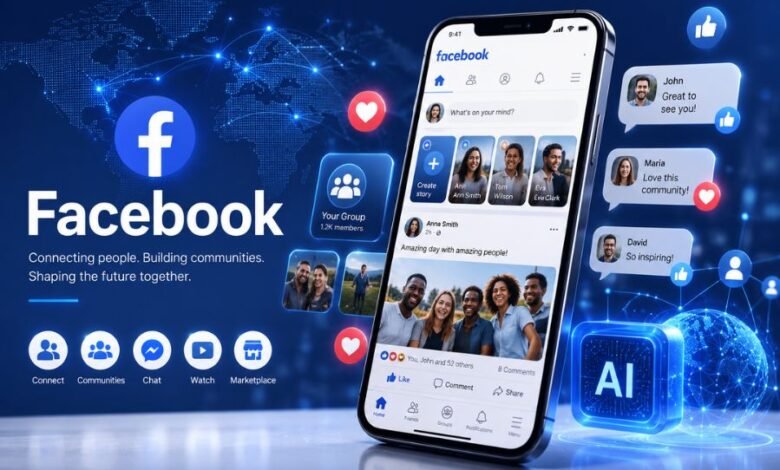
The biggest story in 2026 is not whether Facebook is still relevant. The real story is how the platform is changing its identity. It is no longer simply a website where people post family photographs and birthday messages. Facebook is becoming an AI-powered discovery platform, a video network, a local marketplace, a business tool and a community centre inside one application.
This change creates both opportunities and concerns. Users can discover useful advice, products and communities more quickly, while creators can reach new audiences and earn money. At the same time, people must think carefully about privacy, misleading content, artificial intelligence and how much time they spend scrolling.
Facebook Is No Longer Just a Social Network
The original strength of Facebook was its ability to connect people who already knew each other. Users added school friends, relatives, colleagues and neighbours. Their News Feed mainly showed updates from those personal connections.
That model has gradually changed. In 2026, Facebook is placing greater attention on discovery. Users now see content based on their interests, viewing habits, searches and interactions, even when they do not follow the person or page that created it.
This makes Facebook feel more like a combination of several digital platforms. It offers short videos through Facebook Reels, buying and selling through Marketplace, discussions through Groups, entertainment through video recommendations and communication through Messenger.
Facebook’s advantage is that many users already have an established network on the platform. They do not need to build every connection again. A person can watch a cooking video, ask for advice in a local group, message a family member and search for second-hand furniture without leaving the application.
The result is a platform that may feel familiar on the surface but is becoming very different underneath.
Artificial Intelligence Is Changing the Facebook Experience
One of Facebook’s biggest developments in 2026 is the growing role of Meta AI. Artificial intelligence is being added to search, content creation, recommendations, account support and safety systems.
In June 2026, Meta announced new AI-powered Facebook tools, including an AI Mode designed to provide answers based partly on public conversations, Groups and Reels across Meta’s platforms. The company also introduced AI-assisted photo tools, video templates and creative sharing features.
This means Facebook search is moving beyond a simple list of pages, people and posts. A user may search for travel advice, home decoration ideas or local food recommendations and receive a summarised response connected to real public discussions.
That could make Facebook especially useful for questions where personal experience matters. A traditional search engine may show a restaurant’s website, while Facebook can surface comments from local residents who have recently visited it.
However, users should not automatically treat every AI-generated answer as correct. Artificial intelligence can misunderstand information, miss context or repeat inaccurate public claims. Important medical, financial or legal decisions should always be checked through reliable professional sources.
AI is therefore making Facebook faster and more helpful, but it is not removing the need for human judgement.
Original Content Is Becoming More Valuable
Facebook has often been criticised for recycled videos, copied posts, engagement bait and pages that publish material taken from other creators. In 2026, Meta is trying to make original content more visible while reducing the reach of copycat material.
Meta reported that views and viewing time for original Reels approximately doubled during the second half of 2025 compared with the same period in 2024. The company also updated its guidelines to explain what it considers original and announced stronger tools for reporting impersonation.
This is important for creators and businesses. Simply downloading a popular video, adding a border and uploading it again is becoming a weaker strategy. Facebook increasingly wants content that adds new information, personal experience, meaningful commentary or creative editing.
A local bakery, for example, may perform better by showing how its bread is made instead of reposting a general food video. A fitness trainer can build trust by demonstrating a routine and explaining common mistakes. A travel creator can share a personal visit rather than copying a list from another website.
The lesson for 2026 is clear: authentic voices have more long-term value than copied trends. Creators who develop a recognisable style and provide useful information are more likely to build loyal communities.
Facebook Is Becoming More Serious About Creators
Facebook is no longer treating creators as a small part of the platform. It is competing directly for people who produce videos, tutorials, entertainment, live broadcasts and community-focused content.
Meta stated that Facebook paid creators nearly $3 billion through its monetisation programmes during 2025. According to the company, this was a 35 per cent increase from the previous year and its highest annual creator payment total at that time.
These figures show why Facebook should not be ignored by creators who already publish on other platforms. A video made for Instagram, YouTube or TikTok may also find an audience on Facebook, particularly when it appeals to families, hobby communities, local audiences or older viewers.
However, creators should avoid treating Facebook as a place to dump identical posts. Content often performs better when it is adjusted for the platform. Clear captions, useful context, active comment replies and relatable storytelling can help a post feel natural inside the Facebook Feed.
Creators should also focus on building a relationship rather than chasing one viral result. A strong Facebook page can support a Group, newsletter, website, online shop or service business. That makes the platform valuable even when individual posts receive different levels of reach.
Why Facebook Groups Still Matter in 2026
One feature that separates Facebook from many competitors is the strength of Facebook Groups. People use Groups for parenting advice, neighbourhood updates, education, jobs, hobbies, health support, travel planning and professional networking.
A useful Group can create a sense of belonging that does not exist in a public comment section. Members return because they recognise each other, share similar interests and receive answers connected to their situation.
For businesses, Groups can also provide valuable insight. A company can learn what customers are struggling with, which questions appear repeatedly and what type of content people genuinely find helpful. This information can improve products, customer service and marketing.
However, Groups require active management. Without clear rules and responsible moderation, they can become filled with spam, false information, personal attacks and hidden advertising.
Successful communities in 2026 are likely to be those that protect trust. Administrators should explain their rules, remove obvious scams, encourage respectful disagreement and make sponsored content clear. A smaller but active Group is often more valuable than a large community with little real conversation.
Facebook Marketplace Has Become an Everyday Tool
For many people, Facebook Marketplace is now one of the most practical parts of the application. It allows users to find used furniture, clothing, electronics, vehicles, home items and local services.
Marketplace works because buying and selling are connected to location and social profiles. A user can quickly search nearby listings, compare prices and message a seller. This makes it useful for people who want affordable products or wish to sell items they no longer need.
Its popularity also creates risks. Fake listings, advance-payment scams, counterfeit products and dishonest buyers can appear. Users should be careful when a deal looks unusually cheap or when a seller pressures them to move the conversation away from Facebook.
Buyers should inspect expensive items before paying, meet in a safe public place and avoid sharing unnecessary personal details. Sellers should keep a clear record of the conversation and be cautious about fake payment screenshots.
Marketplace shows why Facebook remains useful. It is not only a place for entertainment; it can solve an immediate local need.
Businesses Need a Community-First Facebook Strategy
Businesses once used Facebook mainly to collect page likes and publish promotional posts. That approach is less effective in 2026 because users are surrounded by content and can quickly ignore material that feels like an advertisement.
A stronger strategy is to create content that answers real customer questions. A clothing company can explain sizing and fabric care. A property business can discuss common renting mistakes. A restaurant can show how a popular dish is prepared. A beauty brand can demonstrate how to use a product safely.
This type of content provides value before asking for a sale. It also gives people a reason to comment, save the post or share it with someone else.
Businesses should combine several Facebook tools instead of depending on one format. Reels can attract attention, Groups can build community, Messenger can support customer service and Marketplace can help suitable businesses reach local buyers.
Paid advertising can still be useful, but it works best when the business already understands its audience. Advertising cannot repair weak customer service, confusing offers or poor content. In 2026, trust remains the most important part of online business growth.
Privacy and Personalisation Remain Major Concerns
Facebook’s increasing use of artificial intelligence makes data privacy even more important. Every search, reaction, video view and interaction can help recommendation systems understand what a person may want to see next.
Meta announced that, from December 2025, interactions with its generative AI features could also be used as signals for personalising content and advertisements in supported regions. The company stated that users would still have access to tools such as ad preferences and Feed controls.
Personalisation can make Facebook more convenient. Users may see more content connected to their hobbies and fewer unrelated posts. However, it can also create a narrow digital environment where people repeatedly see similar opinions.
Users should regularly review privacy settings, connected applications, location permissions and the audience selected for posts. Old public photographs, personal contact details and location updates can reveal more information than people realise.
It is also wise to question why a certain post or advertisement has appeared. Facebook offers feedback options that allow users to hide content or indicate that they are not interested. Using these tools can gradually improve the Feed.
Privacy should not be treated as a one-time setting. It is an ongoing habit.
Misinformation Is Still Facebook’s Hardest Challenge
Facebook allows information to travel quickly, but speed does not guarantee accuracy. Emotional headlines, edited videos and false claims can spread because they create strong reactions.
Meta began testing Community Notes in the United States in 2025 as a replacement for its previous third-party fact-checking approach there. The system allows contributors to write and rate contextual notes on posts.
Supporters believe community-based notes can add useful context and represent different viewpoints. Critics worry that popular opinion may not always match verified evidence. The effectiveness of such systems depends on how fairly contributors are selected and how disagreements are handled.
Ordinary users also have responsibility. Before sharing a surprising story, they should check its date, source and supporting evidence. A dramatic screenshot is not proof, and an old video can be presented as a new event.
Pausing for one minute before sharing can prevent false information from reaching hundreds of people. Digital responsibility is now part of everyday communication.
How to Use Facebook More Wisely in 2026
Facebook can be valuable when people use it with a clear purpose. It becomes less useful when endless scrolling replaces real communication, work, sleep or family time.
Users can improve their experience by unfollowing pages that repeatedly cause stress, leaving inactive Groups and turning off unnecessary notifications. Following trusted creators and meaningful communities can make the Feed more useful.
Parents should also talk openly with teenagers about online privacy, scams and AI-generated content. Meta introduced additional supervision and teen-safety tools in 2026, including features designed to give supervising parents more information about how teenagers interact with Meta AI.
The goal should not be to fear technology. It should be to understand how it influences attention, opinions and behaviour.
Facebook is a tool, and its value depends greatly on how it is used.
Conclusion
Facebook in 2026 is not simply surviving because people are unwilling to leave an old platform. It is changing into a wider digital system built around artificial intelligence, video discovery, creators, local buying, private communication and online communities.
Its future will depend on whether it can balance personalisation with privacy, creativity with responsible moderation and business growth with user trust. Facebook has powerful tools, but those tools also create greater responsibility for Meta, content creators, advertisers and ordinary users.
For people who use the platform thoughtfully, Facebook can still support relationships, learning, business and community life. For those who scroll without limits or share information without checking it, the same platform can create confusion and wasted time.
The most important Facebook trend of 2026 is therefore not a new button or video feature. It is the growing need to use social media with greater awareness.
(FAQs)
Is Facebook still popular in 2026?
Yes. Facebook remains widely used for personal communication, videos, Groups, Marketplace, business pages and local communities. Its role is changing as Meta adds more artificial intelligence and discovery features.
What is Meta AI on Facebook?
Meta AI is an artificial intelligence assistant connected to several Facebook experiences. It can help users search for information, explore public discussions and use creative tools, although important answers should still be verified independently.
Can creators earn money from Facebook?
Eligible creators may earn through Facebook’s monetisation programmes. Earnings depend on factors such as eligibility, location, content performance, originality and compliance with Meta’s policies.
Is Facebook Marketplace safe?
Marketplace can be useful, but users should watch for fake listings, payment scams and suspicious sellers. Expensive products should be inspected carefully, and meetings should take place in safe public locations.
How can users protect their privacy on Facebook?
Users should review post audiences, location access, connected applications, advertising preferences and profile information. They should also avoid publishing private contact details or real-time location updates publicly.