Lucipara: Why This Remote Banda Sea Island Group Feels Like One of Indonesia’s Last True Marine Frontiers

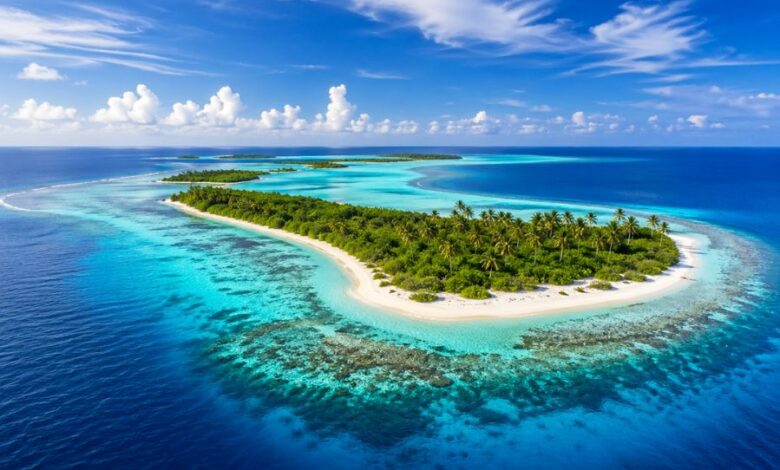
Lucipara is not the kind of place that becomes famous through crowds, beach clubs, or glossy holiday marketing. Its power lies in the opposite. Set in the middle of Indonesia’s Banda Sea, Lucipara feels distant, quiet, and almost untouched by the speed of modern tourism. It is a place spoken about with respect by divers, sailors, conservationists, and marine enthusiasts because it still seems ruled by reef, tide, wind, and depth rather than by roads and resorts. That sense of wonder is not imaginary. Public and scientific sources alike describe Lucipara as a remote island group far south of Ambon, reachable mainly by boat and valued for its remarkable marine life and ecological condition.
What makes Lucipara so compelling is that it offers more than scenery. Yes, there are pale beaches, turquoise shallows, and the visual drama of an atoll rising from the sea, but the deeper story is about survival and rarity. In a time when many marine environments are stressed by overuse, reef damage, and development, Lucipara is repeatedly described as a place where nature still feels dominant. It is remote enough to seem fragile and powerful at the same time. That combination gives Lucipara an identity that is less about tourism and more about atmosphere, geography, and ecological significance.
Where Is Lucipara and Why Does Its Location Matter?
Lucipara lies in Indonesia’s Maluku region in the Banda Sea, about 200 kilometres south of Ambon, in a stretch of ocean that already carries a reputation for depth, isolation, and rich marine life. The wider Banda Sea is one of the major seas around the Maluku Islands and contains extremely deep basins, with parts reaching several thousand metres below the surface. That broader setting matters because Lucipara is not sitting beside a sheltered urban coastline. It belongs to a large, open, oceanic environment where remoteness is not a marketing slogan but a physical reality.
That location shapes everything about the islands. Travel and conservation sources describe Lucipara as a place that can usually be reached only by boat, often during limited seasonal windows around the monsoon transition. Even today, getting there is not casual. It takes planning, time, and favourable sea conditions. This is one of the biggest reasons Lucipara has retained its distinctive character. Places that are difficult to access are often spared the constant pressure that transforms other coastal destinations into busy commercial zones. Lucipara remains compelling because it still feels genuinely far away.
What Kind of Place Is Lucipara?
Lucipara is best understood as an atoll-like island and reef system, not a large settled island with dense infrastructure. Sources describe it as a small group of islands and reef formations in the middle of the Banda Sea, with reef flats, shallow lagoons, sandy edges, and steep underwater drop-offs. Some references describe it as an atoll consisting of several islands, while others refer to a wider Lucipara island group that includes multiple named islands in nearby clusters. What is consistent across these descriptions is the basic impression: Lucipara is a low-lying marine landscape shaped more by coral and ocean structure than by mountains, towns, or built-up coastlines.
That physical character explains why Lucipara leaves such a strong impression on people who visit it. On the surface, it can appear calm and brilliant, with clear blue water and white reef margins glowing under sunlight. Yet beneath that calm is a far harsher and grander marine reality. The Banda Sea is known for its great depth, and around Lucipara the sea floor falls away dramatically beyond the shallows. This creates the feeling that the islands are resting on the edge of something immense. Lucipara is therefore not just beautiful; it is dramatic in a geological and oceanic sense. It offers serenity, but never in a soft or ordinary way.
Why Do Divers and Marine Researchers Speak So Highly of Lucipara?
The answer lies largely underwater. A 2023 scientific study of the Lucipara reefs found medium to high coral cover, high reef-fish biomass, and a strong presence of large predatory species. The paper concluded that these reefs are among the healthiest documented in Indonesia and emphasised that their condition likely reflects the islands’ remoteness. The same study noted that fish biomass at surveyed sites exceeded a widely used conservation target by around two to ten times, which is a striking result in the context of widespread reef decline across many parts of the world.
This scientific picture helps explain why Lucipara has earned such admiration in diving circles. Conservation and expedition accounts describe pristine coral reefs, walls with overhangs, soft and black corals, barrel sponges, sea fans, and encounters with schooling fish, groupers, rays, and sharks. These are not just attractive details for travellers; they are signs of an ecosystem that still supports a substantial range of marine life. When people speak of Lucipara with awe, they are often responding to the rare feeling of entering a reef system that has not yet been flattened into sameness by heavy human pressure.
Lucipara and the Importance of Sea Turtles
One of the most important parts of Lucipara’s identity is its connection with sea turtles. Public descriptions repeatedly note that the islands are famous for their turtle population. A 2021 Coral Triangle Center expedition recorded more than 1,100 turtles around the islands, mostly green turtles, along with hawksbill turtles and some loggerheads. The same source also reported that there are no villages on the islands, although some families maintain traditional ownership connections and return at times to harvest coconuts. That combination of remoteness and limited human presence helps explain why Lucipara remains such an important refuge for marine wildlife.
Travel observations from the area add another layer to this picture. They describe numerous turtle sightings in the water as well as turtle nesting tracks on the beaches. This matters because Lucipara is valuable not only as a scenic marine destination but also as a breeding and resting ground within a wider sea system. In practical terms, islands like Lucipara matter because they provide something increasingly rare: relatively undisturbed habitat. The beaches are not only attractive; they are functional ecological spaces. The shallows are not only photogenic; they support living systems that depend on isolation and stability.
A Place with Human History, but Not Heavy Human Footprint
Although Lucipara feels wild and distant, it is not outside human history. Public references note that the islands appeared in nineteenth-century travel writing, where American diplomat Edmund Roberts referred to them as “Lucepara.” Other modern accounts mention that local families who once lived on Mai still hold traditional claims to parts of the islands. These small fragments of history are important because they remind us that Lucipara is not an invented wilderness. It is part of the long maritime world of eastern Indonesia, where navigation, fishing, seasonal movement, and island knowledge have shaped life for centuries.
Yet Lucipara has not developed into a major settlement or mass tourism destination. That is one of the most striking things about it. Even where there is some human presence, such as lighthouse staff or seasonal visitors, the islands remain overwhelmingly defined by the marine environment rather than by built infrastructure. This is why Lucipara often feels so different from mainstream tropical destinations. It still carries the mood of a place that modern development has only lightly touched. For many people, that is exactly its appeal.
Why Conservation Matters So Deeply Here
The great paradox of Lucipara is that the same remoteness that protects it can also leave it exposed. The 2023 reef study warned that while distance may have shielded the islands from some human pressures, it can also make destructive fishing harder to police. Coral Triangle Center reporting likewise notes that marine debris can be found on some beaches and that destructive fishing remains one of the main threats to marine resources in the area. These warnings are important because they prevent us from romanticising Lucipara too easily. A remote place is not automatically a safe place. It can still be harmed by neglect, illegal activity, and broader environmental change.
That is why Lucipara has increasingly become part of conservation planning. The Coral Triangle Center reported in 2021 that ecological and socio-economic survey data from Lucipara would be used to help develop a marine protected area, and it also noted that the Maluku provincial government had already identified the islands for marine conservation in its zoning plan. More recently, the organisation reported continued collaboration aimed at establishing and managing Lucipara as a marine protected area in Maluku Province. These developments suggest that Lucipara is now being recognised not only as a place of beauty, but as a place of strategic conservation value.
Why Lucipara Continues to Fascinate
In the end, Lucipara fascinates people because it offers something increasingly uncommon: a sense that the sea still leads and humans still follow. It is remote without being empty, beautiful without being over-designed, and ecologically rich without being fully absorbed into mainstream tourism. The islands speak to divers because of their reefs, to sailors because of their distance, to scientists because of their condition, and to ordinary readers because they seem to belong to a slower and more intact world.
What makes Lucipara memorable is not only what it contains, but what it resists. It resists noise, easy access, overexposure, and simplification. It is not merely another tropical location on a map. It is a reminder that some places still hold their mystery because nature remains the main force shaping them. In that sense, Lucipara is more than a destination. It is a living symbol of marine fragility, resilience, and wonder in the heart of the Banda Sea.
Conclusion
Lucipara stands out because it combines remoteness, ecological richness, and natural drama in a way that few places still do. Far from the crowded image of tropical tourism, it survives as a marine frontier where coral reefs remain unusually healthy, sea turtles still thrive, and the vast depth of the Banda Sea shapes the spirit of the landscape. Its future, however, will depend on thoughtful protection. Lucipara is beautiful precisely because it is still fragile, and valuable precisely because it is still relatively intact. That is why it deserves admiration not only as a hidden paradise, but as a place whose living systems matter far beyond its small stretch of sand and reef.
(FAQs)
Where is Lucipara located?
Lucipara is in Indonesia’s Maluku region, about 200 kilometres south of Ambon in the middle of the Banda Sea.
What is Lucipara famous for?
It is known for its coral reefs, remote atoll setting, healthy fish populations, and strong association with sea turtles.
Is Lucipara a normal tourist island?
No. Sources describe it as a remote place mainly reached by boat during limited seasonal windows rather than a standard resort destination.
Are people living on Lucipara?
There are no villages on the islands now, though some families retain traditional connections and occasionally return for coconut harvesting.
Why is Lucipara important for conservation?
Researchers and conservation groups view it as important because its reefs are in unusually strong condition, it supports turtle populations, and its remoteness does not fully protect it from destructive fishing and marine debris