Gregory Generet: The Private Jazz Voice Whose Story Reaches Beyond Celebrity Headlines

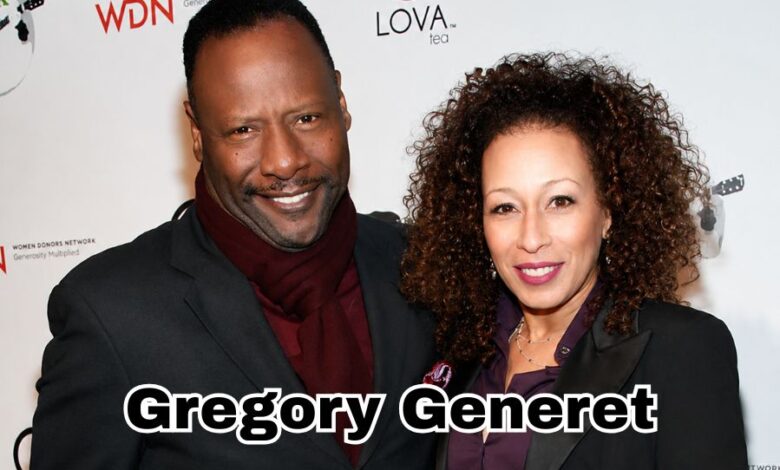
Gregory Generet is one of those names that often appears in public conversation because of a famous connection, yet his own story is far more distinctive than a simple celebrity footnote. Many readers first come across him through his past marriage to actress, producer, and director Tamara Tunie, whose long career includes major work on Law & Order: SVU, As the World Turns, film, theatre, and producing. But the most reliable public information on Generet shows a different centre of gravity. He is a jazz vocalist, and the clearest account of his life in the public domain comes from his own official biography, which presents him not as a tabloid figure but as an artist shaped by gospel, school music, classic jazz listening, and live performance. That difference matters, because it explains why the most accurate way to write about him is with restraint, context, and respect for the fact that his public footprint has always been modest.
Who Is Gregory Generet?
At the simplest level, Gregory Generet is an American jazz singer whose public image has remained unusually private. His official website introduces him as a jazz vocalist and places the emphasis firmly on music rather than on personal publicity. That already sets him apart from many people who become known through proximity to television or film fame. There is very little sign of image-building for its own sake. Instead, the available material concentrates on his musical development, recordings, performances, and the artistic influences that shaped him. In practical terms, that means readers looking for a sensational celebrity backstory will not find much. Readers looking for a quieter, more grounded artist’s path will find more than enough.
What makes Gregory Generet particularly interesting is that his public identity seems to have been built slowly and deliberately. The official biography describes a man who had been singing since childhood, including in gospel and high school bands, but who did not originally believe music would become his career. That detail gives his story a more human shape. He was not introduced to the world as a manufactured entertainment figure who had always been chasing visibility. Instead, he appears as someone who carried music with him for years before finally allowing it to become the centre of his professional life. That slow evolution gives his profile depth, and it helps explain why his artistic story feels more authentic than performative.
The Musical Turning Point That Changed His Life
One of the strongest details in Generet’s official biography is the turning point he describes from 1986, when hearing the John Coltrane and Johnny Hartman album changed his view of singing. In his account, the power of that record did not come from vocal theatrics or flashy showmanship. What affected him was its simplicity, emotional richness, and the way a singer could fully inhabit a song and communicate feeling with clarity. That experience became a creative revelation for him. The biography frames it as the moment when he realised he wanted to tell stories through music, not merely sing notes. That is a revealing idea, because it suggests that Generet’s relationship with jazz was never only technical. It was interpretive, emotional, and literary in spirit.
That influence also helps explain the kind of artist Gregory Generet became. Based on the public record, he does not come across as a crossover performer built around celebrity branding. He seems more aligned with the classic jazz tradition of mood, phrasing, timing, and emotional restraint. Even the way his biography is written reinforces that image. The emphasis is not on chart success or mass-media fame, but on storytelling, standards, live rooms, collaborators, and artistic growth. In a media environment where many biographies are designed to sound loud and impressive, Generet’s feels surprisingly focused. That focus may be one of the clearest indicators of who he is.
From Emmy-Winning Television Work to Jazz Performance
Another compelling aspect of Gregory Generet’s story is that music was not his first major professional chapter. According to his official biography, he worked in television as a post-production editor before moving more fully into performance. The same biography says that he won three Emmy Awards in that field, but later found himself artistically unfulfilled, which pushed him to devote greater energy to developing his craft as a singer. That detail makes his path especially interesting because it was not driven by a lack of success in one area. It was driven by the feeling that success alone was not enough if it did not connect with the deeper creative life he wanted.
That career change gives the Gregory Generet story a second-act quality that many profiles lack. He did not simply drift into music because he had spare time or access to entertainment circles. He moved toward it after already proving himself in another demanding creative profession. That suggests discipline, patience, and a willingness to begin again in order to pursue something more personally meaningful. For readers, it also makes him easier to understand as a serious musician. His journey into jazz was not casual. It came after years of work, reflection, and artistic dissatisfaction strong enough to change the course of his life.
Gregory Generet’s Recording and Performance Career
Once he turned more fully toward music, Gregory Generet began building a visible jazz career through recording and live performance. His official biography says pianist, producer, and arranger Onaje Allan Gumbs produced his first recording, resulting in Generet’s debut CD, (re)generet-ion. The project is described as a romance-themed collection in which he reimagined standards with his own styling and vocal flexibility. That description fits the broader impression of him as a singer interested less in spectacle and more in interpretation. Standards, after all, test whether an artist can make familiar material feel personal.
The list of venues in his biography also strengthens his credibility as a working jazz performer. It states that he gave sold-out performances at Dizzy’s Club Coca-Cola at Jazz at Lincoln Center, Joe’s Pub, The Highline Ballroom, The Kitano, Feinstein’s at the Loews Regency, and Smoke Jazz Club, where he held a three-year residency. The same source says he began working with Jazz at Lincoln Center Doha in 2014 as a special guest with the Dominick Farinacci Quintet, and that he later performed from Umbria to Abu Dhabi, including an appearance linked to UNICEF and an opening concert for Roy Hargrove. The biography also places him alongside musicians such as Wycliffe Gordon, Branford Marsalis, Mike Renzi, Bucky Pizzarelli, and Victor Goines. Together, those details show that his musical identity rests on more than one recording or a famous relationship. He has been part of a recognisable professional jazz circuit.
His official biography further notes praise from critic Stephen Holden of The New York Times and from WBGO’s Sheila Anderson, which suggests that his work has drawn attention from respected corners of the jazz world. While a personal website naturally presents an artist in the best light, the broader pattern still matters. Generet’s public material consistently frames him as a vocalist with a live-performance reputation, not simply as someone adjacent to fame. That distinction is important when writing honestly about his profile.
Gregory Generet and Tamara Tunie
Of course, it would be incomplete to discuss Gregory Generet without addressing his relationship with Tamara Tunie, because that is the connection through which many people still discover his name. Tunie’s official biography reflects a wide-ranging and distinguished career across television, film, stage, directing, and producing. Among other achievements, her site highlights her long run as medical examiner Dr Melinda Warner on Law & Order: SVU, her work in major films, her Broadway and stage projects, and her role as a producer on the Tony Award-winning Spring Awakening. That level of recognition naturally drew public attention to her personal life, including her marriage.
A 2012 Essence interview offers one of the most useful public snapshots of Gregory Generet and Tamara Tunie together. In that conversation, the couple spoke warmly about communication, individuality, mutual respect, and practical ways of making a long marriage work. The interview presented them as affectionate and grounded, with a strong sense of support for one another’s careers. Generet described the importance of being together without losing independence, while Tunie spoke about allowing a partner to remain fully themselves. It is a revealing source because it shows the tone in which they chose to speak publicly when their relationship was still intact.
Later, in 2015, E! News reported that Tunie and Generet had separated after nearly 20 years of marriage. The same report said they had married in 1995 and did not have children together. Beyond that, the public record is comparatively limited, which is itself consistent with the privacy both seemed to maintain. For that reason, the most responsible article about Gregory Generet should not drift into speculation. The confirmed public facts are enough: the marriage was long, the relationship was once publicly described as warm and supportive, and their separation was reported in 2015.
Why Privacy Is Central to Gregory Generet’s Public Story
Perhaps the most striking thing about Gregory Generet is not simply that he is talented or that he was once married to a well-known actress. It is that his public identity has remained relatively quiet in a culture built on exposure. His official site focuses on music, not gossip. The available media coverage tied to his marriage is limited rather than endless. Even the strongest facts about him point toward rooms, songs, and collaborators rather than spectacle. That makes him unusual by contemporary standards and, in some ways, more compelling. He seems to belong to an older idea of artistic life, one in which the work matters more than the surrounding noise.
That privacy also shapes how readers should understand him. With some public figures, a large amount of information encourages endless interpretation. With Generet, the opposite is true. Because the public record is selective, the best profile is one that stays close to what can be verified. Those verified details still tell a meaningful story: a man shaped by gospel roots, moved profoundly by classic jazz, successful in television, willing to reinvent himself, respected on stage, and linked to one of television’s most recognisable performers without turning that connection into a public identity of its own. That is not a small story. It is simply a quieter one.
Conclusion
Gregory Generet is best understood not as a mystery to be exaggerated, but as a private artist whose public story has always been more substantial than celebrity association alone. Yes, his past marriage to Tamara Tunie helped place his name in front of wider audiences. But the clearest public evidence shows a jazz vocalist with deep musical roots, a decisive artistic awakening, a successful earlier career in television, and a performance history that includes respected venues and collaborators. In the end, what makes Gregory Generet memorable is not noise, scandal, or overexposure. It is the opposite. His story stands out because it suggests a life built around music, craft, and discretion.
(FAQs)
Who is Gregory Generet?
Gregory Generet is a jazz vocalist whose official biography describes a background in gospel singing, high school music, and later live jazz performance. He also previously worked in television post-production before focusing more heavily on music.
Why do people search for Gregory Generet?
Many readers search for Gregory Generet because of his past marriage to actress, producer, and director Tamara Tunie, whose long career includes Law & Order: SVU and As the World Turns.
What kind of music does Gregory Generet perform?
He is publicly presented as a jazz vocalist, and his official biography emphasises classic jazz interpretation, standards, storytelling through song, and live performance.
Was Gregory Generet married to Tamara Tunie?
Yes. E! News reported that Gregory Generet and Tamara Tunie married in 1995 and separated in 2015 after nearly 20 years of marriage.
Why is Gregory Generet considered private?
His public footprint is relatively small, and the available material about him focuses mostly on music, performances, and biography rather than personal publicity or constant media exposure