Why Stansted Airport Taxi Services Continue to Grow in Popularity Among UK Travellers

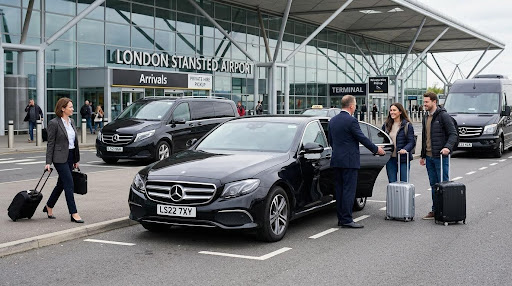
The data is straightforward: Stansted airport taxi bookings have grown for several years running. The interesting question isn’t whether the growth is real — it plainly is — but why. UK travellers have moved decisively toward pre-booked private hire over alternatives that once dominated their choices. That shift didn’t happen because of marketing campaigns. It happened because of accumulated personal experience, small but compounding reasons, and the slow recognition that the cheapest option was rarely the most economical one.
This article looks at the causes behind the trend rather than the trend itself. What’s actually driving travellers to choose Stansted airport taxi services over ride-hailing apps, public transport, and self-drive alternatives? The answer is rarely a single factor. It’s a layered combination of trust restoration, predictable pricing, practical advantages, and quietly accumulated proof that the model simply works better for the journeys that matter.
The Quiet Restoration of Trust in Pre-Booked Services
Perhaps the most important driver of the trend is something the industry rarely talks about openly: the gradual disillusionment with the alternatives travellers spent the last decade trying.
Years of Ride-Hailing Disappointments Cast a Long Shadow
Ride-hailing apps rewrote the ground transport landscape in the 2010s, and for many use cases they remain genuinely useful. But for time-critical airport transfers, the disappointments have accumulated: surge pricing at the worst moments, no-shows on early-morning bookings, drivers cancelling after acceptance, mismatched vehicles with insufficient luggage space, and customer service that exists only through in-app forms. Each incident is small in isolation. Across hundreds of journeys, the pattern is unmistakable — and frequent travellers in particular have been recalibrating away from the model.
The Return to Operators Who Know Your Name
Travellers who experienced the older taxi industry remember its frustrations — opaque pricing, variable service quality, hard-to-reach dispatchers. The current generation of Stansted airport taxi operators has solved most of those problems while preserving the qualities that ride-hailing stripped out: a person who knows your name, a dispatcher who answers the phone, a driver who returns for the same booking next month. That continuity has more value than travellers realised they’d lost until they stopped having it.
Word-of-Mouth and the Compounding Effect of Reliability
Reliable services earn customers slowly but keep them. A traveller who’s had three perfect transfers in a row tells two colleagues. Each of those colleagues tries the service. Some have similar experiences and refer others. This is unfashionable marketing, but it works — and it’s the fundamental engine behind the steady growth of well-run Stansted operators. Companies that invest in service quality see this compounding effect over years rather than months.
Why Predictable Pricing Has Become Disproportionately Valuable
Cost predictability is a quietly powerful driver of preferences, particularly in the current economic environment. Travellers have become more price-aware without becoming more price-driven.
The Psychology of Fixed Fares vs Surge Pricing
Behavioural research consistently shows that humans value loss avoidance more than gain capture. A £40 fixed fare feels meaningfully better than a £25–£55 variable range, even though the variable option averages out to roughly the same cost. The certainty has psychological value separate from the actual price level. Stansted airport taxi services offering fixed pricing tap directly into this preference, and they have visibly gained share as a result.
Cost Control in an Era of General Price Volatility
The past few years of broad UK inflation, energy price volatility, and food cost increases have made consumers more conscious of price unpredictability across every category. Against this backdrop, a service that confirms the cost upfront — and doesn’t change it later — has acquired additional value. Experienced Stansted airport taxi providers have leaned into this advantage, explicitly contrasting their fixed-fare model with the variable pricing models of ride-hailing apps and metered taxis.
Why Travellers Now Compare All-In Prices, Not Headlines
A generation of travellers has learned the hard way that headline prices rarely reflect the final amount paid. Drop-off charges added at the airport. Booking fees. Peak surcharges. Per-bag luggage fees. The accumulated education has produced more sophisticated comparison shopping: travellers now ask for all-in quotes, normalise the comparison, and select on total price rather than the misleading starting number. Operators offering genuinely transparent fixed pricing win these comparisons consistently.
The Practical Reasons That Add Up
Beyond trust and pricing, several practical factors have simply made pre-booked transfers the more sensible option for the journeys most travellers actually take.
Group and Family Travel Has Grown Faster Than Solo Travel
Post-pandemic travel patterns have shifted toward group and family journeys: multi-generational holidays, friend trips, family reunions, group celebrations. These journey types are structurally ill-suited to ride-hailing apps, which match single vehicles rather than coordinating group transport. A pre-booked MPV or minibus carrying eight people on a single booking is significantly cheaper, easier, and more reliable than four separate ride-hailing matches. The shift in travel patterns directly favours operators who can serve groups properly.
Late-Night and Early-Morning Flights Are More Common Now
Low-cost airline economics push flights toward less popular time slots — early-morning departures and late-night arrivals are increasingly the norm rather than the exception. These edge-of-day transfers are where ride-hailing’s structural weakness shows most clearly: limited driver availability, surge pricing, and cancellation risk all peak during these windows. Pre-booked transfers, by contrast, are designed for these exact moments. As more flights shift to these slots, the value differential grows.
Travellers Are Carrying More Luggage Than Before
Luggage volumes have crept upward over time. Travellers now routinely carry more electronics, more items for working trips, more equipment for sports and hobbies, and more belongings for longer trips. The standard saloon car that suited 2015 travel doesn’t always suit 2026 travel, and ride-hailing apps make it difficult to guarantee vehicle category at booking. Pre-booked operators offering specific vehicle selection — saloon, estate, MPV, minibus — handle this far more cleanly.
The Stansted-Specific Factors Driving Local Preference
Beyond general trends, Stansted itself has characteristics that particularly favour pre-booked private hire over alternatives.
The Airport’s Own Growth Creates More Transfer Demand
Stansted handled more than 30 million passengers in 2025 — a record for the airport, and continued growth is expected over the coming decades with planning permission to grow to 51 million annually. More passengers means more transfer demand, which has supported continued investment by established operators in fleet capacity and service quality. The airport’s growth and the local taxi sector’s growth are deeply interconnected.
No Hackney Rank Means Pre-Booking Is Often Required
Stansted’s limited hackney taxi presence — combined with the airport’s specific pickup and drop-off arrangements through the Mid-Stay Car Park — means that for most travellers, pre-booked private hire is genuinely the most practical option rather than just a preference. Casual ride-hailing isn’t actually faster than pre-booked when the walk-and-wait reality is honestly compared. This structural feature of Stansted has supported the local pre-booked taxi market in ways that don’t apply at every UK airport.
Local Operators Have Built Stansted-Specific Expertise
Long-established Stansted operators have accumulated specialist knowledge of the airport’s routines — peak congestion patterns on the M11, optimal drop-off timing, route variations during major event weeks, terminal navigation. This expertise isn’t replicable overnight. Drivers from outside the immediate catchment, including ride-hailing drivers occasionally matched to airport jobs, simply don’t have this knowledge, and the difference shows in journey time consistency and stress levels.
Service Quality That Earns Repeat Customers
Flight Tracking — The Feature That Quietly Changed Everything
Real-time flight tracking moved from premium feature to industry standard within a few years, and its impact on traveller experience has been substantial. The anxiety that previously accompanied any delayed flight — wondering whether the booked taxi would still be there — has largely disappeared. This single improvement has done more for the perception of pre-booked services than any marketing campaign could achieve. Travellers who experience automatic delay handling rarely go back to alternatives that require them to call after landing.
Driver Verification That Travellers Increasingly Expect
Pre-pickup driver photos, names, and vehicle registration numbers have become normal expectations among Stansted travellers. The peace-of-mind value, particularly for solo travellers and late-night arrivals, is genuine and measurable. Operators providing this consistently earn loyalty that competitors without the infrastructure cannot match.
The Compound Effect of Small Reliable Improvements
Each improvement on its own — flight tracking, driver SMS, fixed pricing, vehicle selection — is modest. The compound effect across multiple journeys is significant. A traveller using a quality Stansted airport taxi operator for fifty journeys a year experiences fifty separate moments where the small reliability improvements add up. Across years, this compounds into a fundamentally different experience of airport travel.
Generational and Cultural Shifts
Younger Travellers Value Reliability More Than Cost
Survey data across UK consumer research consistently shows that younger travellers (under 35) place higher value on reliability, predictability, and service quality than on the lowest available price. This is sometimes mistaken for affluence; in reality it reflects a generation that grew up with ride-hailing’s weaknesses and has consciously sought alternatives. The willingness to pay a modest premium for dependable service is broader and more rational than older market assumptions suggest.
Time Has Become More Valuable Than Money
Across most UK income brackets, time scarcity has increased while disposable income for many has stretched. The result: travellers increasingly choose options that save time and stress rather than options that save the smallest amount of money. A pre-booked transfer that costs £5 more than a ride-hailing alternative — but saves twenty minutes of waiting plus the cognitive load of monitoring the app — is genuinely the cheaper option for time-constrained travellers.
The Decline of “Cheap and Cheerful” Tolerance
Two decades of low-cost travel taught UK consumers that cheap services are often cheerful but rarely reliable. That lesson has finally translated into ground transport preferences. Travellers who once defaulted to the cheapest available option now actively select against the cheapest tier — particularly for airport transfers, where the cost of failure substantially exceeds any potential saving. This cultural shift has structurally favoured operators willing to charge modestly more in exchange for genuinely better service.
How Local Operators Have Earned the Loyalty
Investment in Technology Without Losing the Human Element
The operators winning long-term share have invested heavily in technology — instant quotes, mobile booking, automated SMS, flight tracking — while preserving the human relationships that distinguish private hire from gig-economy alternatives. This balance is harder to achieve than it sounds. Operators that over-automated lost the customer relationship; operators that under-invested in technology lost relevance. The successful Stansted operators have walked the line carefully.
Building Relationships Across Decades, Not Just Transactions
Decades-old Stansted private hire operators have built customer relationships that the gig economy fundamentally cannot replicate. Drivers know regular customers. Dispatchers recognise voices. Account holders are remembered. These small consistencies translate into the kind of service quality that travellers describe as “they actually knew who I was” — an unfashionably old compliment that has, paradoxically, become a competitive advantage.
Local Knowledge That Algorithms Cannot Replicate
Algorithms route vehicles efficiently but don’t know that a particular street has had construction work for three weeks, or that a specific hotel forecourt is best entered from the side road, or that the M11 always slows after junction 8 on Friday afternoons. Experienced human drivers and dispatchers carry this granular knowledge, and it translates into journey reliability that platforms simply cannot match through software alone.
Frequently Asked Questions
Why are more UK travellers choosing pre-booked Stansted airport taxis?
The reasons combine: accumulated frustration with ride-hailing reliability, growing preference for fixed pricing in an era of general price volatility, the practical advantages of pre-selected vehicles for groups and luggage, and a cultural shift toward valuing reliability over absolute lowest cost. The growth isn’t driven by one factor — it’s the result of multiple small advantages that compound across each booking.
Are Stansted airport taxis genuinely more reliable than ride-hailing apps?
Yes, in observable and measurable ways. Pre-booked services guarantee a driver for the booked time, monitor flights automatically, and include dispatcher oversight to prevent cancellations. Ride-hailing relies on driver availability at the moment of booking, with cancellation risk that rises sharply during peak demand and unsociable hours. The reliability gap is most visible during the exact moments — early mornings, late nights, weekends — when airport travellers depend on it most.
How much more do Stansted airport taxis cost than alternatives?
Premiums vary, but typically run 10–20% above the cheapest available alternatives during off-peak hours. During peak demand periods, when ride-hailing surge pricing applies, pre-booked fixed-fare transfers often cost less than alternatives — sometimes substantially less. For groups and multi-passenger journeys, pre-booked usually wins on absolute price regardless of timing.
Do younger travellers prefer pre-booked airport taxis over apps?
Increasingly, yes. Younger travellers grew up with ride-hailing and have direct experience of its limitations. They’ve subsequently shown a strong preference for reliability and predictability when stakes are meaningful — airport travel being a clear case. The shift from “apps are always better” to “apps are good for low-stakes journeys; pre-booked is better for important ones” has been particularly visible in this demographic.
What’s the easiest way to start using pre-booked Stansted airport taxi services?
Most established operators offer instant quote tools online. Enter pickup and drop-off addresses, select the vehicle category, and receive a fixed-fare quote within seconds. The online quote system for Stansted Airport Taxi, for example, displays prices for the full fleet range — saloon, estate, MPV, minibus — letting first-time users compare options before booking. Confirmation arrives by email and SMS, with driver details delivered before pickup.
Conclusion
The growing popularity of Stansted airport taxi services among UK travellers is best understood as a collective response to accumulated experience rather than a sudden trend. Travellers have tried the alternatives, discovered their limitations, and gradually moved back toward pre-booked private hire — but with the modern advantages of fixed pricing, flight tracking, mobile booking, and diverse vehicle options that the older taxi industry didn’t offer. The result is a category that has earned its growth slowly and durably.
For travellers still defaulting to ride-hailing or struggling with public transport for airport journeys, the practical question is straightforward: try a pre-booked Stansted airport taxi for the next time-critical journey and compare the experience directly. The growth in this category exists because that comparison consistently favours pre-booked operators — not as a marketing claim, but as repeated personal observation.
────────────────────────────────────────────────────────────
─── AUTHOR BIO ───
This article is published in partnership with Stansted Airport Taxi, a long-established private hire operator providing fixed-fare airport transfers across London, Essex, Hertfordshire, Cambridgeshire, and surrounding regions. The company combines the modern advantages travellers expect — instant online quotes, real-time flight tracking, multi-channel booking, and diverse vehicle categories — with the human relationships and local knowledge that distinguish established operators from gig-economy alternatives. For instant quotes and online booking, visit stanstedairport-taxi.com.
────────────────────────────────────────────────────────────
─── PUBLISHING NOTES (Remove Before Publication) ───
| Link 1 (Body) | https://stanstedairport-taxi.com/stansted-airport-taxi (anchor: “Experienced Stansted airport taxi providers”) |
| Link 2 (FAQ) | https://stanstedairport-taxi.com/online-taxi-booking-24-7 (anchor: “online quote system”) |
| Brand Mentions | 4 natural mentions + author bio (causes-focused tone) |
| Image Suggestions | Hero: Multi-generational family at Stansted Arrivals / Mid: Smartphone showing fixed-fare quote screen / FAQ: Driver and passenger handshake at vehicle |
| FAQ Schema | 5 questions formatted for FAQPage schema markup (host site to add JSON-LD) |