Matt Hamshaw: The Steady Football Mind Behind a Career Built on Grit and Growth

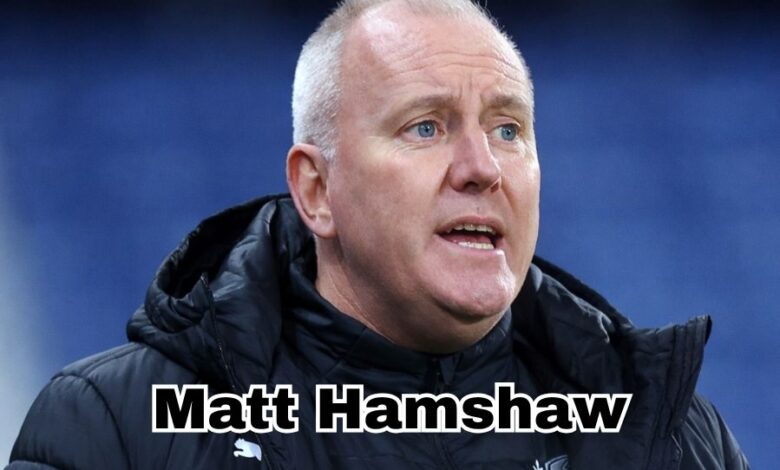
In modern football, the spotlight usually follows superstars, outspoken managers, and headline-making personalities. Yet the game has always depended just as much on people who build their careers quietly, steadily, and honestly. Matt Hamshaw belongs to that group. He was never sold as a glamorous figure, and he did not build his name through noise or celebrity. Instead, he earned respect through hard work, football intelligence, and a deep understanding of what the sport demands at every level. His journey through the professional game reflects the values many supporters still admire most: discipline, reliability, patience, and the ability to adapt when football changes around you.
What makes Matt Hamshaw especially interesting is that his football story did not end when his playing days slowed down. In many ways, it became even more meaningful. He moved from the dressing room into the coaching room, from the training ground into leadership, and from supporting others into taking full responsibility himself. That transition is never simple. It requires more than knowledge of the game. It demands communication, emotional control, tactical clarity, and the ability to guide players through pressure. Hamshaw’s career shows how a former player can grow into those responsibilities over time, earning trust through lived experience rather than reputation alone.
Early Life and the Start of Matt Hamshaw’s Football Journey
Matt Hamshaw was born in Rotherham on January 1, 1982, and his connection to Yorkshire football runs deep. He came through the youth ranks at Sheffield Wednesday, one of the region’s best-known clubs, and made his first-team debut in 2000. Derby County’s official profile also notes that he was called up to the England Under-18s setup, which showed that his potential was recognized early. Even at that stage, Hamshaw was not known as a flashy footballer. He was seen as a dependable right-sided midfielder who understood shape, responsibility, and the less glamorous demands of team football. Those qualities often go unnoticed from the outside, but inside clubs they are the kind that managers value deeply.
His early years at Sheffield Wednesday helped shape the identity that would follow him throughout his career. Breaking into professional football is difficult enough, but staying there requires consistency, mental toughness, and the ability to deal with competition every day. Hamshaw learned that in a demanding environment. He also played his part as Wednesday won promotion from League One through the play-offs in 2005, giving him an important success during the opening chapter of his career. That achievement mattered because it placed him inside a winning environment and reinforced the idea that football progress is often built on collective discipline rather than individual attention.
A Playing Career Defined by Honesty and Consistency
As a player, Matt Hamshaw built a career that was grounded in trust. After leaving Sheffield Wednesday, he joined Stockport County, where he spent a season and was made captain, an early sign that his leadership qualities were already being noticed. From there he moved to Mansfield Town, where he made 95 appearances across two seasons, more than at any other club in his professional career. He then went on to play for Notts County, where he was part of the side that won the League Two title in 2009/10, before ending his full-time professional playing career with Macclesfield Town. Derby County’s official profile states that across his professional career he made 375 appearances and scored 26 goals.
Those numbers tell an important story. They do not describe a brief or fortunate football life. They describe a player who kept finding his place, kept earning minutes, and kept being trusted by managers in a competitive system. Football League careers are demanding, especially outside the top tier, where consistency is everything and squad places are never guaranteed. Hamshaw’s longevity suggests that he understood the daily standards required to survive and contribute. He was the kind of footballer who may not have dominated the back pages, but whose role inside a squad was real and valuable. That is often the difference between a short career and a respected one.
Why the Move Into Coaching Was So Important
One of the most notable decisions in Hamshaw’s football life came when he chose to focus on coaching at the age of 30. Derby County’s profile explains that he left full-time football early in order to concentrate more seriously on that side of the game, while continuing to play semi-professionally with Matlock Town and later Stocksbridge Park Steels. That detail says a lot about his mindset. Many players wait until retirement forces a next step. Hamshaw appears to have planned his development earlier. He was not simply extending his time in football. He was preparing for a different role inside it.
Coaching requires a new identity. A player can focus on his own position, his own fitness, and his own performance. A coach has to see the whole structure. He must improve others, solve problems, and understand how personalities, tactics, and timing all fit together. Hamshaw’s shift into coaching suggested that he saw football in that wider way. It also gave him time to learn properly. Rather than jumping straight into senior management, he built himself step by step, which made his later rise more credible. In a sport where some careers move too quickly, his slower development became one of his strengths.
Rotherham United and the Building of a Coaching Identity
Hamshaw’s long association with Rotherham United became one of the most important parts of his career. Derby County’s profile says he joined the Millers in 2012 as a Youth Coach and continued to rise through the club’s structure over roughly a decade. During that time, he moved from youth development into broader leadership roles, including Director of Youth Department, before later stepping into the senior setup as First Team Coach under Paul Warne. The same Derby profile credits him with being part of a coaching group that helped Rotherham achieve three promotions and a Papa Johns Trophy success.
This period matters because it gave Matt Hamshaw a full football education. He was not limited to first-team tactics alone. He worked with young players, player development, academy progression, and the wider structure of a club. That kind of experience can be invaluable in modern football, where successful coaches often need to understand more than matchday decisions. They need to know how clubs function from the inside, how talent is developed, and how standards are maintained over time. Hamshaw’s years at Rotherham gave him exactly that kind of grounding. They also explain why he became a respected name among people who value football substance over image.
Derby County and a Bigger Stage for His Coaching Reputation
In September 2022, Hamshaw followed Paul Warne to Derby County as First Team Coach, stepping into a bigger club with greater pressure and greater visibility. Derby’s official profile introduced him as part of Warne’s new coaching staff and highlighted both his playing background and his long development at Rotherham. This move showed that Hamshaw was not just an internal Rotherham figure; he was a coach trusted enough to help lead a major rebuilding project at one of the EFL’s most followed clubs.
His standing at Derby became even clearer in February 2025. Derby’s official match report against Norwich City confirmed that Hamshaw took interim charge of the team following Paul Warne’s departure. The Rams earned a dramatic 1-1 draw, and the report noted that the result ended Derby’s seven-game losing run in the Championship. That may have been a short spell, but it was an important one. It demonstrated that when the club needed stability in a difficult moment, Hamshaw was trusted to step forward and lead. A few days later, Derby announced that Hamshaw and goalkeeping coach Andy Warrington had chosen to step down from their roles, even though they had been offered the chance to remain under new head coach John Eustace.
Return to Rotherham United and the Step Into Management
The next major stage of Matt Hamshaw’s career brought him back to familiar ground. On March 30, 2025, Rotherham United announced that after the departure of Steve Evans, Hamshaw, together with Andy Warrington and other staff, would take charge of first-team matters until the end of the season. Just over two weeks later, on April 15, 2025, the club confirmed that he had accepted the offer to become the permanent first-team manager. That appointment was significant because it reflected years of trust built inside the club. Hamshaw was not an outsider being asked to learn the environment. He already knew the people, the culture, and the expectations.
Management, however, is the hardest test in football. Coaching can earn respect, but management brings final accountability. Results become personal, pressure becomes public, and every decision is judged quickly. Hamshaw’s appointment at Rotherham was a major opportunity, but it also placed him in one of the most unforgiving roles in the game. On March 18, 2026, Rotherham United confirmed that the club had parted ways with him as first-team manager. That outcome was disappointing, but it does not erase the broader shape of his career. In football, one difficult managerial spell does not cancel years of serious work, nor does it remove the value of the experience he built across the game.
What Matt Hamshaw’s Career Says About English Football
There is something deeply familiar about Hamshaw’s path. He represents a kind of football professional who remains essential even if he is not constantly discussed outside the game. He played with commitment, learned through experience, developed patiently as a coach, and eventually stepped into management through earned opportunity. That is a very English football story. It is about the people who hold clubs together, who understand the rhythm of training grounds and lower-league dressing rooms, and who treat the sport as a craft rather than a performance.
For that reason, Matt Hamshaw remains an interesting and respected figure. His story is not built on hype. It is built on football reality. It includes progress, setbacks, adaptation, and responsibility. It shows that a meaningful football life can be shaped by substance, not just fame. In an era that often rewards attention first and depth second, Hamshaw’s journey stands as a reminder that the game still depends on steady professionals who do the hard work properly.
Conclusion
Matt Hamshaw built his reputation the hard way. From Sheffield Wednesday to Stockport County, Mansfield Town, Notts County, and Macclesfield Town, he earned his place as a player through consistency and trust. From there, he made a thoughtful transition into coaching, grew within Rotherham United, took on a key role at Derby County, and later stepped into management himself. Even though his time as Rotherham’s permanent manager ended in March 2026, the larger story of his career remains one of resilience, learning, and professionalism. That is what makes him worth writing about. He may never have been the loudest figure in football, but he has been one of the more authentic ones.
(FAQs)
Who is Matt Hamshaw?
Matt Hamshaw is an English former professional footballer and coach who played mainly as a right-sided midfielder and later moved into coaching and management. He was most recently the manager of Rotherham United.
Which clubs did Matt Hamshaw play for?
He played professionally for Sheffield Wednesday, Stockport County, Mansfield Town, Notts County, and Macclesfield Town, before later playing semi-professionally as he developed as a coach.
How many appearances did Matt Hamshaw make in professional football?
Derby County’s official profile says Hamshaw made 375 professional appearances and scored 26 goals during his playing career.
When did Matt Hamshaw move into coaching?
He made the decision to focus on coaching at 30 years old and joined Rotherham United in 2012, starting as a youth coach before rising through the club’s structure.
Was Matt Hamshaw manager of Rotherham United?
Yes. Rotherham first put him in interim charge in March 2025, then appointed him permanent manager on April 15, 2025. The club confirmed on March 18, 2026 that it had parted ways with him.