James Dacre: The Award-Winning Theatre Director Redefining Contemporary British Performance

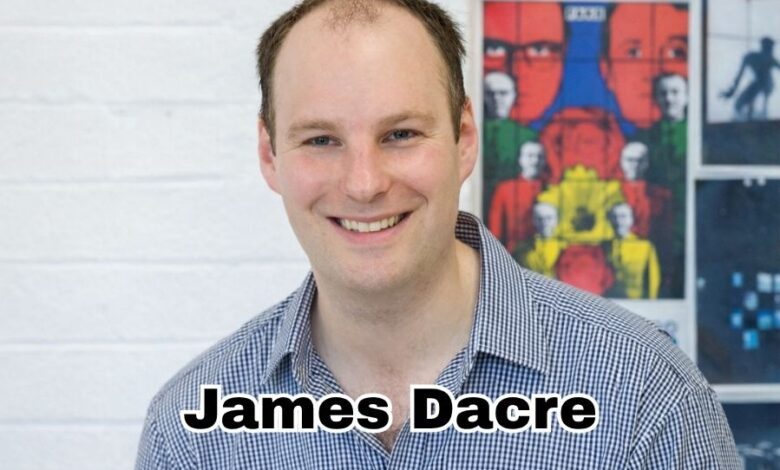
James Dacre has built a reputation as one of the most thoughtful and versatile creative figures working in British theatre today. He is known not only as a director, but also as a producer and cultural leader whose work moves across stage drama, opera, music theatre, film, radio, and live performance. What makes him stand out is not simply the range of his credits, but the seriousness of his artistic vision. Across different forms, he has consistently chosen projects that explore history, politics, faith, memory, identity, and the pressures of public life. That combination of artistic ambition and public-minded storytelling has made James Dacre a distinctive presence in contemporary performance.
In a theatre culture that often rewards speed, fashion, and short-term attention, Dacre’s career feels notably substantial. His body of work suggests a director interested in ideas as much as images, in emotional truth as much as spectacle, and in civic meaning as much as entertainment. He has directed world premieres, revived classic works, led major institutions, toured productions nationally and internationally, and helped shape the wider cultural landscape through governance roles. That breadth is one reason his name carries weight in British theatre circles, and why his career continues to attract attention from audiences, critics, and the industry alike.
The Early Rise of James Dacre
The rise of James Dacre in British theatre was marked early by serious recognition. One of the defining moments in his career came with The Mountaintop by Katori Hall, a production strongly associated with his emergence as a major directing talent. The play went on to win the Olivier Award for Best New Play in 2010, a significant achievement that placed the production firmly in the national spotlight. Even though the award formally recognised the play, the success of that production helped establish Dacre’s standing as a director with a sharp instinct for ambitious, politically resonant writing and a strong ability to bring urgency to the stage.
That early success mattered because it signalled the kind of work Dacre would continue to pursue. Rather than building a career only around safe revivals or conventional crowd-pleasers, he became associated with challenging material that placed moral, historical, and social questions at the centre of performance. This became a defining quality of his professional identity. His directing career would go on to include new writing, literary adaptation, music theatre, opera, and interdisciplinary performance, but the unifying thread remained clear: James Dacre was drawn to work that mattered, not just work that filled a stage.
A Transformative Decade at Royal & Derngate
The most important institutional chapter of Dacre’s career was his decade as Artistic Director of Royal & Derngate Theatres in Northampton. Official sources state that he held the post from 2013 to 2023, and that period proved central to his development as a national arts leader. Under his direction, the theatre strengthened its position as a major producing house outside London, while continuing to build audiences and send work on tour. He did not treat a regional theatre as a smaller version of a metropolitan venue. Instead, he treated it as a creative engine capable of developing ambitious work with national reach.
The measurable results of that decade were substantial. According to Living Productions, Dacre’s work at Royal & Derngate included producing more than 120 shows, with 60 touring nationally and internationally and 42 transferring to London. Those numbers are impressive in themselves, but they matter even more because they reflect a broader artistic strategy. Dacre helped build a model in which regional theatre was not culturally secondary, but central to the creation of significant new work. Awards recognition followed, with productions from that period associated with Olivier, Evening Standard, WhatsOnStage, and The Stage recognition. His tenure at Royal & Derngate therefore was not simply long; it was influential.
Directing Style and Artistic Identity
One of the most striking things about James Dacre is the consistency of his thematic interests. His productions often revolve around questions of conscience, power, belief, conflict, and identity. This can be seen in projects such as The Mountaintop, Our Lady of Kibeho, The Two Popes, The Hook, The Herbal Bed, and Four Quartets. These are not accidental selections. Together they suggest a director who is deeply interested in what happens when private emotion collides with public history, and when personal lives are shaped by larger political, spiritual, or cultural forces.
His style also appears to be marked by versatility rather than repetition. Some directors become associated with one visual signature or one theatrical mood. Dacre’s record suggests something broader. He has directed intimate new plays, intellectually demanding literary works, large-scale touring productions, opera stagings, music-led events, and screen-related projects. What ties them together is not a single visual formula, but a way of thinking: the belief that performance can be emotionally immediate while also engaging with complex ideas. That makes James Dacre feel less like a stylist in the narrow sense and more like a director with a serious intellectual and humanistic approach to art.
Major Productions That Shaped His Reputation
Looking at Dacre’s major productions offers a clear picture of why his reputation has grown so steadily. His biography highlights work that includes The Mountaintop, The Two Popes, Four Quartets, The Hook, The Herbal Bed, and Unexpected Twist. These titles range across different genres and audiences, yet they all carry a sense of substance. The Two Popes, for instance, later became the basis for an Oscar, Golden Globe, and BAFTA-nominated film, which underlines how closely Dacre has been connected to work of real cultural reach. Four Quartets, with Ralph Fiennes, reopened eight regional theatres after the pandemic, later transferred to the West End, and was adapted into a feature film.
His work beyond straight drama further strengthens that reputation. Official biographies note opera directing that includes Verdi’s Macbeth with English Touring Opera, as well as a new operatic staging of Derek Jarman’s Modern Nature. They also reference cabaret and concert projects such as A Most Marvellous Party, and music theatre work like Unexpected Twist. This range matters because it shows that Dacre is not limited by a single form. He understands performance as a broad creative field, and that gives him unusual flexibility as a modern director and producer. In a time when many artists are pushed toward narrow branding, James Dacre has built a career through creative range and depth.
Living Productions and a New Career Chapter
After stepping down from Royal & Derngate, Dacre entered a new phase by founding Living Productions in 2024. The company presents itself through three strands: Living Theatre, Living Music, and Living Arts. That structure immediately reveals something important about his current ambitions. He is no longer focused only on leading one building or one producing house. Instead, he is creating a platform that can move across theatre, concerts, festivals, radio, podcasts, films, and collaborative arts projects. In other words, James Dacre is expanding from theatre leadership into a wider model of cultural production.
The projects attached to Living Productions confirm that ambition. The company has been involved with Derek Jarman: Modern Nature at the Barbican, Family Business on BBC Radio 4, Summer 1954 touring from Theatre Royal Bath, Four Quartets, and the world premiere of David Edgar’s Here in America. It also developed the concept and business model for Nevill Holt Festival 2024, where Dacre served as Guest Festival Director. According to the company, that inaugural programme involved 150 artists and welcomed 12,000 audience members across 60 events. These are not modest side projects. They show a creative figure actively building a cross-disciplinary future for his work.
Leadership Beyond the Stage
Another important part of Dacre’s profile is his leadership outside rehearsal rooms and performance venues. Official sources identify him as Chair of the Board of Theatre503, a Trustee of The Theatres Trust, a trustee of Talawa Theatre Company, and a board director of Spirit of 2012. Government and sector sources also confirm his continuing role with Theatres Trust, including his reappointment as trustee. These positions are important because they show that his influence is not limited to the productions he directs. He is also involved in the governance and support structures that shape the future of British theatre.
This broader leadership role helps explain why James Dacre is often described as more than a director. He is also a cultural organiser, someone committed to sustaining institutions, nurturing artists, and protecting the places where theatre happens. In the current arts climate, where funding pressures, access questions, and structural challenges remain intense, that kind of contribution matters. It suggests a professional who sees theatre not as a personal brand opportunity, but as a shared cultural ecosystem that needs imagination, stewardship, and long-term care.
Why James Dacre Matters in British Theatre
The importance of James Dacre lies in the combination of qualities he brings together. He has artistic credibility, institutional experience, award-winning productions, and a clear commitment to public value. He understands theatre as an art form, but also as a civic force. His productions frequently ask audiences to think about the world around them rather than merely escape from it. At the same time, his work remains deeply theatrical, attentive to performance, rhythm, design, and emotional charge. This balance between ideas and immediacy is one of the strongest reasons his career stands out.
He also represents an important model for contemporary arts leadership. Dacre’s career shows that a director can move successfully between new writing, classics, opera, interdisciplinary work, institutional leadership, and independent producing without losing artistic coherence. That coherence comes from purpose. Whether he is directing The Mountaintop, helping lead Royal & Derngate, or building Living Productions, the same impulse appears again and again: to make work that is artistically strong, publicly engaged, and culturally meaningful. That is why James Dacre continues to matter in the evolving story of British theatre.
Conclusion
James Dacre has earned his place as one of the notable creative voices in modern British performance. His career combines award-winning direction, serious artistic purpose, large-scale institutional leadership, and a continuing commitment to the public role of culture. From the breakthrough impact of The Mountaintop to his decade at Royal & Derngate, and from the launch of Living Productions to his ongoing trustee and chair roles, he has shown a rare ability to connect art with ideas and leadership with imagination. For audiences, artists, and the wider theatre world, James Dacre represents a form of creative seriousness that still feels urgent and necessary.
(FAQs)
Who is James Dacre?
James Dacre is a British theatre director, creative producer, and arts leader known for award-winning work across theatre, opera, film, and live performance. He previously served as Artistic Director of Royal & Derngate and later founded Living Productions.
What is James Dacre best known for?
He is widely known for directing The Mountaintop, a production connected with the Olivier Award-winning play, and for leading Royal & Derngate Theatres from 2013 to 2023.
What is Living Productions?
Living Productions is the company founded by James Dacre in 2024. It develops work across theatre, music, film, radio, festivals, and other arts projects through its Living Theatre, Living Music, and Living Arts strands.
Has James Dacre worked outside theatre?
Yes. His official biographies describe work in opera, music theatre, concerts, radio, film, and festival programming, including projects such as Macbeth, Modern Nature, Family Business, and Four Quartets.
What leadership roles does James Dacre hold?
He is listed as Chair of Theatre503, a Trustee of The Theatres Trust, a trustee of Talawa Theatre Company, and a board director of Spirit of 2012.