Alan Rickman: The Actor Who Made Silence Speak

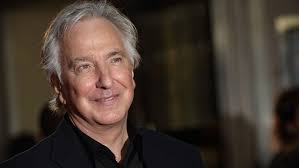
Alan Rickman did not arrive in the world with the smooth authority that later filled cinema screens. He was born in Acton, West London, on 21 February 1946, into a home that knew work, discipline, illness, and loss. His father, Bernard, worked in a factory. His mother, Margaret, held the family together after Bernard died when Alan was eight. That early loss did not turn Rickman into a public confessor. It made him watchful.
Rickman grew up on a council estate, far from the polished rooms and theatrical circles that later defined parts of his career. His childhood had rules, limits, and pressure. Money mattered. Stability mattered. A person had to notice small shifts in mood, timing, and tone. That kind of childhood often trains the eye before it trains the voice. Rickman became the sort of man who could read a room without needing to dominate it.
His early life gave him a grounded sense of class. He never seemed dazzled by fame, perhaps because he knew how artificial it could be. He had seen the gap between public polish and private struggle long before Hollywood discovered his face. That awareness later shaped many of his best performances. He could play with privilege without worshipping it. He could play cruelty without making it cartoonish. He understood that status was often a costume.
Rickman showed creative ability early, but he did not take the straight path to acting. He had a strong visual sense and trained first in design. He studied at Chelsea College of Art and Design and then at the Royal College of Art. Before he became a famous actor, he worked as a graphic designer and helped run a design business. That part of his life matters because it shaped how he saw performance.
Design teaches structure. It teaches proportion, space, restraint, and the power of leaving something out. Rickman carried those lessons into acting. He did not throw emotions around. He placed them. He understood the shape of a scene. He knew when to step forward and when to let silence do the work.
His voice later became one of the most recognisable in modern film, but his craft was never only about sound. He used posture, stillness, and rhythm with the care of someone arranging a page. He could make one raised eyebrow feel like a full paragraph. He could pause before a word and make the pause carry more meaning than the word itself.
Rickman’s early years also built patience. He did not become a screen star in his twenties. He did not rush from drama school into instant fame. He built his career late, deliberately, and with a seriousness that came from choosing acting after already trying another life. He knew what he was giving up. He knew what he wanted.
That slow start became one of his strengths. By the time the wider public noticed him, he seemed fully formed. He had the face of a man who had lived, not the polish of someone manufactured for attention. He brought age, intelligence, and private history into roles that might have seemed thin in another actor’s hands.
The young Rickman did not dream only in applause. He studied, worked, made choices, and changed course. That is why his later success feels less like a lucky break and more like a delayed arrival. He spent years becoming interesting before he became famous.
The designer who chose the stage
Rickman entered acting with the seriousness of a man who had already tested another profession. He won a place at the Royal Academy of Dramatic Art in his mid-twenties and trained there from 1972 to 1974. That timing matters. He was not a teenager trying on personalities. He was an adult making a hard turn.
RADA gave him formal training, but Rickman had already developed a working mind. He knew deadlines, clients, studios, and practical pressure. He knew that talent without discipline could collapse under its own weight. He treated acting as a craft, not a mood.
His stage career grew through the 1970s and 1980s. Theatre suited him because it rewarded control. A stage actor must repeat emotion without flattening it. He must project without shouting. He must handle language as both thought and music. Rickman learned those habits before cinema gave him close-ups.
His breakthrough came through theatre before film. His performance as the Vicomte de Valmont in Les Liaisons Dangereuses with the Royal Shakespeare Company drew major attention. The role suited him: seductive, cruel, elegant, wounded, and sharp. Rickman gave Valmont danger without cheap noise. He understood that charm can be a weapon.
That performance travelled to Broadway and brought him to the attention of American audiences. It also opened the door to a role that changed his career: Hans Gruber in Die Hard. Rickman was in his early forties when he made his major film debut. Most actors would have feared arriving so late. Rickman turned lateness into authority.
A younger actor might have played Hans Gruber as a shouting terrorist. Rickman played him as a man who had chosen his suit carefully. Hans did not need to rant because he believed he was the cleverest person in the building. Rickman gave him manners, wit, and theatrical calm. That calmness made him more frightening.
The famous falling scene in Die Hard became part of film history, but Rickman’s real achievement came before the fall. He made audiences enjoy listening to Hans. That is a risky kind of villainy. The viewer knows he is dangerous, but still leans in. Rickman understood the seduction of intelligence. He made evil sound educated.
After Die Hard, Hollywood knew what to do with him and also failed to know what to do with him. It saw the voice, the sneer, the elegance, and the threat. It offered villains. Rickman accepted some, rejected others, and complicated almost all of them.
His Sheriff of Nottingham in Robin Hood: Prince of Thieves became a wild contrast to Hans Gruber. Where Hans was controlled, the Sheriff was theatrical, petty, hungry, and absurd. Rickman turned the role into a dark comic performance. He stole scenes not by ignoring the film around him, but by sensing exactly how far he could push the character before the whole thing split apart.
That boldness showed another side of him. Rickman was not only restrained. He could be outrageous when the material called for it. He had a gift for finding the temperature of a role. Some parts needed ice. Others needed fire. Some needed both in the same line.
His background in design may explain his sense of contrast. He understood that a dark mark shows best on a pale surface. A soft line can make a hard line sharper. In acting, he used the same principle. He could wrap menace in politeness. He could hide grief inside a formal sentence. He could place comedy next to cruelty and make both stronger.
Rickman’s route to fame also made him resistant to celebrity nonsense. He did not seem eager to be consumed by the public. He valued the work more than the machinery around it. That distance gave him a rare quality on screen. Even in large films, he looked like a person with a private life happening off-camera.
The villain who refused to be simple
Alan Rickman became famous for villains, but the label never quite fitted. His best dark characters were not simple monsters. They were intelligent people who had chosen terrible paths, or damaged people who used control to hide pain. He played evil as behaviour, not as a costume.
Hans Gruber remains the clearest example. He walks into Die Hard with style, but Rickman never treats style as decoration. Hans uses elegance to manage fear. He wants the room to believe he has already won. His suit, accent, posture, and vocabulary all serve the same purpose. They turn violence into theatre.
Rickman understood that dangerous people often perform calmly. That insight made Hans different from the usual action villain. He did not need to flex. He did not need to scream. His confidence created tension because it suggested planning. The audience waited for the mask to crack.
The Sheriff of Nottingham allowed Rickman to move in the opposite direction. The character had no interest in subtlety. He wanted power, pleasure, revenge, and attention. Rickman played him with comic viciousness. He made the Sheriff funny without making him harmless. The result turned a broad villain into the most watchable part of the film.
Judge Turpin in Sweeney Todd brought another kind of darkness. Turpin is not flashy. He is rotten beneath respectability. Rickman’s performance used stillness and discomfort. He showed a man who hides obsession behind office, law, and status. It was a colder performance, and it needed that coldness.
Then came Severus Snape, the role that introduced Rickman to millions of younger viewers. Snape could have become a pantomime school villain: black robes, sharp tongue, greasy hair, and constant disapproval. Rickman made him stranger and sadder. He gave Snape the slow speech of a man who measured every word because words were the only part of himself he could still control.
Snape’s cruelty was real, but Rickman kept suggesting buried damage. He did not ask the audience to forgive the character too early. He let discomfort remain. That patience mattered because Snape’s full story unfolded over years. Rickman had to carry secrets across films without revealing them too soon.
His performance depended on discipline. He used small movements, slow turns, and clipped delivery. He made classrooms feel colder by entering them. He made silence feel disciplinary. Yet he also placed tiny signals of conflict where they could be seen later. A glance. A delay. A refusal to explain himself.
Snape became one of Rickman’s defining roles because it combined many parts of his talent. It used the voice, the stillness, the pain, the wit, and the threat. It also used his age. Rickman looked like a man with a past. That past sat behind his eyes before the script fully named it.
His villains worked because Rickman never begged the audience to like them. He trusted viewers to notice complexity without being spoon-fed. He did not soften every hard edge. He knew that mystery loses power when an actor explains too much.
That choice separated him from performers who confuse intensity with volume. Rickman rarely needed volume. He could lower his voice and make a scene lean towards him. He could make politeness feel more alarming than rage. He could turn a sentence into a blade.
His darker roles also revealed his humour. Rickman had a dry, precise comic instinct. He knew when a villain’s self-importance could become funny. He could let the audience laugh at arrogance without draining the character of threat. That balance is difficult. Too much comedy weakens danger. Too much danger kills wit. Rickman often found the narrow line between them.
The villain label followed him because it was easy. The truth was richer. Rickman played people who used masks: charm, authority, sarcasm, class, intelligence, contempt. His real subject was not villainy. It was a cover-up.
The romantic, the comic, and the wounded man
Rickman’s career becomes far more interesting when viewed beyond villains. His gentler roles show how much feeling he could hold back without making a character seem empty. He had a rare command of restraint. He understood that love, grief, and regret often appear in small, awkward forms.
In Sense and Sensibility, he played Colonel Brandon with quiet dignity. The role could have seemed dull beside younger, brighter romantic figures. Rickman made Brandon move because he did not push for sympathy. He showed steadiness, patience, and moral weight. His Brandon loved without demanding a reward for loving.
That performance revealed one of Rickman’s finest qualities: he could make decency dramatic. Many actors need conflict to hold attention. Rickman could hold it through self-command. Brandon’s emotions mattered because he fought not to spill them everywhere.
In Truly, Madly, Deeply, Rickman explored grief from a different angle. The film gave him warmth, humour, and tenderness. He played a dead lover who returns, not as a perfect fantasy, but as a presence with habits, irritations, and unfinished intimacy. The role showed how well he could mix the ordinary with the strange.
Rickman’s comic timing became clearer in Galaxy Quest. As Alexander Dane, a trained actor trapped by his association with a cult science fiction role, he played resentment with perfect dryness. His face carried the fatigue of a man who had said the same catchphrase too many times. The comedy came from precision, not mugging.
That role worked because Rickman understood professional embarrassment. He knew what it meant for an actor to want serious work while the public clings to one beloved part. The joke had bite because it carried the truth. Years later, Snape would make that tension even more personal. Rickman became globally linked to a role that some fans treated as larger than the actor himself.
In Love Actually, he played Harry, a married man drifting towards betrayal. The performance is uncomfortable because it feels ordinary. Harry is not a grand villain. He is vain, weak, flattered, and careless. Rickman did not overplay the guilt. He made the damage recognisable. The pain comes from how small the choices look until they become large.
Rickman’s range also included directing. He directed The Winter Guest and later A Little Chaos. His work behind the camera reflected his interest in mood, conversation, and contained emotion. He cared about human behaviour more than spectacle. He liked moments where people did not say the whole truth.
His theatre work remained central throughout his career. He did not treat stage acting as a stepping stone that could be abandoned once film paid better. Theatre gave him language, risk, and direct contact with audiences. It kept his technique sharp.
Rickman’s presence also crossed into voice work. His voice seemed built for narration, but not because it was merely deep. It had texture. It carried irony, fatigue, intelligence, and warmth. He could make a simple line sound private. He could make a comic line land without leaning on it.
That voice became so famous that it sometimes obscured the rest of his skill. People imitated the drawl, the pauses, and the tone. Few could imitate the thought behind it. Rickman’s speech worked because it sounded connected to judgement. The listener felt that every word had passed through a strict internal court before being released.
His romantic and comic work also challenged assumptions about masculinity on screen. He did not need to appear young, loud, or physically dominant to command attention. He used maturity as power. He made intelligence attractive. He made hesitation expressive.
Rickman’s face could carry contradiction. He could look severe and vulnerable within the same scene. He could suggest disappointment without asking for pity. He made characters feel as though they had private rules, and that they suffered when those rules failed them.
That quality explains why his performances have lasted. Trends change. Acting styles change. But audiences still recognise emotional control under pressure. Rickman specialised in that pressure. He played people at the point where speech almost fails, then made the chosen words count.
The private man people kept remembering
Alan Rickman lived a public career without turning his private life into a permanent display. He spent decades with Rima Horton, whom he met when they were young. Their relationship lasted for most of his adult life, and they married privately after many years together. The privacy was not a gimmick. It reflected how he seemed to handle intimacy: seriously, quietly, and away from performance.
His colleagues often described him as generous, loyal, and sharp-witted. Those words can become empty when attached to famous people, but in Rickman’s case the stories carried detail. He wrote notes. He gave advice. He supported younger performers. He took interest in people’s work without making a public show of kindness.
He also kept diaries. That habit fits the man many people thought they knew from his performances. A diary requires attention, memory, judgement, and discipline. It also allows a person to speak privately in a world that wants public statements. Rickman’s diaries later gave readers a view of a working actor who noticed everything: rehearsals, politics, friendships, irritations, meals, performances, and grief.
The diaries also showed that he was not a saintly figure carved from nostalgia. He had opinions. He could be impatient. He could be funny, cutting, warm, and exacting. That complexity makes him more interesting. Public grief often turns actors into soft statues after death. Rickman resists that treatment because his personality had edges.
His political awareness also formed part of his life. He cared about public affairs, the arts, and social responsibility. He came from a background where politics was not an abstract salon topic. Policy touched housing, work, education, opportunity, and health. He carried that awareness into adulthood.
Rickman’s friendships lasted because he seemed to practise friendship as an action. He showed up. He helped. He listened. He remembered. In an industry built on short projects and fast loyalties, that mattered. People did not speak only about his talent after his death. They spoke about meals, letters, visits, and private support.
His humour deserves its own place in any account of him. Rickman could be wonderfully dry. He had the kind of wit that arrived cleanly, without begging for laughter. On the Harry Potter set, stories circulated about his timing, patience, and mischief, including the well-known prank involving Daniel Radcliffe and a hidden noise machine. Such stories softened the severe image many fans attached to Snape.
He also had a reputation for high standards. That could be demanding, but it came from respect for the work. Rickman did not seem interested in lazy acting or careless writing. He valued precision. That made him a strong collaborator when the material deserved care, and probably a difficult one when it did not.
His visual taste stayed with him throughout his life. The former designer never disappeared. He understood rooms, clothes, objects, and surfaces. He knew how physical detail shaped behaviour. One can see that awareness in how he wore a coat, handled a prop, or occupied a chair. Even the plainest setting gained tension when he entered it, as if the furniture had suddenly been arranged around him. In one photograph from a quiet café, he looks less like a celebrity posing between coffee shop chairs than a man briefly caught between thoughts.
Rickman’s private manner also protected his mystery. He did interviews, attended events, and supported projects, but he did not give everything away. That restraint now feels almost old-fashioned. Modern celebrity often rewards constant access. Rickman belonged to a different code. He let the work speak first.
That choice helped his performances remain vivid. Audiences could project onto him because he had not over-explained himself in public. He left the room. He understood, perhaps from acting and from life, that mystery is not the same as emptiness. It is a form of control.
The final act and the legacy that stayed alive
Alan Rickman died on 14 January 2016 from pancreatic cancer. He was 69. The news shocked many fans because his illness had not been turned into a public narrative. In keeping with much of his life, the hardest part remained private until the end.
His death produced a rare kind of mourning. Different generations grieved different versions of him. For some, he was Hans Gruber, the elegant thief who changed action cinema. For others, he was Colonel Brandon, the quiet romantic adult in a story full of youthful confusion. For many younger viewers, he was Snape, the severe teacher whose story became one of the emotional anchors of the Harry Potter films.
That range explains why his legacy remains strong. Rickman did not leave behind one type of role. He left a pattern of intelligence. His characters often seemed to know more than they said. They carried secrets, disappointments, desires, and grudges under controlled surfaces. Viewers return to those performances because there is still something to read.
His work also challenges the idea that screen presence depends on constant motion. Rickman could dominate a scene by doing less. He trusted stillness. He trusted language. He trusted the audience to watch closely. That confidence feels increasingly rare in films that often cut quickly and explain too much.
His timing remains one of his greatest gifts. He knew when to delay a word. He knew when to let another actor move first. He knew when to make a line dry, when to make it cruel, and when to let it break slightly. Timing is hard to describe because it happens in the body. Rickman made it visible.
His career also offers comfort to late starters. He was not a young screen phenomenon. His major film fame came in his forties. By then he had trained, worked, failed, observed, and matured. His path shows that some talents need time to gather force. Speed is not always the friend of depth.
Rickman’s death also sharpened public awareness of pancreatic cancer, a disease often detected late. Rima Horton later spoke about the illness and supported efforts connected to research and early detection. That part of his story belongs to real life, not performance. It reminds us that even the most commanding screen presence remains human.
His diaries added another layer after his death. They did not replace the performances, but they gave readers a fuller sense of the working man behind them. They showed a life filled with rehearsals, friends, frustrations, politics, travel, humour, and observation. They confirmed what many suspected: Rickman noticed more than he said.
The younger audience that discovers him through Harry Potter often travels backwards. They see Snape first, then find Die Hard, Sense and Sensibility, Galaxy Quest, Truly, Madly, Deeply, and his theatre reputation. That reverse journey helps keep his career alive. Each role alters the next. Hans makes Snape funnier. Brandon makes Snape sadder. Galaxy Quest makes the solemn image crack open.
Rickman’s lasting appeal does not rest only on nostalgia. It rests on craft. His acting rewards attention. A viewer can watch a scene years later and notice a new detail: a pause, a look away, a shift in breath, a trace of amusement. He built performances with layers, not tricks.
His voice will always be part of the memory. It had weight, but also mischief. It could sound like velvet, smoke, steel, or tired kindness. Yet the voice mattered because of the mind behind it. Rickman made the speech feel chosen. In a noisy culture, that choice still has power.
Alan Rickman’s story is not the simple tale of a beloved actor who played famous parts. It is the story of a working-class London boy who became a designer, then a stage actor, then a film presence unlike anyone else. It is the story of a man who used restraint as force. It is the story of a performer who turned villains into studies of power, romantics into studies of patience, and comic roles into studies of wounded pride.
His best work still feels alive because it never gives itself away too quickly. It asks the viewer to lean in. It rewards patience. It treats silence as language. That is why Alan Rickman remains difficult to replace. Many actors can raise their voice. Few can lower it and make the whole room listen.