Chameleónovité: Nature’s Shape-Shifting Reptiles and the Science Behind Their Extraordinary Adaptations

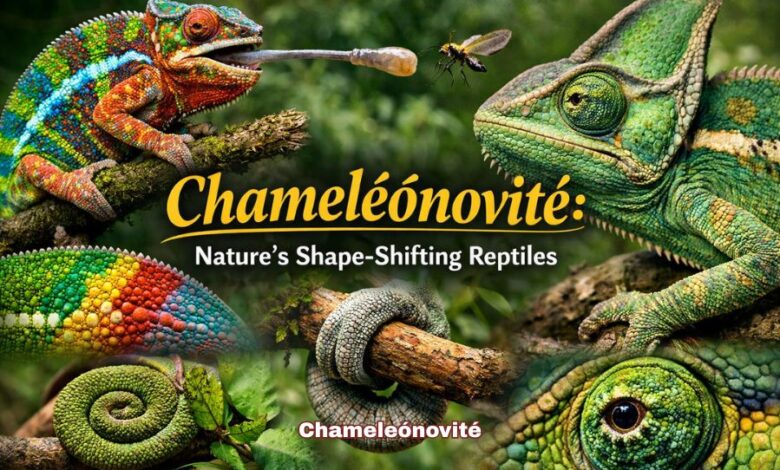
The reptile family known as Chameleónovité, scientifically called Chamaeleonidae, represents one of the most unusual and specialized branches of the reptilian world. These creatures have fascinated scientists, storytellers, and nature lovers for centuries because of their seemingly magical abilities and alien-like anatomy. Native primarily to Africa and Madagascar, with a few species extending into southern Europe, the Middle East, India, and Sri Lanka, chameleons have evolved into masters of survival in arboreal environments. Their bodies are not simply adapted for life in trees — they are engineered for it in ways that few other animals can match. The independent eye movement, lightning-fast tongue projection, grasping feet, and prehensile tail together form a toolkit that allows these reptiles to hunt efficiently while remaining almost invisible to predators. The name Chameleónovité itself evokes mystery, transformation, and adaptability, qualities that have turned these animals into symbols across cultures. Yet beyond their reputation lies a complex biological story that reveals how evolution can produce extraordinary solutions to environmental challenges.
Evolutionary Origins and Classification
The family Chameleónovité belongs to the order Squamata, which also includes lizards and snakes, but their evolutionary path diverged millions of years ago. Fossil evidence suggests that early chameleon ancestors originated in Africa, later spreading to Madagascar where an extraordinary diversification occurred. Today, Madagascar alone hosts roughly half of all known species, including some of the smallest reptiles on Earth, such as leaf chameleons that can sit comfortably on a human fingertip. Classification within the family is based on physical characteristics, genetic relationships, and geographic distribution. Scientists recognize several genera, each adapted to specific ecological niches, from rainforest canopy dwellers to ground-living forest species. This diversity illustrates how isolation, climate variation, and habitat specialization drive evolutionary change. Unlike many reptiles that rely on speed or strength, Chameleónovité evolved toward stealth, precision, and camouflage, demonstrating that survival does not always depend on brute force. Their slow movement, rocking gait that mimics swaying leaves, and cryptic coloration reflect millions of years of fine-tuning to arboreal life.
The Science of Color Change
Perhaps the most famous trait of Chameleónovité is their ability to change color, but this phenomenon is far more sophisticated than simple camouflage. Their skin contains multiple layers of specialized cells, including chromatophores and iridophores, which manipulate pigments and light reflection. By adjusting the spacing of nanocrystals within these cells, chameleons can alter how light is reflected, producing colors ranging from muted earth tones to brilliant blues, reds, and yellows. Color change serves many functions beyond hiding. It is a visual language used for communication, expressing mood, stress, temperature regulation, and social status. A dominant male may display vivid patterns to intimidate rivals or attract females, while a frightened individual may darken dramatically. Temperature also plays a role, as darker colors absorb more heat in cooler conditions. This dynamic skin system represents one of the most advanced biological color technologies in nature, inspiring research in materials science and adaptive camouflage technologies.
Extraordinary Anatomy and Hunting Techniques
Beyond color change, the anatomical features of Chameleónovité are nothing short of remarkable. Their independently rotating eyes allow nearly complete panoramic vision, enabling them to monitor their surroundings without revealing movement. Each eye can focus on a different object simultaneously, but when prey is detected, both eyes converge to calculate precise distance. The projectile tongue then launches at astonishing speed, powered by elastic energy stored in specialized tissues rather than muscle contraction alone. This mechanism allows the tongue to extend up to twice the animal’s body length in a fraction of a second, ending with a sticky tip that secures the prey. Equally important are their zygodactylous feet, with toes fused into opposing groups that function like clamps for gripping branches. Combined with a muscular prehensile tail, this creates exceptional stability in complex three-dimensional environments. Many species also possess a casque, a helmet-like crest on the head that may aid in thermoregulation, water collection, or species recognition. Together, these traits make chameleons highly efficient ambush predators perfectly suited to life above the forest floor.
Behavior, Lifestyle, and Communication
Chameleons are typically solitary animals, interacting with others primarily during mating periods. Territorial males may engage in dramatic visual displays, inflating their bodies, changing colors, and opening their mouths to appear larger and more intimidating. Physical combat is rare because these displays often resolve conflicts without direct confrontation. Their slow, deliberate movements are not signs of weakness but strategic adaptations that conserve energy and reduce detection. Unlike many reptiles that bask openly, chameleons often move gradually through foliage, blending seamlessly into their surroundings. Communication relies heavily on visual signals rather than sound or scent. Color patterns, body posture, and head movements convey messages about dominance, readiness to mate, or submission. This reliance on visual communication underscores the importance of good eyesight and color perception within the family Chameleónovité.
Reproduction and Development
Reproductive strategies among Chameleónovité vary depending on species and habitat. Most species are egg-laying, with females digging holes in soil or leaf litter to deposit clutches that may range from a few eggs to dozens. After laying, the female covers the nest carefully and leaves, providing no further parental care. Incubation periods can last from several months to over a year, influenced by temperature and humidity. Some species, particularly those in cooler mountainous regions, give birth to live young, an adaptation that protects developing embryos from harsh environmental conditions. Hatchlings are miniature replicas of adults, fully capable of climbing and hunting tiny insects immediately after emerging. However, survival rates are low due to predation and environmental hazards, meaning only a small fraction reach maturity. This high mortality is balanced by relatively large clutch sizes in egg-laying species.
Chameleons in Human Culture and Captivity
The mysterious nature of Chameleónovité has made them powerful symbols in art, folklore, and modern media. They often represent adaptability, transformation, patience, or hidden identity. In some cultures, they are seen as wise observers of the natural world, while in others they symbolize unpredictability. In recent decades, chameleons have also become popular exotic pets, though they require highly specialized care. Proper husbandry involves vertical enclosures with abundant climbing structures, controlled humidity, UVB lighting, and a diet of live insects supplemented with vitamins and calcium. Many species are sensitive to stress and do not tolerate frequent handling, making them unsuitable for casual pet owners. Captive breeding programs, however, have helped reduce pressure on wild populations and increased public awareness about their needs.
Conservation Challenges Facing Chameleónovité
Despite their popularity, many chameleon species face serious threats in the wild. Habitat destruction due to deforestation, agricultural expansion, and urban development is the most significant factor. Madagascar, home to the greatest diversity of Chameleónovité, is experiencing rapid environmental degradation that threatens numerous endemic species. Climate change adds further pressure by altering temperature and rainfall patterns essential for their survival. Illegal wildlife trade also contributes to population declines, as some species are collected for the pet market. Conservation efforts include habitat protection, trade regulation, research, and community education programs. Protecting chameleons ultimately means protecting the ecosystems they inhabit, as they serve as indicators of environmental health and biodiversity.
Conclusion
The family Chameleónovité represents one of nature’s most astonishing examples of evolutionary innovation. From their color-changing skin and independently moving eyes to their lightning-fast tongues and specialized climbing adaptations, chameleons embody the concept of transformation in both biological and symbolic terms. They remind us that survival in nature often depends on subtlety, precision, and balance rather than strength alone. As human activities continue to reshape the planet, understanding and protecting these remarkable reptiles becomes increasingly important. Preserving Chameleónovité is not only about saving a single group of animals but also about maintaining the rich ecological tapestry that supports life on Earth.
(FAQs)
What does Chameleónovité mean?
Chameleónovité is the Slovak and Czech term for the reptile family Chamaeleonidae, which includes all chameleon species.
Do chameleons change color only for camouflage?
No, color change is used for communication, temperature regulation, mood expression, and social signaling in addition to camouflage.
Where are most chameleon species found?
The majority live in Madagascar and mainland Africa, though some species occur in parts of Europe, the Middle East, and Asia.
Are chameleons good pets for beginners?
Generally no, because they require precise environmental conditions, specialized lighting, and careful handling to remain healthy.
Why are chameleons important to ecosystems?
They help control insect populations and serve as indicators of environmental health due to their sensitivity to habitat changes