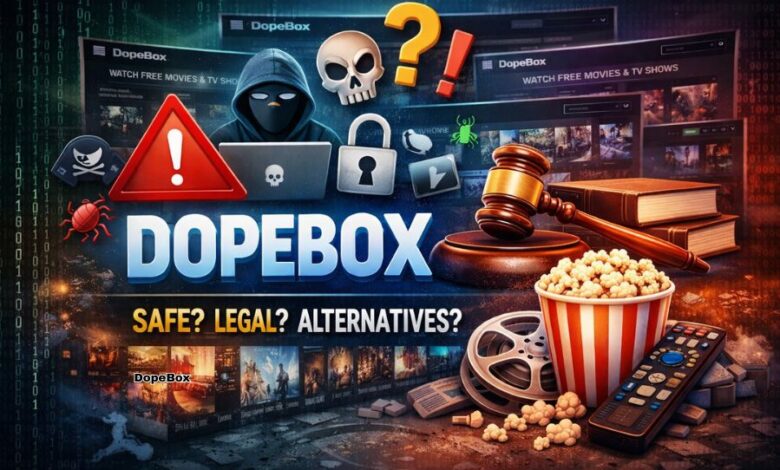
DopeBox Explained: Is It Safe, Legal, and Why Are There So Many DopeBox Websites?

DopeBox has become a familiar name for people searching online for free movies and TV shows. Its popularity comes from a simple promise: open a website, pick a title, and start watching without paying for a monthly subscription. For many users, that sounds like the perfect shortcut around rising streaming costs and endless sign-up pages. But the more closely people look at DopeBox, the more confusing it becomes. Unlike Netflix, Disney+, or Prime Video, DopeBox does not present itself as a mainstream licensed entertainment company. Instead, the name appears across different domains and similar-looking websites, which makes many users wonder whether they are visiting the same platform or just another copy using the same branding.
That confusion matters because DopeBox is not just a question of convenience. It is also a question of trust, legality, and digital safety. When people search “Is DopeBox safe?” or “Why are there so many DopeBox websites?” they are really asking whether free access is worth the uncertainty that comes with it. That is why this article looks at the full picture: what DopeBox is, how it works, why the brand appears in so many places, what makes it attractive, what risks users should understand, and which legal alternatives offer a safer way to stream.
What Is DopeBox?
At its core, DopeBox is the name used by sites that offer browser-based access to movies and television content for free. The main DopeBox site currently indexed in search results says users can watch and download thousands of movies and TV shows, often in high resolution, with no ads and no complicated sign-up process. That message explains why the name spreads quickly online: the platform is marketed as easy, fast, and full of content. For users tired of paid subscriptions, that kind of pitch is extremely appealing.
However, the key point is that DopeBox is not presented as a licensed streaming service. In fact, one of the most important details comes from the site itself: its FAQ states that DopeBox is “not a legal site” because the content offered for free streaming is pirated. That is a major difference from legitimate platforms that pay for licensing rights and operate through formal distribution agreements. So while DopeBox may look polished on the surface, it exists in a very different category from official streaming companies.
Why Are There So Many DopeBox Websites?
One reason people get confused about DopeBox is that the same name appears on multiple domains. A DopeBox-branded page explains that websites like it may go offline or become inaccessible because of copyright enforcement, hosting problems, or domain restrictions, and that they may continue operating through new domains or mirror sites. That means the brand is not tied to one stable web address in the way a legal streaming business usually is. Instead, it can shift, reappear, and be copied across different URLs.
The confusion goes even further because the name is now used in places that are not part of the same streaming network. A Google Play app called “Dope Box AIMovies & TV Shows” explicitly says it is a standalone AI platform and has no affiliation with the legacy Dopebox streaming network, its active domains, or related mirror sites. That disclaimer is revealing. It shows that the DopeBox name has become so fragmented online that even unrelated products feel the need to distance themselves from it. For the average user, that means typing “DopeBox” into a search engine may bring up a mix of mirror sites, unofficial lookalikes, unrelated apps, and copied branding.
How Does DopeBox Work?
Most DopeBox websites are built for simplicity. A visitor lands on the homepage, searches for a movie or series, clicks a title, and starts streaming inside the browser. The platform design usually imitates the user-friendly feel of well-known services by offering search tools, genre sections, trending titles, and episode pages. This smooth presentation is part of the reason DopeBox attracts attention. It tries to remove friction and make streaming feel instant.
But the smooth front-end experience should not be confused with the kind of stable business model used by legal services. DopeBox pages describe themselves as free streaming platforms that provide broad access to films and shows without subscriptions, which suggests a model built around unauthorized distribution rather than licensed catalog management. In practice, that means the viewing experience can depend on changing domains, unstable hosting arrangements, and a network that is harder to verify or trust. What looks easy for the viewer may be structurally unreliable behind the scenes.
Why Is DopeBox So Popular?
The answer is simple: free access remains one of the strongest forces on the internet. When a site tells users they can watch movies and TV shows without paying, without registering, and without dealing with subscription fatigue, it naturally attracts attention. DopeBox also markets itself around fast loading, high-quality playback, and a large library, which makes it even more attractive to people who want entertainment with as few barriers as possible.
There is also a practical reason behind its popularity. Many viewers now feel overwhelmed by how fragmented legal streaming has become. A single person may need several subscriptions to watch everything they want, and even then some titles remain unavailable in certain regions. A site like DopeBox becomes popular because it appears to solve all of those problems at once. That does not make it trustworthy, but it does explain why the name is searched so often and why mirrors keep resurfacing whenever one domain disappears.
Is DopeBox Safe?
This is the most important question, and the honest answer is that DopeBox should not be treated as fully safe. Even if one version of the site looks clean and easy to use, the broader environment of illegal streaming comes with real cybersecurity risks. The U.S. Federal Trade Commission warns that websites, apps, and add-ons offering illegal movies and TV shows can infect devices with malware. The FTC explains that malware can steal personal information, including usernames, passwords, bank account details, and other sensitive data. That warning is not about one specific brand only; it applies to the wider ecosystem of unofficial free streaming services that attract users by offering pirated content.
More recent anti-piracy research points in the same direction. In July 2025, the Alliance for Creativity and Entertainment published a study saying consumers using piracy sites were, in the worst case, up to 65 times more likely to encounter malware than users of legitimate websites. The same research found that piracy sites overall carried cyber-threat risk more than 22 times higher than mainstream legitimate sites on average, with streaming piracy among the riskiest categories. That does not mean every single visit will instantly harm a device, but it does mean the risk profile is significantly higher than what users face on official platforms.
Is DopeBox Legal?
From a legal perspective, DopeBox sits on weak ground. The strongest evidence again comes from the platform itself, because the DopeBox FAQ openly says the site is not legal and describes the content as pirated. That is far more direct than the language used by real licensed platforms, which clearly operate under formal rights agreements and public terms of service. When a site acknowledges that its free streaming catalog is pirated, users should take that statement seriously.
The exact consequences for viewers can vary by country, but the central issue remains the same: DopeBox is not a licensed mainstream streaming service. That means users should not confuse availability with legitimacy. A movie being easy to stream does not mean the platform has permission to distribute it. For anyone who values transparency, reliability, and lower legal uncertainty, this alone is a strong reason to stay cautious.
Why Mirror Sites Make the Risk Bigger
Mirror sites do more than create confusion. They also make it harder for users to know whether they are looking at a familiar site, an imitation, or something worse. Because DopeBox-style sites can move between domains or reappear under new addresses, ordinary visitors may end up trusting the brand name without being sure who is actually operating the page. That uncertainty is exactly where scams, misleading redirects, fake download prompts, and unsafe clones can grow.
This is one of the biggest differences between a legal streaming brand and an unstable mirror-based network. A licensed platform builds trust through stable ownership, official apps, public policies, and predictable customer support. A mirror ecosystem does the opposite. It keeps changing shape, which makes user trust more emotional than verifiable. That is why the question is not only “Does DopeBox work?” but also “Which DopeBox is this, and who is behind it?” In many cases, users cannot answer that with confidence.
Better Legal Alternatives to DopeBox
People are often drawn to DopeBox because they want free entertainment, not because they specifically want piracy risks. The good news is that legal free options do exist. Tubi describes itself as a free movie and TV streaming service, and Pluto TV promotes free movies, TV shows, and live TV online. These services are ad-supported rather than subscription-based, which means users can still watch without paying a monthly fee while staying inside a licensed ecosystem.
Legal alternatives may not always offer the newest blockbuster titles in exactly the same way unofficial sites do, but they provide something more important: clarity. With legal platforms, viewers know who operates the service, how the content is funded, what the policies are, and what kind of safety standards are in place. That makes them the smarter long-term choice for anyone who wants free streaming without the same level of malware, fraud, and legal uncertainty attached to unofficial sites.
Conclusion
DopeBox has become popular because it promises the exact things modern viewers want most: free access, quick playback, no complicated registration, and a wide content library. But that convenience comes with serious trade-offs. The name appears across multiple websites, the domains can change, even unrelated apps now distance themselves from the brand, and the site itself acknowledges that its streaming content is pirated. On top of that, official warnings from the FTC and recent ACE research show that piracy sites expose users to much greater cyber risk than legitimate platforms.
So, is DopeBox popular? Yes. Is it the same as a safe, legal, trustworthy streaming platform? No. The smarter choice for most viewers is to use legitimate free services like Tubi or Pluto TV, where the experience may include ads but the risks are far easier to understand and manage. In the end, free entertainment sounds attractive, but when the source is unstable and unofficial, the hidden cost can be much higher than it first appears.
(FAQs)
What is DopeBox?
DopeBox is a name used by free streaming websites that offer movies and TV shows through a browser without a subscription. The main DopeBox site says it provides thousands of titles for free streaming and downloading.
Why are there so many DopeBox websites?
A DopeBox-branded page says sites like it may switch domains or operate through mirrors because of copyright enforcement, hosting issues, or restrictions, which is why users often see many DopeBox versions online.
Is DopeBox safe to use?
It should be approached with caution. The FTC warns that illegal streaming sites and apps can expose users to malware, and ACE research found piracy sites carry much higher cyber risk than legitimate websites.
Is DopeBox legal?
The DopeBox FAQ itself says the site is not legal because the content is pirated, which means it is not a licensed mainstream streaming platform.
What are the best legal alternatives to DopeBox?
Tubi and Pluto TV are two well-known legal free streaming options that offer movies, TV shows, and in Pluto TV’s case, live TV as well