Cynthia Blaise: The Quiet Hollywood Expert Behind Real Voices and Authentic Performances

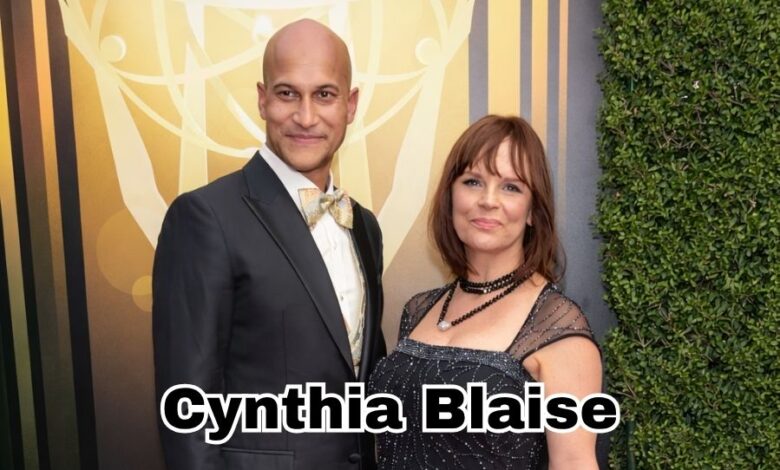
In Hollywood, fame usually belongs to the people standing in front of the camera, but some of the most important work happens far away from the spotlight. That is where Cynthia Blaise built her reputation. She is not the kind of celebrity whose face appears everywhere online, yet her contribution to film, television, and performance training is far more significant than many people realize. Public records identify her as an actress, voice and speech trainer, and dialect coach, a combination that already says a great deal about the kind of career she chose. Rather than chasing visibility, she appears to have focused on craft, discipline, and the technical side of performance, helping actors sound convincing and emotionally believable on screen.
For many readers, the name Cynthia Blaise first became familiar because of her former marriage to comedian and actor Keegan-Michael Key. That connection brought her into public discussion, but it does not define the full scope of her story. Long before celebrity media made her personal life a topic of curiosity, she had already developed a serious professional identity in acting, speech training, and dialect work. Her story is especially compelling because it highlights a truth many audiences overlook: a believable performance is not built by talent alone. It also depends on voice, rhythm, accent, breath, and the subtle musicality of speech. People like Blaise help shape all of that, even when their names remain largely unknown to the public.
Early Life and Education of Cynthia Blaise
One reason Cynthia Blaise continues to attract attention is that much of her early private life remains out of the public eye. Reliable public sources reveal only limited personal details, and that makes it important to separate what is documented from what is merely repeated online. IMDb lists her birth date as January 12, 1958, while her professional biography through the International Dialects of English Archive focuses much more on her education and professional training than on personal history. That profile states that she earned a BA in Theatre from the University of Oregon and an MFA in Acting from the University of California, Irvine, where she studied under the influential theatre director Jerzy Grotowski. These details suggest that her career was built on rigorous artistic study rather than celebrity access or chance visibility.
That educational background matters because dialect coaching is a highly specialized discipline. It is not simply about teaching someone how to copy an accent. It requires a deep understanding of performance, speech mechanics, listening skills, vowel placement, rhythm, and emotional truth. A weak imitation can sound artificial within seconds, while a well-trained performance can make a character feel entirely real. Blaise’s training in theatre and acting gave her the kind of foundation needed for that level of precision. Her IDEA biography also notes that she became a Certified Associate in Fitzmaurice voice work, which is a respected approach in actor voice training. This points to a career shaped by expertise and method, not just participation in the entertainment industry.
Building a Career Beyond the Spotlight
What makes Cynthia Blaise especially interesting is that she did not seem to pursue the most obvious path to public fame. Many people in entertainment aim to become stars, but Blaise built a quieter and, in some ways, more enduring identity. According to the IDEA profile, she is an award-winning actor, director, and voice and speech trainer. That wording alone reflects the breadth of her work. She was not restricted to a single title or a single part of the industry. Instead, she moved across acting, teaching, directing, and coaching, building a career around the many layers of performance rather than only the visible ones.
Her academic background also shaped that path. The same profile states that she taught voice, speech, and acting for 14 years at institutions including Temple University, Wayne State University, and the University of Illinois at Chicago. This is an important part of her story because it shows that she was not only working with performers professionally, but also training future actors in formal educational settings. Teaching for that length of time requires mastery, patience, and credibility. It also shows that Blaise belonged to a world where artistic skill is studied, refined, and passed on. In an industry often defined by publicity, her connection to education gives her career a deeper and more lasting dimension.
Cynthia Blaise as a Dialect Coach
The role of a dialect coach is often misunderstood by the public. Audiences notice when an accent sounds wrong, but they rarely think about the person who made it sound right. That is exactly where Cynthia Blaise’s work becomes so meaningful. Her published article, Dialect Coaching for the Camera, appeared in Voice and Speech Review in 2003, and the journal listing identifies her as an associate professor at the University of Illinois at Chicago as well as an actor, director, and voice and dialect coach. This matters because it shows she was not only practicing the craft but also writing about it in a serious professional context. She understood dialect coaching as both an art and a discipline.
That kind of work can completely change a performance. An accent is not just a sound effect added to a character. It influences identity, class, geography, social history, confidence, and the emotional rhythm of speech. A good dialect coach helps an actor move past imitation and into full embodiment. That is likely why Blaise’s behind-the-scenes work stands out as such a valuable part of her career. It reflects a professional who understood how voice shapes character and how language can make storytelling either believable or distracting. In many ways, dialect coaching is one of Hollywood’s least visible but most essential crafts, and Blaise appears to have built real authority in that space.
Acting and Screen Credits
Although Cynthia Blaise is often discussed for her coaching work, she also has acting credits of her own. IMDb lists her as an actress known for Star Trek V: The Final Frontier from 1989, Miami Vice from 2006, and Hardcore Henry from 2015. These credits show that she was not only advising performance from the outside but also participating in the world of screen acting herself. That dual perspective is important because actors often respond well to coaches who understand performance from direct experience, not just theory. Blaise’s acting background likely gave her an edge when working with performers who needed accent or speech guidance under the pressure of a real production environment.
Other publicly available credits add more depth to her professional résumé. TV Guide’s credits page lists her as connected to dialect or dialogue coaching on productions including The Tiger Hunter, Blackhat, Bad Teacher, Faster, 8 Mile, Timeline, Polish Wedding, The Spitfire Grill, and Miami Vice. Even without the kind of celebrity recognition attached to lead actors, that is a substantial record of work. It shows that her name has been tied to projects across genres and over many years, which suggests reliability and long-term trust within the industry. That type of career may be quieter than stardom, but it is often the mark of someone whose skills are consistently respected.
Public Attention and Her Marriage to Keegan-Michael Key
It would be incomplete to discuss Cynthia Blaise without mentioning the chapter of her life that brought her the most public attention. PEOPLE reported that she and Keegan-Michael Key married on December 27, 1998, agreed to a separation date of November 15, 2015, and finalized their divorce in November 2017. Those details became widely repeated in entertainment coverage, and for many people that personal story was their introduction to her name. Yet it is important to remember that by the time the divorce became public news, Blaise already had a long professional history in acting, coaching, and teaching.
This is where media attention can sometimes distort a person’s identity. When coverage focuses heavily on a marriage or divorce, it can reduce someone with a full career to a single relationship label. In Blaise’s case, that would be unfair. The available record shows that she had already established herself as a skilled voice and speech trainer, educator, and industry professional. Her story deserves to be understood on those terms first. Personal headlines may have amplified public curiosity, but they do not outweigh the substance of her work.
Why Cynthia Blaise Still Matters
The career of Cynthia Blaise matters because it reminds us that entertainment is a collaborative art. Audiences tend to remember the face, the costume, or the line delivery, but all of those things are shaped by people whose names may never become famous. Blaise represents that hidden layer of excellence. She worked in a field where subtlety is everything, where one sound can change how truthful a performance feels. Her background in theatre, teaching, acting, and voice work placed her in a unique position to help actors sound authentic, not performative.
She also represents a different definition of success. Not every meaningful Hollywood career leads to public celebrity. Some are built through respect, technical mastery, and years of consistent contribution. That seems to be the case with Blaise. The IDEA archive also shows that she contributed recordings and commentary to dialect documentation projects, which reflects her deeper connection to the study and preservation of spoken language. In that sense, her work reaches beyond film sets and classrooms. It becomes part of a larger effort to understand how people really speak and how voice communicates identity. That is a lasting contribution, even if it is quieter than fame.
Conclusion
Cynthia Blaise may not be a conventional Hollywood celebrity, but her career tells a richer and more impressive story than many public figures ever manage to build. She trained seriously, acted professionally, taught for years, published on dialect coaching, and contributed to productions in ways audiences often never notice directly. Her life also shows the difference between fame and value. Fame is visible, but value is often created in the quiet, demanding work that supports everyone else. That is where Blaise appears to have made her mark. She is best understood not simply as a public name connected to a celebrity marriage, but as a talented artist, educator, and dialect coach whose influence helped make performances more real.
(FAQs)
Who is Cynthia Blaise?
Cynthia Blaise is an actress, voice and speech trainer, and dialect coach known for her work in film, television, and academic performance training.
What is Cynthia Blaise known for?
She is known for acting credits such as Star Trek V: The Final Frontier, Miami Vice, and Hardcore Henry, as well as for behind-the-scenes dialect and dialogue coaching on multiple screen projects.
Was Cynthia Blaise married to Keegan-Michael Key?
Yes. PEOPLE reported that the couple married in December 1998 and finalized their divorce in November 2017.
What did Cynthia Blaise study?
Her professional biography states that she earned a BA in Theatre from the University of Oregon and an MFA in Acting from the University of California, Irvine.
Why is her work important in Hollywood?
Her work matters because dialect and voice coaching help actors sound natural and believable, which can make a major difference in the overall quality of a performance