Michael Byrne: Remembering the Versatile British Actor Who Made Every Role Unforgettable

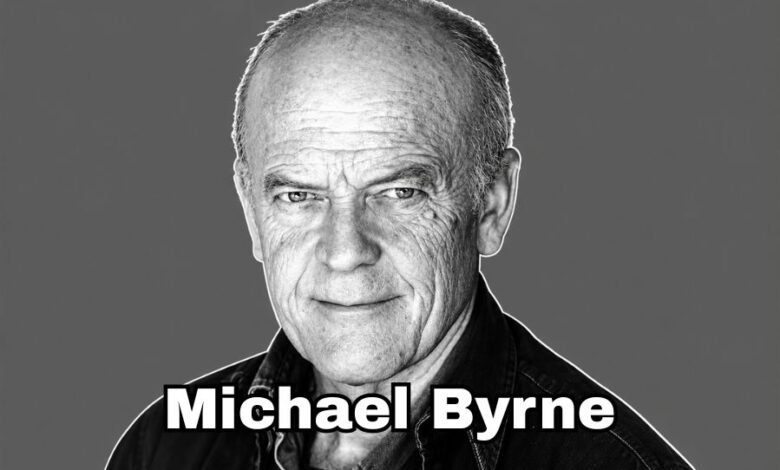
Michael Byrne was a highly respected British character actor whose remarkable career lasted for more than six decades. He worked across theatre, television, radio and cinema, building a reputation as one of Britain’s most reliable and convincing performers. Although he was not usually placed at the centre of publicity, his strong screen presence made him difficult to forget.
Byrne became especially well known for playing military officers, villains, government officials and powerful authority figures. His controlled voice, serious expressions and sharp delivery allowed him to create tension without using exaggerated acting. Even when he appeared in only a few scenes, he could give his character a clear personality and an important place in the story.
International audiences recognised him from major films such as Indiana Jones and the Last Crusade, Braveheart, Tomorrow Never Dies, Gangs of New York and Harry Potter and the Deathly Hallows – Part 1. However, his career was much wider than these popular titles. He was also a trained stage actor who worked with Laurence Olivier’s National Theatre Company and performed at several respected British theatres.
Michael Byrne died on 20 June 2026, bringing an extraordinary acting journey to an end. His death was widely reported when he was 82 years old. While he is no longer present, his performances remain part of British film, television and theatre history.
Michael Byrne’s Early Life and Background
Michael Byrne was born in London and spent his early years in the Hampstead area. His mother, Helen Byrne, came from Kilkenny in Ireland and raised him as a single parent. His childhood was not shaped by fame, wealth or powerful entertainment connections. Instead, his path into acting developed through education, discipline and personal determination.
From an early age, Byrne showed an interest in performance and communication. He later studied acting at the Central School of Speech and Drama, one of Britain’s most respected training institutions. His education helped him develop the vocal control, body language and emotional understanding needed for professional acting.
This training became important throughout his career. Byrne was able to move between classical theatre and modern cinema because he understood the different demands of each form. On stage, he needed to project his voice and hold the attention of a live audience. In film and television, he could use smaller expressions and quieter movements to communicate emotion.
His early experiences gave him a strong professional foundation. He did not become successful overnight, but he slowly built a career through carefully chosen roles and consistent performances.
The Start of Michael Byrne’s Theatre Career
Before becoming a familiar face in international films, Michael Byrne gained valuable experience in theatre. During the early 1960s, he toured Ireland with the Arena theatre company. Touring required energy, patience and flexibility because actors often performed in different locations under changing conditions.
A major step forward came when Byrne joined Laurence Olivier’s National Theatre Company at the Old Vic. This was an important achievement for a young actor. The company included some of Britain’s greatest performers, and working in that environment allowed Byrne to observe experienced actors and improve his craft.
He appeared in productions such as The Recruiting Officer, The Royal Hunt of the Sun and Trelawny of the Wells. Even when he was not playing the leading role, his work gave him practical knowledge of timing, movement and character development.
Byrne later performed at the Royal Court, the Young Vic, the Royal Exchange in Manchester and several West End venues. His stage career included classical plays, modern drama and experimental productions. This variety showed his willingness to take risks rather than remain limited to one type of character.
Theatre remained important to him throughout his life. Even after becoming known for blockbuster films, he continued returning to the stage and accepting challenging roles.
Why Michael Byrne Was Perfect for Authority Figures
Michael Byrne had a natural ability to portray men in positions of power. His serious face, clear speech and controlled behaviour made him especially believable as a military commander, political official or strict leader.
During the 1970s, he appeared in several major war films. These included The Eagle Has Landed, A Bridge Too Far and Force 10 from Navarone. Such productions often required actors to create convincing military characters within large casts and complicated stories.
Byrne rarely played these roles in exactly the same way. One officer might appear calm and confident, while another could be nervous, cruel or morally uncertain. He looked beyond the costume and attempted to understand the person behind the uniform.
His ability to communicate danger through small details made him particularly effective. He did not always need loud dialogue or dramatic movement. A pause, a stare or a slight change in his voice could make a scene feel threatening.
This quality later helped him succeed in several internationally successful films. Directors trusted him because he could quickly establish a character and strengthen the atmosphere of a story.
Michael Byrne in Indiana Jones and the Last Crusade
Michael Byrne’s most famous film role came in 1989 when he played Colonel Ernst Vogel in Indiana Jones and the Last Crusade. The popular adventure film starred Harrison Ford as Indiana Jones and Sean Connery as his father, Professor Henry Jones.
Colonel Vogel was a dangerous Nazi officer involved in the search for the Holy Grail. Byrne played him as a cold, disciplined and brutal man who believed strongly in his own authority. His calm performance made the character more frightening because Vogel did not appear uncertain or emotional.
One of the film’s best-known scenes involved a long action sequence on a moving tank. Indiana Jones fought Vogel while attempting to protect his father and stop the Nazis. The confrontation gave Byrne an important place in one of the most memorable parts of the film.
His performance stood out even though the production included several major stars. Byrne understood that a strong villain needed to feel believable rather than exaggerated. He created a serious threat while still allowing Harrison Ford’s hero to remain the centre of the story.
For many viewers around the world, Colonel Vogel became the role most closely connected with Michael Byrne.
His Role in Braveheart
In 1995, Byrne appeared in the historical film Braveheart, directed by and starring Mel Gibson. He played Smythe, an English soldier connected to a violent event that helps shape William Wallace’s decision to fight against English control.
Although Byrne’s role was not large, it was important to the emotional direction of the story. Smythe represented cruelty, abuse of power and the danger faced by ordinary people under military rule.
Byrne made the character disturbing without turning him into a simple cartoon villain. His controlled performance gave the scene greater seriousness and helped audiences understand why William Wallace’s anger became so powerful.
This role once again proved that Byrne did not need extensive screen time to make an impact. He knew how to enter a scene, establish a character and leave a lasting impression.
Appearing in Tomorrow Never Dies
Michael Byrne became part of another major film series when he appeared in the 1997 James Bond adventure Tomorrow Never Dies.
He played Admiral Kelly, a senior Royal Navy officer involved in the growing international conflict created by media businessman Elliot Carver. Pierce Brosnan starred as James Bond, while Jonathan Pryce played the main villain.
Admiral Kelly was different from many of Byrne’s darker characters. He was not an enemy but a responsible military leader trying to protect British interests during a dangerous crisis.
The role made good use of Byrne’s authoritative presence. He looked and sounded believable as a senior officer, helping the military scenes feel more realistic. His appearance may have been supporting in nature, but it added strength and credibility to the film.
By joining the James Bond franchise, Byrne became connected with another important part of British popular culture.
Gangs of New York and Other Film Work
Michael Byrne continued appearing in major films throughout the later years of his career. In 2002, he had a role in Martin Scorsese’s Gangs of New York, a large historical drama starring Leonardo DiCaprio, Daniel Day-Lewis and Cameron Diaz.
He also appeared in The Sum of All Fears, a political thriller released during the same year. Other film credits included The Medusa Touch, The Good Father, Proof of Life, Apt Pupil and Mortdecai.
His performance in Apt Pupil was particularly meaningful because he played a Holocaust survivor who recognised a former Nazi criminal. This gave Byrne an opportunity to move away from the German officers he had often played and portray someone affected by the violence of that period.
Across these films, Byrne showed that he could fit naturally into different genres. He worked in adventure films, historical dramas, thrillers, fantasy productions and dark character stories.
His reliability allowed him to remain active in an industry that often changes quickly. He could adjust to new directors, new acting styles and new generations of performers without losing his own identity.
Michael Byrne as Gellert Grindelwald
A younger audience discovered Michael Byrne when he appeared in Harry Potter and the Deathly Hallows – Part 1 in 2010.
He played the older version of Gellert Grindelwald, a powerful dark wizard with an important connection to Albus Dumbledore. Earlier in his life, Grindelwald had become one of the most dangerous figures in the wizarding world. In the film, however, he was shown as an elderly prisoner at Nurmengard.
Lord Voldemort visited him while searching for information about the Elder Wand. Byrne’s scene was brief, but his facial expressions and voice gave the character mystery, courage and a strange sense of amusement.
He made Grindelwald appear physically weak because of age, yet mentally difficult to control. The performance suggested that the prisoner understood more than he was willing to reveal.
This role demonstrated one of Byrne’s greatest strengths. He could take a short scene and make it feel important through careful acting.
A Long and Varied Television Career
Michael Byrne was also a familiar face on British television. He appeared in numerous dramas, mysteries and historical productions throughout his career.
One of his notable television roles came in Smiley’s People, the acclaimed spy drama starring Alec Guinness. The series required quiet and intelligent performances, making it well suited to Byrne’s controlled style.
He also appeared in programmes such as A Touch of Frost, Midsomer Murders, Waking the Dead, Casualty, Sharpe and The Mists of Avalon. These roles introduced him to viewers who may not have followed his theatre or cinema work.
Between 2008 and 2010, Byrne played Ted Page in Coronation Street. Ted was Audrey Roberts’ former partner and Gail Platt’s long-absent father. The character allowed Byrne to show a warmer, more emotional and sometimes humorous side of his personality.
His work in Coronation Street proved that he was not limited to military officers and villains. He could also play an ordinary man dealing with family relationships, regret and ageing.
Byrne additionally worked in radio, where his distinctive voice helped him create believable characters without appearing on screen.
Michael Byrne’s Wife and Family
Michael Byrne met actress Carole Nimmons while touring Ireland during the early years of his career. The couple married in 1965 and remained together for more than six decades.
They had two daughters, Tara and Bryony, and Byrne was also survived by three grandchildren. Despite his long career in the public eye, he kept much of his family life private.
He did not appear interested in using personal publicity to increase his fame. Instead, he allowed his professional work to remain the main focus of public attention.
People who knew him remembered a man whose real personality was warmer and more humorous than many of his screen characters. This contrast showed the depth of his acting. Audiences often believed he was cold or frightening because he performed those roles so effectively.
His Continued Commitment to Theatre
Even after achieving international recognition, Michael Byrne continued working on stage. In 2010, he played Romeo opposite Siân Phillips as Juliet in an unusual production at the Bristol Old Vic.
The play reimagined Shakespeare’s famous lovers as older people. It explored love, memory, age and family control through characters who had already lived long lives.
The role showed Byrne’s willingness to accept creative challenges. Rather than depending only on familiar military parts, he continued exploring new ideas and different emotional experiences.
He later appeared in the West End production of Mary Stuart, playing Talbot. His continued stage work reflected his deep respect for theatre and the training that had shaped his career.
Why Michael Byrne’s Career Was Special
The success of Michael Byrne was built on consistency rather than celebrity. He understood that supporting actors were essential to creating believable stories.
He could make a villain dangerous, a soldier convincing or a troubled man emotionally complex. His characters often had limited dialogue, yet he found ways to suggest a complete life beyond the scene.
Byrne also worked across several important periods of British entertainment. He began in classical theatre, appeared in major war films, entered famous Hollywood franchises and later reached younger viewers through Harry Potter.
Few actors manage to remain active across so many decades while continuing to appear in respected productions. Byrne achieved this because he was adaptable, prepared and professional.
He did not need to dominate every scene. Instead, he understood exactly what each role required and delivered it with intelligence.
Conclusion
Michael Byrne was a gifted British actor whose work reached audiences through theatre, television, radio and international cinema. His career lasted for more than sixty years and included memorable appearances in some of the world’s best-known productions.
From Colonel Vogel in Indiana Jones and the Last Crusade to Smythe in Braveheart, Admiral Kelly in Tomorrow Never Dies and the elderly Grindelwald in Harry Potter and the Deathly Hallows – Part 1, Byrne created characters that remained in the minds of viewers.
His greatest strength was his ability to make every role feel believable. He brought seriousness to authority figures, intelligence to villains and emotional truth to troubled characters.
Michael Byrne’s death on 20 June 2026 marked the end of a remarkable life in acting. However, his work continues to show the value of discipline, versatility and quiet professional excellence.
He will be remembered as a powerful character actor who may not always have played the leading role but regularly made the entire production stronger.
(FAQs)
Who was Michael Byrne?
Michael Byrne was a British character actor known for working in theatre, television, radio and films for more than six decades.
What was Michael Byrne’s best-known role?
His most famous role was Colonel Ernst Vogel in Indiana Jones and the Last Crusade.
Who did Michael Byrne play in Harry Potter?
He played the older Gellert Grindelwald in Harry Potter and the Deathly Hallows – Part 1.
Was Michael Byrne in Coronation Street?
Yes, he played Ted Page, the father of Gail Platt and former partner of Audrey Roberts, from 2008 to 2010.
When did Michael Byrne die?
Michael Byrne died on 20 June 2026. He was widely reported to be 82 years old.