Pineapple Upside Down Cake: A Timeless Dessert with Sweet Caramelized Charm

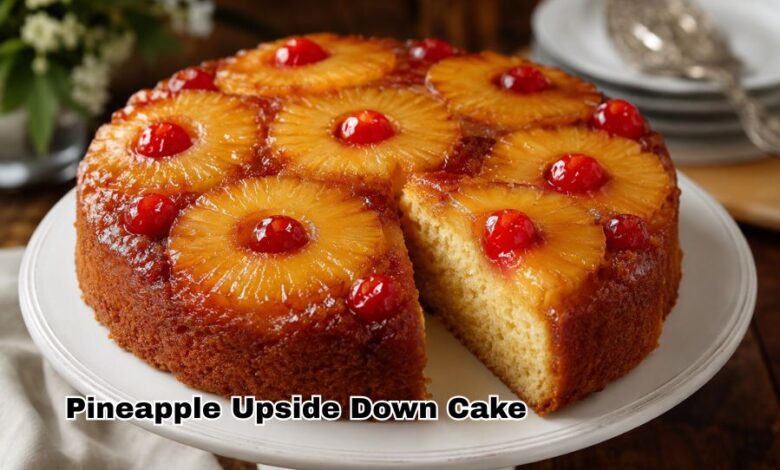
Pineapple upside down cake is one of those desserts that instantly brings warmth, nostalgia, and color to the table. Known for its golden pineapple rings, glossy caramel topping, and soft cake base, this classic treat has earned a special place in American baking history. Unlike ordinary cakes that rely on frosting or elaborate decoration, this dessert decorates itself through a simple yet magical baking method. The fruit and sugar mixture are placed at the bottom of the pan, the cake batter is poured on top, and after baking, the entire cake is flipped over to reveal a bright, sticky, caramelized pineapple topping. This dramatic reveal is part of what makes the cake so memorable. Whether served at family gatherings, holiday dinners, potlucks, birthdays, or casual weekend meals, pineapple upside down cake continues to be loved for its beautiful appearance, tropical flavor, and comforting homemade texture.
What Makes Pineapple Upside Down Cake So Special?
The charm of pineapple upside down cake comes from the way it combines beauty, flavor, and simplicity in one pan. Many cakes require layers, fillings, frostings, piping bags, or advanced decorating skills, but this cake creates its own decoration while it bakes. The pineapple slices, often arranged with bright red maraschino cherries, become the centerpiece once the cake is inverted. Beneath that fruit is a rich mixture of butter and brown sugar that melts into a caramel-like glaze, soaking slightly into the cake and giving every bite a moist, buttery sweetness. The contrast between the tangy pineapple and the soft vanilla cake is what makes this dessert so balanced. It is sweet but not boring, rich but still fruity, and impressive without being complicated. This is why many home bakers consider it a dependable recipe when they want something attractive, familiar, and satisfying.
A Brief History of Pineapple Upside Down Cake
Although upside-down cakes existed before pineapple became the star ingredient, the popularity of canned pineapple in the early twentieth century helped turn this dessert into an American classic. Before modern ovens and nonstick pans became common, people often made skillet cakes by placing fruit and sugar at the bottom of a pan and cooking the batter over heat. When canned pineapple became widely available, it offered a convenient, affordable, and visually appealing fruit option. The round pineapple rings looked decorative, stayed firm during baking, and paired beautifully with brown sugar caramel. Over time, pineapple upside down cake became associated with home kitchens, church suppers, community cookbooks, and family celebrations. Its retro look is still part of its appeal today, reminding many people of recipes passed down from grandparents or served at special occasions during childhood.
Key Ingredients That Create the Classic Flavor
The beauty of pineapple upside down cake is that it uses simple ingredients, yet each one plays an important role. Pineapple rings provide the signature tropical flavor and decorative pattern, while brown sugar and butter create the rich caramelized topping. Maraschino cherries are optional, but they add a pop of color and a traditional vintage appearance. The cake batter usually includes flour, sugar, eggs, butter or oil, baking powder, milk, vanilla extract, and sometimes pineapple juice for extra flavor. Some bakers prefer a light sponge-like texture, while others enjoy a denser, buttery crumb. Using pineapple juice in the batter can deepen the fruit flavor and help keep the cake moist. The best versions are tender without falling apart, sweet without becoming heavy, and sturdy enough to hold the topping after the cake is flipped.
The Importance of the Upside-Down Baking Method
The upside-down technique is the heart of this dessert. Instead of baking a cake and adding fruit later, the fruit is baked directly beneath the batter. This allows the pineapple to soften slightly while absorbing the buttery brown sugar mixture. As the cake rises, the juices and caramel settle into the top layer, creating a glossy finish after inversion. Timing is important when flipping the cake. If it sits too long in the pan, the caramel may harden and stick, making it harder to release cleanly. If it is flipped too quickly, the cake may be too delicate and could break. Most bakers let the cake rest for a short time after removing it from the oven, then carefully invert it onto a serving plate while the topping is still warm and loose. This moment is exciting because the cake transforms from a plain baked surface into a colorful dessert centerpiece.
Tips for Making the Best Pineapple Upside Down Cake
To make a successful pineapple upside down cake, preparation matters. Greasing the pan well helps prevent sticking, especially around the edges where caramel can become thick. Arranging the pineapple neatly before adding the batter ensures the final cake looks attractive. It is also important to spread the batter gently so the fruit pattern does not shift. Using room-temperature ingredients can help the batter mix evenly and create a softer crumb. Another helpful tip is to avoid overbaking. A dry cake can ruin the contrast between the moist topping and tender base. The cake is usually done when a toothpick inserted into the center comes out clean or with only a few moist crumbs. After flipping, any pineapple pieces that stick to the pan can be carefully placed back onto the cake while the topping is still warm.
Fresh Pineapple vs. Canned Pineapple
Both fresh and canned pineapple can be used in pineapple upside down cake, but they create slightly different results. Canned pineapple is the traditional choice because it is convenient, evenly sliced, and packed in juice that can be used in the batter. It also has a consistent sweetness and texture, making it reliable for baking. Fresh pineapple gives a brighter, more natural flavor, but it may be more acidic and can vary in sweetness. If using fresh pineapple, it should be sliced evenly and not too thick, or it may release too much juice and affect the cake’s structure. For a classic look, canned pineapple rings are often preferred, but for a more modern or homemade flavor, fresh pineapple chunks or slices can work beautifully. The choice depends on whether the baker wants a nostalgic presentation or a fresher tropical taste.
Serving Ideas for Pineapple Upside Down Cake
Pineapple upside down cake is delicious on its own, but it can also be served in several appealing ways. Warm slices pair wonderfully with whipped cream, vanilla ice cream, or a light dusting of powdered sugar. For a richer dessert, a drizzle of caramel sauce can enhance the buttery topping, though the cake is already sweet enough for most tastes. It can be served after dinner, with coffee or tea, or as a centerpiece at brunch. Because of its bright fruit topping, it also feels suitable for spring and summer gatherings, though its cozy caramel flavor makes it just as welcome in cooler months. The cake is best served slightly warm or at room temperature, when the topping is soft and glossy and the crumb is tender.
How to Store Pineapple Upside Down Cake
Proper storage helps maintain the flavor and texture of pineapple upside down cake. Because the fruit topping contains moisture, the cake should not be left uncovered for too long. If it will be eaten within a day, it can usually be kept covered at room temperature in a cool place. For longer storage, refrigeration is recommended. The cake should be placed in an airtight container or covered tightly to prevent it from drying out. When refrigerated, it can last for several days, though the texture may become slightly firmer. To restore softness, individual slices can be warmed briefly before serving. Freezing is also possible, but the topping may become softer after thawing, so it is best for situations where appearance is less important than flavor.
Common Mistakes to Avoid
One common mistake when making pineapple upside down cake is using too much liquid in the topping or batter. Pineapple is juicy, and excess moisture can make the cake soggy or prevent it from baking evenly. Another mistake is not allowing the cake to cool for the right amount of time before flipping. Waiting too long can cause sticking, while flipping immediately may cause breakage. Overmixing the batter can also lead to a dense or tough cake because it develops too much gluten. A gentle mixing method produces a softer texture. Bakers should also make sure the serving plate is larger than the cake pan, since warm caramel may drip slightly during inversion. These small details can make the difference between a cake that looks bakery-worthy and one that falls apart during serving.
Why Pineapple Upside Down Cake Remains Popular
The continued popularity of pineapple upside down cake comes from its emotional and practical appeal. It is easy enough for beginners, attractive enough for guests, and flavorful enough to satisfy people who enjoy both fruit desserts and classic cakes. Its retro appearance has never truly gone out of style because it feels cheerful, familiar, and homemade. In a time when many desserts are heavily decorated or complicated, this cake stands out because it is simple but still dramatic. The moment of flipping the cake creates excitement, and the final presentation looks like it required more effort than it actually did. This balance of ease and beauty is one reason the recipe continues to appear in kitchens generation after generation.
Conclusion
Pineapple upside down cake is more than just a dessert; it is a celebration of simple ingredients, clever technique, and timeless flavor. Its caramelized pineapple topping, tender cake base, and beautiful presentation make it a favorite for both everyday baking and special occasions. From its vintage roots to its continued popularity in modern kitchens, this cake proves that a recipe does not need to be complicated to be memorable. With the right balance of fruit, butter, brown sugar, and soft cake, pineapple upside down cake delivers comfort, color, and sweetness in every slice. Whether made with canned pineapple for a classic version or fresh pineapple for a brighter twist, it remains a dessert that feels welcoming, nostalgic, and always worth sharing.
(FAQs)
Can I make pineapple upside down cake ahead of time?
Yes, pineapple upside down cake can be made ahead of time, which makes it useful for parties and gatherings. For the best texture, bake it one day in advance, let it cool completely, cover it well, and store it at room temperature or in the refrigerator depending on your kitchen temperature. Warm it slightly before serving if you want the topping to feel soft and fresh.
Why did my pineapple upside down cake stick to the pan?
The cake may stick if the pan was not greased properly, if the caramel cooled too much before flipping, or if the fruit layer settled firmly into the pan. To prevent this, grease the pan well, use enough butter in the topping, and invert the cake while it is still warm but not extremely hot.
Can I use fresh pineapple instead of canned pineapple?
Yes, fresh pineapple can be used, but it should be sliced evenly and not too thick. Canned pineapple is more traditional and convenient because the rings are uniform and the juice can be added to the batter. Fresh pineapple gives a brighter flavor but may release more liquid during baking.
Should pineapple upside down cake be refrigerated?
If you plan to eat it within a day, it can often stay covered at room temperature in a cool kitchen. For longer storage, refrigeration is better because the fruit topping contains moisture. Keep it tightly covered so the cake does not dry out.
What is the best pan for pineapple upside down cake?
A round cake pan, square baking pan, or cast-iron skillet can all work well. A cast-iron skillet gives a classic look and helps create a rich caramel topping, while a standard cake pan is easier for beginners. The most important thing is to use a pan that is deep enough to hold the topping and batter without overflowing.