Why the Most Interesting Travellers Are Always Chasing a Car or a Plane

Most travellers arrive at a destination and ask what to see. The automotive or aviation collector arrives and already knows — precisely, specifically, with years of research behind the question — why this particular place matters and what it produced that nowhere else on earth could have produced. They are not sightseeing. They are completing a pilgrimage that began the moment they first understood why a specific car or aircraft, from a specific factory or airfield, built or flown in a specific decade, was something worth caring about deeply.
These are the most interesting travellers I know. They plan routes around factory locations, museum opening hours, and the historic airfields where aviation’s defining chapters were written. And they come home with something that no general tourist guide would have suggested: a scale replica of the car or aircraft that made the journey worth taking.
The Pilgrimages Worth Planning a Trip Around — Automotive and Aviation
Maranello, Italy — The Source of Everything Red
Maranello is forty minutes south of Bologna and feels, on approach, like an ordinary northern Italian town. Then the Ferrari Museum announces itself and the ordinary quality dissolves entirely. The Museo Ferrari is the obvious destination — eight decades of road and racing cars in a purpose-built facility that rotates its displays regularly enough to justify repeat visits. But the serious automotive traveller extends beyond the museum: the factory perimeter, the test track access road, the town restaurants where engineers and production workers have eaten since the 1950s. The place is saturated with the history of the cars that were built here, and that saturation is palpable in a way that no museum display can fully replicate.
Kragujevac, Serbia — Where the Yugo Was Born
This is the pilgrimage that most automotive travellers have not yet made — and the one that produces the most unexpected rewards. The Zastava factory in Kragujevac, the Serbian industrial city that produced Yugoslavia’s most famous automotive export, is not a conventional tourist destination. It is a working facility with a history that spans seven decades of production across vehicles nobody outside the Balkans remembers. But for the collector who has a Yugo model car on their shelf — or who has spent time understanding what the Yugo represented in Cold War economic terms and why its American failure tells a more interesting story than its specification suggests — Kragujevac is the most historically loaded automotive destination in Eastern Europe. The town built its identity around the factory. The factory built its identity around a car that the world laughed at and the collector market eventually reassessed with genuine seriousness.
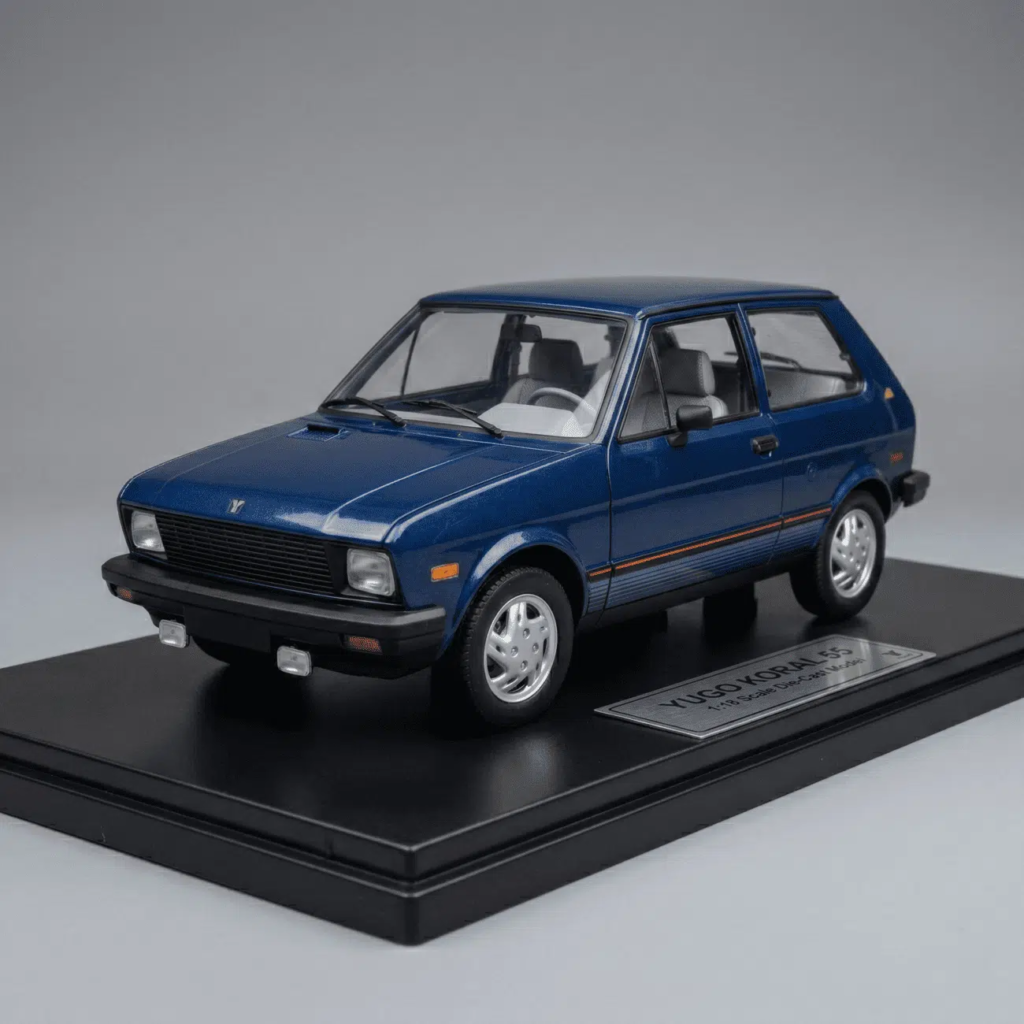
The Yugo’s story — a socialist people’s car built on a Fiat platform, exported to America at $3,990, mocked relentlessly, and then quietly acquired by collectors who understood that cultural specificity is itself a form of historical value — is one of the most compelling in automotive history. Visiting Kragujevac with that story in mind is a completely different experience from visiting it as a general tourist. The factory makes sense. The town makes sense. The car makes sense. And the scale replica that comes home from the trip carries that understanding with it permanently.
Le Mans, France — Where Endurance Became Legend
The Circuit de la Sarthe is both a permanent racing facility and a network of public roads — which means that on non-race days, the automotive traveller can drive sections of the circuit legally. The Musée des 24 Heures du Mans, adjacent to the pit complex, documents the race from 1923 to the present in a collection that makes most other automotive museums look narrowly focused. For the collector whose primary interest is endurance racing — the Ford GT40, the Porsche 917, the Ferrari 330 P4, the Mazda 787B — Le Mans is the destination that puts everything in physical, geographic context.
Kitty Hawk, North Carolina — Where Everything Changed in Twelve Seconds
The Wright Brothers National Memorial at Kill Devil Hills is the most understated significant site in the history of human transport. A granite monument on a modest hill, four markers in the grass indicating where each of the four flights on 17 December 1903 ended, and a replica of the Flyer in a visitor centre that most people walk through in twenty minutes. The serious aviation traveller spends considerably longer. They stand at the first marker — 120 feet from the launch point — and try to recalibrate their understanding of what twelve seconds of flight represented in 1903, twenty-three years after Edison’s lightbulb and forty-four years before Chuck Yeager broke the sound barrier. The distance between those markers is less than the wingspan of a modern Boeing 737. The distance between what those markers represent and the world we inhabit is everything. Commissioning a precision airplane model of the Wright Flyer after visiting Kitty Hawk is not collecting aviation history in the abstract. It is documenting a specific moment of understanding — one that the site produces in any visitor paying the right quality of attention.
What the Serious Automotive Traveller Brings Home
The most considered souvenir from any automotive pilgrimage is a scale replica of the specific vehicle the journey was organised around. Not a generic gift shop miniature — a precision car model commissioned from reference photographs taken during the visit, in the correct livery of the specific era the trip was researching. The Le Mans visitor who commissions a Ford GT40 in the Gulf Oil livery of the 1968 winning car is bringing home something that documents the journey’s specific focus rather than its general destination. The Maranello visitor who commissions a Ferrari 308 GTB in the production colour they saw in the museum is doing the same thing. The object earns its place on the shelf because it is traceable directly back to a specific place, a specific vehicle, and a specific moment of understanding that the journey produced.
For collectors who prefer to engage with the construction process as part of the journey documentation — who want to build the object that represents the experience rather than commission it — the model cars to build category offers a different but equally legitimate approach. A kit build of the Yugo GV or the Ferrari 308 GTB completed in the weeks following the trip, with reference photographs from the journey as the accuracy guide, embeds the travel experience in the construction process itself. The finished model carries both the journey and the making — two layers of personal history in a single object.
The automotive pilgrim travels with a specific question and comes home with a specific answer. The scale model on the shelf is the evidence that the question was worth asking — and the answer worth keeping permanently.
Frequently Asked Questions
What is the best automotive travel destination for scale model collectors?
Maranello for Ferrari and Italian automotive design history; Le Mans for endurance racing across ten decades; the Nürburgring for a driveable circuit and the Ring Werk museum; Pebble Beach during Monterey Car Week for the world’s finest concours event. For Eastern European automotive history — particularly Cold War-era production vehicles — Kragujevac in Serbia and the Škoda museum in Mladá Boleslav are the most undervisited destinations in the category.
Why do automotive collectors travel differently from other tourists?
Automotive collectors arrive at destinations with specific, research-backed questions rather than general curiosity. The factory location, the production period, the specific vehicles associated with a place — all of this is known before departure. The travel experience confirms, deepens, and contextualises existing knowledge rather than introducing it from scratch. The result is a qualitatively different engagement with place — more specific, more historically grounded, and more likely to produce the kind of understanding that a scale model commission can accurately document.
Can I commission a car model based on a vehicle I saw during a trip?
Yes. Reference photographs from the visit, combined with any documentation of the specific vehicle’s make, model, year, and colour, provide the foundation for an accurate commission. Museum vehicles, concours display cars, and factory heritage examples are all legitimate commission subjects. Lead times run six to ten weeks for standard scales. For travellers who want to build rather than commission, kit options for most significant automotive subjects are available in 1:24 and 1:48 scales from major manufacturers.
The Journey With a Destination Worth Arriving At
The collector traveller — automotive or aviation — travels with a specific question and comes home with a specific answer. The factory, the circuit, the airfield, the museum are the geography through which the understanding is accessed. And the scale replica that comes home is not a souvenir in the conventional sense. It is the understanding made permanent — the evidence that the question was worth asking and the place was worth visiting to find the answer.
Plan the route around the car or the aircraft. Commission the model after the visit. The shelf will tell a more specific and more honest story than any photograph — and it will still be telling it twenty years later.