Richard Lintern: The Quiet Brilliance of a British Actor Who Elevates Every Role

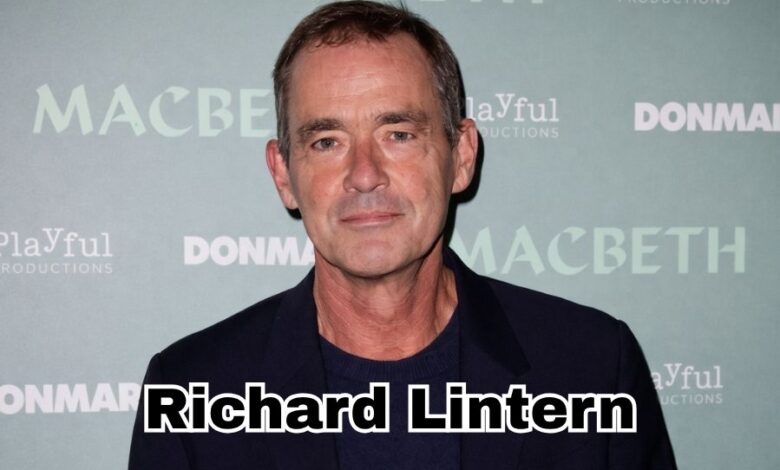
Richard Lintern is one of those actors whose value becomes clearer the more closely you watch him. He is not a performer who relies on noise, celebrity theatrics, or exaggerated display. Instead, he belongs to that distinguished class of British actors whose impact comes from control, intelligence, and emotional precision. Across television, film, theatre, and voice work, Richard Lintern has built a career defined by depth rather than hype. Audiences may first recognise him from a major television role, but the true story of his career is much broader. He has spent decades shaping productions from within, bringing dignity, complexity, and authority to the characters he plays. In an entertainment culture often driven by instant visibility, Richard Lintern stands out for a more enduring reason: he makes performance feel truthful. That quality has earned him a lasting place in British entertainment as one of its most dependable and quietly distinguished talents. He was born in Taunton, Somerset, studied English Literature at Durham University, and later graduated from RADA in 1987, foundations that help explain the literary intelligence and technical polish visible throughout his work.
Early Life and Training
To understand Richard Lintern as an actor, it helps to begin with the roots of his craft. Unlike performers who emerge mainly from screen culture, Lintern’s background reflects the traditional British path of serious study, dramatic discipline, and immersion in language. He studied English Literature at Durham University before training at the Royal Academy of Dramatic Art, one of the United Kingdom’s most respected drama schools. That combination matters. A grounding in literature tends to sharpen an actor’s relationship with text, subtext, tone, and rhythm, while formal training at RADA builds the technical skills needed to carry those qualities into performance. In Richard Lintern’s case, these influences can be felt in the way he handles dialogue. He often sounds not merely fluent, but thoughtful, as though every line belongs to a larger emotional and intellectual structure. That sense of command has become one of his signatures. It also explains why he has been so effective in roles that demand authority, restraint, and an inner life richer than what is immediately visible on the surface.
Richard Lintern and the Art of the Character Actor
The term character actor is sometimes misunderstood, as though it describes someone permanently confined to the margins. In reality, the best character actors are often the people who make a drama believable, and Richard Lintern is a powerful example of that truth. He has built his reputation not by dominating attention for its own sake, but by giving productions weight, structure, and credibility. His screen presence carries intelligence and calm force. He often plays men connected to institutions such as medicine, government, law, religion, or power, and he is particularly convincing when portraying figures who seem capable, self-possessed, and morally layered at the same time. What makes him so effective is that he never flattens these roles into simple authority. Even when playing polished or influential men, he suggests hesitation, private burdens, or emotional complication. That is why his performances remain memorable. Richard Lintern does not merely fill a role; he enlarges it. In production after production, he demonstrates that subtle acting can be every bit as powerful as grandstanding, and often far more lasting. His listed screen credits span television and film work such as Spies of Warsaw, The Shadow Line, Page Eight, White Heat, Top Boy, and The Crown, reflecting both longevity and versatility.
The Breakthrough Recognition of Silent Witness
For many viewers, the name Richard Lintern is inseparable from Silent Witness, and with good reason. He joined the long-running BBC forensic drama as Dr Thomas Chamberlain, becoming head of the Lyell Centre in series 17 and remaining in the show through series 23. This role proved especially well suited to his strengths. Chamberlain was not written as a simple procedural superior whose purpose was only to deliver instructions. He was experienced, socially skilled, professionally formidable, and personally guarded, a character who required both command and vulnerability. Lintern brought all of that to the role with great finesse. He gave Chamberlain charm without sentimentality, authority without stiffness, and vulnerability without melodrama. Viewers could sense the private life beneath the professional exterior, which made the character feel fully human. His years on Silent Witness significantly expanded his public visibility, but they also showed why his acting works so well. In a series driven by science, trauma, and criminal investigation, Richard Lintern made emotional intelligence feel as important as technical expertise. Chamberlain became one of the drama’s notable modern figures, and Lintern’s performance remains one of the strongest examples of his quietly commanding style.
A Career Beyond One Signature Role
Although Silent Witness introduced Richard Lintern to many mainstream television audiences, his career is much larger than any single credit. He has worked steadily across genres and formats, moving from crime drama to political thriller, from costume storytelling to literary adaptation. This adaptability is a major reason he has remained respected for so long. Some actors become trapped by one successful part, but Lintern has continually avoided that limitation. Instead, he has built a body of work that shows range without ever losing artistic identity. He can appear in a historical setting and feel entirely at home; then he can move into a contemporary thriller and bring the same assurance with a different tone. That consistency is impressive because it does not depend on repetition. Rather, it comes from a stable core of skill. Richard Lintern’s performances generally share certain qualities: verbal precision, emotional discipline, psychological nuance, and a sense of inner authority. These qualities allow him to move across productions while still remaining recognisably himself as an artist. His credited work includes titles such as The Crown, where he appeared as Stephen Ward, alongside numerous British television dramas and films that have relied on his ability to strengthen ensemble storytelling.
Richard Lintern on Stage
No complete article on Richard Lintern would be adequate without discussing theatre, because the stage is central to his artistic identity. He has an extensive stage career and has worked at some of the most respected institutions in British theatre, including the Royal National Theatre, the Royal Shakespeare Company, the Royal Court, West Yorkshire Playhouse, and Bristol Old Vic. This background is not just a biographical detail. It helps explain the qualities audiences often notice in his screen work. Theatre trains actors to live inside language, to sustain character through time, and to maintain concentration without depending on editing or camera framing. Lintern’s performances often carry exactly those strengths. He has a patience that feels theatrical in the best sense: he allows a scene to breathe, listens with seriousness, and creates the impression that thought is unfolding in real time. His stage training also contributes to his vocal control, posture, and sense of dramatic proportion. These are subtle gifts, but they make a major difference. In an age when some screen acting can feel hurried or under-shaped, Richard Lintern brings a classical steadiness that is increasingly rare. It is one of the reasons he is so admired by those who care deeply about performance as craft.
Voice, Presence, and Intellectual Authority
Another important part of Richard Lintern’s appeal is his voice. He is not only a stage and screen actor but also a voice performer, and that vocal authority contributes enormously to the impact of his work. Some actors are visually striking but vocally neutral; Lintern has the opposite advantage as well. His speech carries clarity, elegance, and a composed weight that makes him especially effective in roles connected to expertise or leadership. When he speaks, the audience tends to believe that the character knows what he is talking about. That is a deceptively valuable skill. It allows him to inhabit doctors, officials, clergy, and other institutional figures without seeming artificial. Yet his voice does not feel cold. He often suggests feeling beneath formality, which gives his performances humanity. This vocal strength also explains why he has extended successfully into narration and voice acting. Even outside conventional live-action roles, he brings atmosphere and conviction. In a career where many assets combine, his voice has clearly been one of the most distinctive. It supports the broader impression he creates: a performer of intelligence, discipline, and quiet power.
Why Richard Lintern Matters
What makes Richard Lintern significant is not simply that he has worked for many years, but that he has done so while maintaining a high artistic standard. British entertainment has always depended on actors like him, performers who may not dominate celebrity culture but who give serious drama its backbone. They create credibility, deepen tone, and allow stories to feel inhabited by real people rather than by performance clichés. Richard Lintern exemplifies that tradition. His career shows that craftsmanship, consistency, and subtle authority still matter. In fact, they may matter more over time than louder forms of fame. He represents a model of success rooted in professionalism and artistic integrity. Viewers who appreciate performance as an art rather than mere spectacle often recognise this instinctively. That is why Lintern continues to command respect. He is not simply a familiar face from British television; he is a reminder that acting can be intelligent, restrained, and deeply affecting without ever becoming flashy.
Conclusion
Richard Lintern has built a remarkable career through skill, discipline, and emotional intelligence. From his academic and dramatic training to his extensive work in theatre, television, film, and voice performance, he has remained a consistently compelling figure in British acting. His performance as Dr Thomas Chamberlain in Silent Witness brought him wide recognition, but it is only one chapter in a much broader artistic journey. What truly defines Richard Lintern is his ability to make characters feel textured, thoughtful, and real. He brings seriousness without heaviness, authority without arrogance, and vulnerability without excess. In a profession that often rewards noise, he has achieved something more substantial: enduring respect. That is why Richard Lintern remains such an important and admirable presence in British entertainment.
(FAQs)
Who is Richard Lintern?
Richard Lintern is an English stage, screen, and voice actor known for his work in British television, theatre, and film. He was born in Taunton, Somerset, and trained at RADA after studying English Literature at Durham University.
What is Richard Lintern best known for?
He is widely known for playing Dr Thomas Chamberlain in Silent Witness, where he appeared from series 17 to series 23.
Did Richard Lintern work mainly in television?
No. Although he is well known on television, Richard Lintern also has a substantial theatre career and has worked at major British institutions such as the National Theatre and Royal Shakespeare Company.
What makes Richard Lintern a respected actor?
He is admired for his versatility, restraint, strong command of language, and ability to portray complex, intelligent, and morally nuanced characters. This reputation is reflected across his long-running stage and screen career.
Why do audiences remember Richard Lintern?
Audiences remember him because he brings credibility and depth to every role. Even in supporting parts, he often creates characters who feel fully formed, thoughtful, and emotionally believable