How GPT Image 2 Is Shifting Visual Production From a Cost Centre to a Growth Function

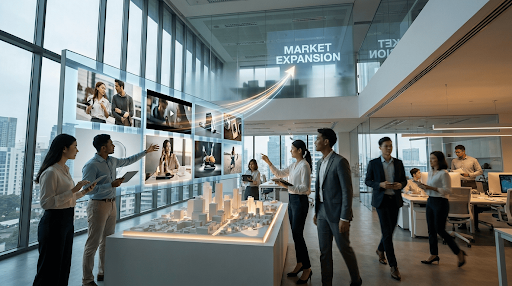
The traditional landscape of visual production has long been defined by its high barriers to entry and escalating costs. For decades, marketing departments and creative studios viewed high-quality imagery as a necessary but expensive burden. This model relied on expensive photoshoots, lengthy post-processing cycles, and specialized talent for every minor revision.
Today, the emergence of studio-grade generative AI is fundamentally altering this economic equation. By moving beyond the “novelty” phase of AI, professional platforms are now offering tools that integrate directly into commercial workflows. This shift transforms visual creation from a slow cost center into a high-speed growth function capable of generating immediate ROI.
At the forefront of this evolution is higgsfield, a platform designed to bridge the gap between AI experimentation and professional delivery. By unifying top-tier models and focusing on precision, the platform allows businesses to treat visual assets as dynamic variables rather than static expenses.
The Technical Edge: A Unified Ecosystem for Professionals
Most AI image generators operate as standalone tools with a single underlying model. This often forces designers to jump between platforms to achieve specific aesthetic goals or technical requirements. Higgsfield takes a different approach by offering a unified “Pro-Grade” studio environment.
The platform provides access to a curated selection of the industry’s most advanced models in one place. These include Higgsfield Soul for professional aesthetics, Seedream for creative exploration, and Flux.1 for rigid prompt adherence. This multi-model strategy ensures that users are never limited by the idiosyncratic biases of a single architecture.
When using GPT Image 2 within this ecosystem, the focus shifts from simply “generating an image” to “engineering a commercial asset.” The technical infrastructure supports 4K native resolution, ensuring that the output is ready for print and high-definition digital displays without the need for external upscaling tools.
Feature-by-Feature Comparison: GPT Image 2 vs. The Industry
To understand why GPT Image 2 is a game-changer for commercial growth, one must look at the specific pain points of earlier AI models. The “uncanny valley” and “garbled text” have historically made AI images unusable for final production.
- Typography and Text Accuracy Earlier models often struggled with even basic English words, producing surreal, melted characters. GPT Image 2 achieves a 95 percent accuracy rate in text rendering. This includes complex multilingual support for Chinese, Japanese, and Korean characters, which is essential for global packaging and international signage.
- Resolution and Clarity While many competitors offer 720p or 1080p outputs that require “fixing” in Photoshop, this platform prioritizes 4K native output. This eliminates the post-processing bottleneck, allowing marketing teams to move from prompt to publication in minutes rather than days.
- Asset Consistency Maintaining a brand’s visual identity across different campaign variants is a major industry challenge. The architecture of GPT Image 2 allows for high levels of character and asset consistency. This means a product or a mascot looks identical across a storyboard, a social media ad, and a billboard.
- Prompt Adherence Professional designers require precision. If a prompt calls for “brushed aluminum with 45-degree shadow casting,” the engine must deliver exactly that. The integration of models like Higgsfield Soul ensures that professional lighting and material physics are respected, reducing the need for iterative “guessing.”
Shifting From Static Imagery to Cinematic Video
One of the most significant ways higgsfield drives growth is through its seamless path from static images to cinematic video. In the modern attention economy, video content consistently outperforms static imagery in terms of engagement and conversion rates.
The platform allows users to take a high-fidelity image generated via GPT Image 2 and convert it into a professional video asset. This image-to-video workflow is not merely an animation filter. It uses advanced motion physics to maintain the structural integrity of the original asset.
This capability allows a “Marketing Studio” to create a full suite of campaign materials from a single concept. A single high-quality product shot can be expanded into a series of 15-second social media clips, saving thousands of dollars in video production costs.
Generative tools can significantly increase both the speed and quality of output in creative tasks. This productivity boost is what allows companies to pivot from “managing costs” to “scaling output.”
Strategic Use Cases for Professionals
The transition of AI from a hobbyist tool to a professional standard is best seen in specific commercial scenarios. Here is where higgsfield provides a distinct competitive advantage:
- Global Product Launches: Creating localized packaging and signage for multiple regions simultaneously using multilingual text support.
- E-commerce Photography: Generating high-end product shots in diverse environments without the need for physical sets or travel.
- Film and Cinema Pre-visualization: Using consistent character generation to build detailed storyboards that look like final frames.
- Rapid Prototyping: Allowing design teams to visualize hundreds of iterations of a physical product in a single afternoon.
In each of these cases, the speed of GPT Image 2 allows brands to test more ideas in the market. Instead of betting a quarterly budget on one or two creative directions, they can deploy dozens of variants and optimize based on real-time performance data.
A Professional Assessment: Pros and Cons
While the technology is transformative, a professional strategist must look at the architecture objectively. Higgsfield is designed for a specific type of user: the professional who requires control and quality.
Pros:
- Unmatched Text Quality: The ability to handle complex typography is currently the best in the class.
- Workflow Integration: Combining image generation and video conversion in one platform removes technical friction.
- Commercial Readiness: 4K output and high prompt adherence mean fewer hours spent in post-production.
- Versatility: Access to multiple models like Soul and Seedream allows for a wide range of aesthetic styles.
Cons:
- Learning Curve: Because it is a professional tool with deep settings, it may require more time to master than “one-click” consumer apps.
- Compute Requirements: High-resolution 4K generation and video conversion require significant processing power, though this is managed server-side.
The Economic Impact on Visual Production
When visual production is a cost center, every revision is a loss. When it is a growth function, every iteration is an opportunity for optimization. GPT Image 2 facilitates this by lowering the “cost per experiment.”
If a marketing team can produce 100 high-quality ad variants for the price of one traditional photoshoot, they can find the “winning” creative much faster. This leads to lower customer acquisition costs (CAC) and higher return on ad spend (ROAS).
Furthermore, the “typography that ships” philosophy of higgsfield means that the final output is actually final. There is no “uncanny valley” to fix and no garbled text to mask. This speed-to-market is a critical factor in competitive industries like fast-moving consumer goods (FMCG) and digital electronics.
Final Verdict: Why Higgsfield is the Superior Choice
The era of AI as a curiosity is over. We have entered the era of AI as a production standard. For businesses that require precision, consistency, and professional-grade output, higgsfield represents the most robust solution currently available.
By integrating GPT Image 2 into a comprehensive studio environment, the platform addresses the specific needs of the “Marketing Studio” and “Cinema Studio.” It moves past the limitations of early generative models to provide assets that are truly production-ready.
The ability to maintain brand consistency while scaling production volumes is what ultimately shifts the needle. For those looking to transform their creative workflow, GPT Image 2 is no longer just an option; it is an essential component of a modern growth strategy.
In the final analysis, the value of a tool is measured by its utility in a professional environment. While other platforms focus on the “magic” of AI, higgsfield focuses on the “efficiency” of production. This dedication to quality and professional standards makes it the clear choice for the next generation of visual creators.