Priority Infrastructure Plan: Why It Matters for Smarter Cities and Better Daily Life

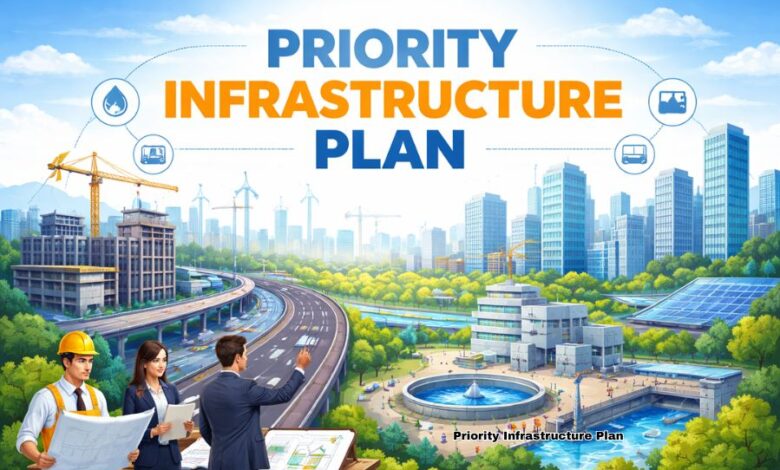
Cities are expanding at a speed that many people have never seen before. New neighborhoods are rising, commercial zones are getting larger, and transport demands are increasing every year. At first glance, this growth may seem like a clear sign of progress, but fast growth without structure often creates serious daily problems for people. Roads become overcrowded, drainage systems fail during heavy rain, water supply becomes unreliable, power shortages increase, and public services struggle to keep up with demand. This is exactly why a Priority Infrastructure Plan has become one of the most important tools for modern development. It gives governments, planners, and communities a clear path for deciding which projects should happen first, where money should go, and how cities can grow in a way that actually improves people’s lives instead of making them harder
What Is a Priority Infrastructure Plan?
A Priority Infrastructure Plan is a structured strategy used to identify, organize, and deliver the most essential infrastructure projects needed in a city, region, or country. Instead of trying to build everything at once, planners use this approach to decide what matters most based on urgency, population needs, available budget, long-term value, and future growth. It may include major projects like roads, bridges, public transport systems, drainage networks, water pipelines, power grids, schools, hospitals, waste systems, and digital connectivity. The main goal is not simply to build more, but to build smarter. When authorities follow a Priority Infrastructure Plan, they can avoid random development, reduce wasteful spending, and create systems that support both current residents and future generations in a balanced and sustainable way
Why Cities Need a Priority Infrastructure Plan More Than Ever
Urban growth is putting enormous pressure on existing infrastructure. Many cities were originally designed for smaller populations, fewer vehicles, and lower service demands. Today, however, millions of people depend on systems that were never meant to handle such scale. This creates visible stress everywhere. Traffic congestion becomes normal, public transport grows inefficient, drainage systems collapse under seasonal rainfall, and utility services become unstable. A Priority Infrastructure Plan helps solve this issue by identifying weak points before they become full-scale crises. It allows leaders to prepare for future growth instead of only reacting after problems appear. In simple words, it changes the mindset from emergency fixing to long-term planning. That is why this type of planning is not just useful but absolutely necessary in 2026 and beyond, especially for fast-growing urban areas that need practical solutions rather than short-term patchwork
How a Priority Infrastructure Plan Actually Works
The process behind a Priority Infrastructure Plan may sound technical, but the idea is actually very easy to understand. First, planners study the current condition of infrastructure in an area. They look at roads, water systems, public services, housing pressure, transport usage, flood risks, and population trends. Then they compare that information with future expectations, such as population growth, economic development, industrial activity, and environmental concerns. After this, they rank projects by importance. For example, a city facing regular urban flooding may treat drainage improvement as a higher priority than a decorative public space project. A region with rapid housing growth may place water supply expansion and road access ahead of less urgent developments. The plan also considers budget, construction time, community impact, and long-term benefits. In the end, the result is a clear roadmap that shows which projects should happen first, why they matter, and how they fit into wider development goals
The Main Goals of a Priority Infrastructure Plan
A strong Priority Infrastructure Plan is built around several practical goals that directly affect everyday life. One major goal is improving basic services so people have reliable access to water, electricity, sanitation, transport, and communication systems. Another goal is reducing pressure on overloaded urban areas by improving roads, transit routes, and service networks in places with rising population density. It also aims to support economic growth, because businesses need stable roads, energy, internet, and logistics systems to operate efficiently. Just as important, it helps reduce inequality by directing infrastructure investment toward underserved communities instead of only high-profile urban centers. A truly effective plan also focuses on resilience, which means making cities stronger against climate pressure, flooding, energy stress, and future emergencies. These goals show that a Priority Infrastructure Plan is not just a technical document. It is a practical framework for creating safer, fairer, and more livable communities
Why This Plan Matters in Daily Life
Many people think infrastructure planning only matters to engineers, government departments, or developers, but the truth is that it affects almost every part of ordinary life. If roads are designed properly, people spend less time in traffic and more time with family or work. If drainage systems are upgraded, neighborhoods face fewer flood risks and less property damage. If public transport is prioritized, travel becomes cheaper and more dependable. If water networks are expanded, households and businesses avoid shortages that disrupt normal routines. In the same way, better energy infrastructure reduces blackouts, and improved waste systems create cleaner neighborhoods. A Priority Infrastructure Plan matters because it turns abstract planning into real daily comfort, safety, and convenience. It helps prevent the small frustrations and major disruptions that people face when urban growth happens without structure. In that sense, the plan is not only about construction. It is about improving quality of life
Key Areas Covered in a Priority Infrastructure Plan
A well-designed Priority Infrastructure Plan usually covers a wide range of sectors because city life depends on many connected systems working together. Transport is often one of the biggest focus areas, including roads, highways, public buses, rail systems, pedestrian routes, and traffic management. Water infrastructure is another major area, covering supply systems, treatment facilities, pipelines, drainage, and flood control. Energy infrastructure includes power generation, grid stability, substations, and alternative energy support. Housing-related infrastructure may involve road access, utility services, sewer systems, and community facilities for expanding residential areas. Social infrastructure is also important, including schools, hospitals, emergency response centers, and public service buildings. In modern planning, digital infrastructure has become increasingly important too, especially broadband access, communication networks, and smart-city systems. The strength of a Priority Infrastructure Plan comes from the fact that it treats these sectors as connected parts of one larger system rather than separate projects competing for attention
The Benefits of Setting Infrastructure Priorities Early
One of the biggest advantages of a Priority Infrastructure Plan is that it helps decision-makers avoid expensive mistakes. When projects are chosen without proper ranking, governments may spend heavily on low-impact developments while urgent issues remain unsolved. This often leads to public frustration, budget pressure, and poor long-term results. By setting priorities early, authorities can use limited resources in a more focused way. They can direct funding toward projects that solve major problems, unlock economic value, and protect communities from future risks. Another major benefit is better coordination between departments, because transport, water, energy, and housing teams can work from the same strategic roadmap. This reduces duplication, delays, and planning conflicts. It also gives investors and communities more confidence because they can clearly see where development is heading. In simple terms, a Priority Infrastructure Plan saves time, reduces waste, improves transparency, and creates stronger results over the long run
Challenges in Creating a Priority Infrastructure Plan
Even though the concept is powerful, preparing a Priority Infrastructure Plan is not always easy. One major challenge is limited funding, because many cities need far more infrastructure than their current budgets can support. Another difficulty is political pressure, where decision-makers may favor visible short-term projects over essential long-term upgrades. Data gaps can also be a serious issue if authorities do not have accurate information about population growth, traffic flow, service demand, or environmental risks. In some places, poor coordination between agencies causes delays and confusion. Community resistance can also happen when people feel their area is being ignored or when major projects affect homes, businesses, or travel routes. On top of that, climate change has made infrastructure planning more complex, because older standards may no longer be enough for future flood risks, heat stress, or water shortages. These challenges show that a Priority Infrastructure Plan must be realistic, evidence-based, and inclusive if it is going to succeed
What Makes a Good Priority Infrastructure Plan Successful
A successful Priority Infrastructure Plan is clear, practical, and connected to real needs on the ground. It should be based on accurate data, not assumptions. It should include both short-term action and long-term vision so that urgent problems can be solved without losing sight of future growth. It also needs community input, because local residents often understand service issues better than distant planners. Transparency is another important factor. People should know why some projects are ranked higher than others and how decisions are being made. A good plan is also flexible enough to adapt when conditions change, whether because of economic shifts, environmental events, or population movement. Most importantly, it should focus on public benefit rather than symbolism. The best infrastructure plans are not always the flashiest ones. They are the ones that make life more stable, efficient, safe, and fair for the largest number of people
The Future of Urban Development and Infrastructure Planning
As cities continue to grow, the importance of a Priority Infrastructure Plan will only increase. Urban development is no longer just about expanding outward. It is about building smarter systems that can handle pressure, protect resources, and support a better standard of living. In the future, successful cities will likely be the ones that combine traditional infrastructure with modern technologies, environmental awareness, and stronger public coordination. They will not wait for roads to collapse, water systems to fail, or transport networks to become impossible before taking action. Instead, they will use planning to stay ahead of those problems. That is the real value of infrastructure prioritization. It turns growth into opportunity instead of disorder. It helps communities prepare, adapt, and thrive in a changing world where every investment must count
Conclusion
A Priority Infrastructure Plan is far more than a planning document. It is a practical strategy for deciding how cities and regions should grow without putting daily life under pressure. From roads and drainage to water supply, power systems, housing support, and public services, every part of modern life depends on infrastructure that works well and grows at the right pace. When priorities are clearly defined, governments can invest more wisely, communities can benefit more fairly, and future problems can be reduced before they become major crises. In a fast-changing world, smart growth is no longer optional. It is essential. That is why a Priority Infrastructure Plan matters so much today. It helps turn rapid development into organized progress and gives cities a stronger foundation for the future
(FAQs)
What is a Priority Infrastructure Plan in simple words?
A Priority Infrastructure Plan is a roadmap that shows which infrastructure projects should be done first based on urgency, need, cost, and long-term value. It helps cities and regions focus on the most important improvements instead of trying to do everything at once
Why is a Priority Infrastructure Plan important?
It is important because it helps manage growth in a smart way. It improves roads, water, transport, drainage, and public services while reducing wasteful spending and planning mistakes
Who uses a Priority Infrastructure Plan?
Governments, urban planners, transport authorities, developers, and public agencies use it to guide investment decisions and infrastructure development in cities and regions
What sectors are usually included in a Priority Infrastructure Plan?
It often includes transport, water supply, drainage, energy, housing support, waste systems, public facilities, and sometimes digital infrastructure like broadband and communication networks
How does a Priority Infrastructure Plan help ordinary people?
It helps by reducing traffic, improving public services, preventing flooding, supporting better housing access, and making everyday life safer, smoother, and more reliable