Top 10 Business Management Skills Every Leader Should Develop in 2026

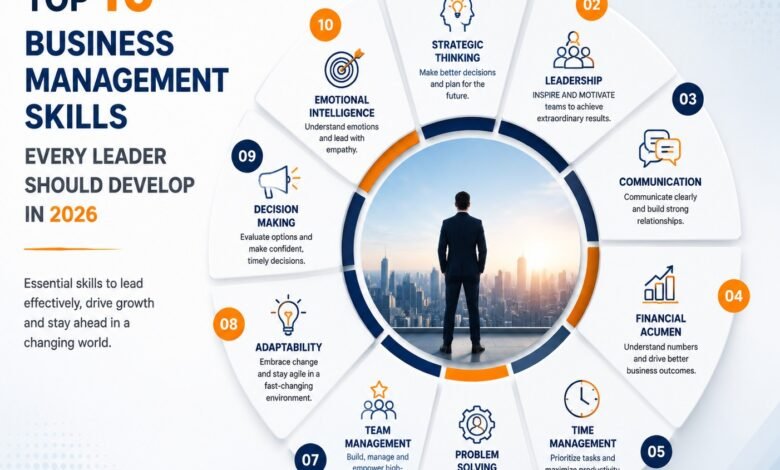
Top 10 Business Management Skills Every Leader should Know
The business world is evolving faster than ever before. From digital transformation and hybrid workplaces to changing customer expectations and global competition, leaders can no longer rely on traditional management approaches. Success in 2026 requires a combination of strategic thinking, emotional intelligence, technological awareness, and adaptability.
Whether you’re an aspiring manager, a business owner, or pursuing a Level 7 Business Management qualification, developing the right management skills can prepare you to lead teams effectively and achieve long-term business success.
Here are the top 10 business management skills every leader should develop in 2026.
1. Strategic Thinking
Strong leaders don’t just focus on today’s tasks—they prepare for tomorrow’s opportunities. Strategic thinking involves analyzing market trends, identifying business opportunities, and making decisions that support long-term growth.
A strategic manager understands how every department contributes to company objectives and creates plans that align resources with business goals.
How to improve:
- Study industry trends regularly.
- Practice long-term business planning.
- Evaluate risks before making major decisions.
2. Communication Skills
Clear communication remains one of the most valuable leadership qualities. Managers must communicate expectations, provide constructive feedback, and ensure everyone understands organizational goals.
Effective communication also improves collaboration, reduces misunderstandings, and strengthens workplace relationships.
Good communication includes:
- Active listening
- Public speaking
- Business writing
- Negotiation
- Presentation skills
3. Emotional Intelligence (EQ)
Technical knowledge alone is no longer enough. Leaders who understand emotions—both their own and others’—build stronger, more productive teams.
Emotional intelligence helps managers:
- Resolve conflicts professionally
- Motivate employees
- Build trust
- Improve workplace culture
- Handle pressure effectively
Employees are more likely to stay with organizations where leaders demonstrate empathy and respect.
4. Decision-Making
Every leader faces difficult choices. Whether hiring new employees, managing budgets, or launching products, confident decision-making directly impacts business performance.
Effective decision-makers gather accurate information, evaluate different options, and act decisively instead of delaying important decisions.
To improve this skill:
- Analyze data before deciding.
- Consider both short-term and long-term outcomes.
- Learn from previous successes and mistakes.
5. Adaptability and Change Management
Business environments continue to change rapidly due to technology, economic shifts, and evolving customer demands. Leaders who embrace change help their organizations remain competitive.
Adaptability means being open to new ideas, encouraging innovation, and helping employees navigate organizational changes without unnecessary disruption.
Successful change management includes:
- Transparent communication
- Employee involvement
- Continuous learning
- Flexibility during implementation
6. Financial Management
Every manager should understand basic financial principles, even if they are not finance specialists.
Financial literacy helps leaders:
- Manage budgets
- Control costs
- Improve profitability
- Evaluate investments
- Understand financial reports
Managers who understand key financial metrics make more informed business decisions and contribute directly to organizational success.
7. Digital and Technology Awareness
Technology is reshaping every industry. While leaders don’t need to become software engineers, they should understand how digital tools improve productivity and business performance.
Important areas include:
- Data analytics
- Artificial intelligence
- Cloud computing
- Cybersecurity awareness
- Business automation
- Customer relationship management (CRM) systems
Leaders who embrace technology can improve efficiency while maintaining a competitive advantage.
8. Problem-Solving and Critical Thinking
Business challenges are inevitable. Strong leaders identify problems quickly, evaluate possible solutions, and implement effective strategies.
Critical thinking allows managers to:
- Analyze complex situations
- Challenge assumptions
- Identify root causes
- Develop practical solutions
- Prevent recurring issues
Organizations value leaders who remain calm under pressure and solve problems without creating unnecessary conflict.
9. Team Leadership and People Management
A business succeeds because of its people. Great managers know how to inspire teams, delegate responsibilities, and develop employee potential.
Effective people management includes:
- Coaching employees
- Recognizing achievements
- Delegating appropriately
- Managing performance
- Supporting professional development
Leaders who invest in their teams often experience higher productivity, stronger employee engagement, and lower staff turnover.
10. Continuous Learning
The best leaders never stop learning. Business practices, technologies, regulations, and customer expectations evolve constantly, making lifelong learning essential.
Many professionals strengthen these leadership skills by completing a Level 6 Diploma in Business Management before progressing to a Level 7 qualification.
Modern leaders should regularly:
- Attend professional training
- Earn industry-recognized qualifications
- Read business publications
- Learn from mentors
- Develop new technical and leadership skills
Continuous improvement ensures leaders remain relevant in an increasingly competitive business environment.
Why These Skills Matter in 2026
Organizations are looking for leaders who can balance business performance with employee wellbeing, innovation, and sustainability. Companies increasingly value professionals who combine technical expertise with strong interpersonal and strategic abilities.
Developing these management skills not only improves career opportunities but also prepares professionals to lead organizations through uncertainty and rapid change. Whether managing a small business or a multinational company, these competencies create a strong foundation for leadership success.
Many professionals pursue advanced business management qualifications to strengthen these capabilities while gaining practical knowledge in leadership, operations, finance, and organizational strategy. Combining academic learning with real-world experience helps future leaders stay competitive in today’s dynamic business environment.
Final Thoughts
Leadership in 2026 goes beyond supervising teams or meeting deadlines. It requires adaptability, strategic vision, emotional intelligence, financial awareness, and a commitment to continuous learning. By investing in these ten essential business management skills, professionals can build stronger teams, make smarter decisions, and position themselves for long-term career success.
The workplace will continue to evolve, but leaders who remain curious, resilient, and people-focused will always be in demand. Developing these skills today is one of the smartest investments you can make for your future career.
If you’re planning to advance into senior management roles, you may also find our guides on Career Options After Completing a Diploma in Business Management and Level 7 Diploma vs MBA useful when deciding your next step.