Bodenxt: The Bold Swedish Vision Reshaping a Community for the Green Future

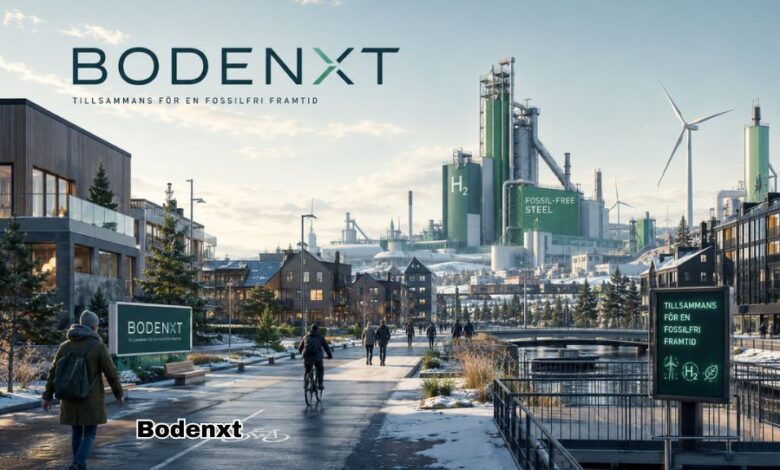
bodenxt is one of the most forward-looking community development initiatives connected to Sweden’s modern green transformation. At its heart, bodenxt is about helping the municipality of Boden manage rapid industrial, social, environmental, and urban change in a way that benefits both current residents and future generations. Boden is not simply growing in the traditional sense; it is being reshaped by major investments in fossil-free industry, new infrastructure, new housing demands, workforce expansion, and a wider ambition to become a model for sustainable community development. The municipality describes bodenxt as the platform for Boden’s major green transition across society, with Stegra’s establishment acting as an important accelerator for long-term smart and green development. This makes the initiative much more than a local planning project. It is a broad response to a historic moment in which climate goals, industrial innovation, population growth, social inclusion, and economic opportunity are all arriving at the same time.
What Is Bodenxt?
bodenxt is a coordinated development platform created to support Boden’s transformation during a period of unusually fast growth. Instead of allowing change to happen randomly or only through private investment, the initiative gives the municipality a structured way to plan for housing, infrastructure, skills supply, business development, and community life. Boden Municipality explains that the development connected to bodenxt includes several sub-projects, with focus areas such as skills supply, living and housing, business development, and infrastructure above and below ground. This is important because fast industrial growth can create pressure on almost every part of a municipality. More workers mean more need for homes, schools, transport, healthcare, shops, culture, and public services. New industries need roads, energy, water, land, suppliers, and trained employees. Long-term residents need to feel that development strengthens their town rather than replacing its identity. Through bodenxt, Boden is trying to turn rapid change into planned progress.
Why Bodenxt Matters for Sweden’s Green Transition
The importance of bodenxt becomes clearer when it is seen as part of Sweden’s wider green transition. Northern Sweden has become a major region for fossil-free industrial development because of its access to renewable electricity, land, technical knowledge, and strong climate ambitions. Boden is now connected to this transformation through large-scale industrial investments, especially in green steel and hydrogen-based production. bodenxt matters because the green transition is not only about building cleaner factories; it is also about building communities that can support and benefit from those factories. If sustainable industry grows but local people struggle with housing shortages, weak infrastructure, or limited job access, the transition will feel incomplete. A truly sustainable transformation must include social sustainability, economic resilience, and quality of life. Bodenxt helps connect these goals so that climate-focused industry becomes part of a larger community vision, not just an isolated industrial project.
The Role of Stegra in Boden’s Transformation
A major force behind bodenxt is Stegra, formerly known as H2 Green Steel. Stegra is developing a large industrial plant in Boden focused on green hydrogen, green iron, and green steel. The company describes its Boden project as a fully integrated, digitalized, and circular plant that will use renewable electricity and green hydrogen to replace coal in the steelmaking process. Stegra also presents the Boden plant as “three plants in one,” combining green hydrogen, green iron, and green steel production, with an ambition to produce 5 million tonnes of green steel annually by 2030. This is significant because traditional steelmaking is one of the most carbon-intensive industrial activities in the world. By using hydrogen instead of coal in key parts of production, Stegra aims to reduce emissions and create a new model for heavy industry. For Boden, however, the impact goes far beyond steel. A project of this size affects employment, education, housing, business opportunities, infrastructure, and the long-term image of the municipality.
Housing and Living in a Growing Boden
One of the most practical challenges addressed by bodenxt is housing. When a municipality experiences fast industrial expansion, people move in for construction jobs, technical roles, service work, engineering, management, education, and business opportunities. This creates demand for apartments, family homes, temporary accommodation, and attractive neighborhoods. However, housing is not only about placing buildings on available land. A successful community needs safe streets, green areas, schools, childcare, public transport, health services, cultural spaces, and places where people can meet. bodenxt is important because it treats living conditions as part of the green transition. A fossil-free industrial project cannot succeed over the long term if people do not want to live near it, work around it, or raise families in the surrounding community. Boden’s challenge is to create homes and neighborhoods that serve both newcomers and existing residents while keeping the town human, welcoming, and connected.
Skills Supply and Future Jobs
Another central part of bodenxt is skills supply, which means making sure that the local and regional workforce can meet the needs of new industries. The green transition requires more than engineers and factory workers. It also needs electricians, welders, machine operators, logistics specialists, construction workers, planners, teachers, healthcare workers, digital experts, and many others. If a municipality cannot provide or attract skilled people, even the most ambitious industrial projects may struggle. Bodenxt therefore helps connect education, training, employment, and business needs. This includes creating pathways for young people, supporting adults who want to retrain, helping newcomers enter the labor market, and encouraging cooperation between public institutions and employers. In this way, bodenxt can help turn green investment into real opportunity. The goal is not only to create jobs, but to create meaningful careers that allow people to build stable lives in Boden.
Business Development and Local Economic Growth
bodenxt also supports business development, because the success of Boden’s transformation depends on more than one major industrial company. Large projects create wider demand for suppliers, contractors, restaurants, hotels, transport companies, maintenance services, digital firms, consultants, housing developers, and local entrepreneurs. A strong local economy needs many different types of businesses, not only one dominant employer. Through bodenxt, Boden can encourage local companies to take part in the green transition while also attracting new businesses that add value to the municipality. This creates a more resilient economy. If planned well, the growth around green industry can strengthen small businesses, encourage innovation, and open new markets for sustainable products and services. The most successful version of bodenxt would be one where local residents, entrepreneurs, investors, and public organizations all find a place in the transformation.
Infrastructure for a Sustainable Community
Infrastructure is one of the most important foundations of bodenxt. Growth at this speed requires strong systems both above and below ground. Roads, rail, public transport, bike paths, energy networks, water systems, sewage, broadband, schools, public buildings, industrial land, and housing areas all need to develop in a coordinated way. Stegra’s project also depends on large-scale logistics and energy systems, including renewable electricity and hydrogen production. The European Climate, Infrastructure and Environment Executive Agency has described the Boden plant as featuring a 690 MW electrolyser that will use renewable electricity to generate green hydrogen. This shows the scale of infrastructure needed to support the transformation. For residents, infrastructure affects daily life in very direct ways. It determines how easily people can travel, how reliable services are, how safe neighborhoods feel, and how well the municipality can handle growth. bodenxt recognizes that sustainable development must be supported by practical systems that work every day, not only by ambitious climate language.
Social Sustainability and Community Identity
One of the strongest parts of bodenxt is its recognition that social sustainability matters just as much as industrial sustainability. Rapid growth can create excitement, but it can also create uncertainty. Long-term residents may worry about rising costs, cultural change, construction disruption, or losing the familiar character of their town. New residents may need help finding housing, jobs, schools, social networks, and a sense of belonging. A good transition must bring people together rather than divide them. This is where community identity, inclusion, and participation become essential. Bodenxt can help create spaces where citizens, businesses, municipal leaders, educators, and civil society groups work together. The initiative gives Boden a chance to build not only a greener economy, but also a stronger civic culture. When people feel included in development, they are more likely to support it, contribute to it, and benefit from it.
Challenges Facing Bodenxt
Although bodenxt is ambitious, it also faces real challenges. Fast growth can create pressure on housing supply, public services, land use, municipal planning, transport systems, and social cohesion. Large industrial projects can also face financial, technical, and construction-related challenges. Reuters reported in 2025 that Stegra was seeking additional financing to support construction of its hydrogen-powered steel plant in Boden, after already securing major earlier funding. Reuters also reported that Sweden awarded Stegra 390 million Swedish crowns in funding through the Swedish Energy Agency to help support the hydrogen-based steel project, with conditions connected to proving sufficient financing. These developments show that the transition is promising but complex. Boden must manage the excitement of opportunity while staying realistic about risks, timelines, costs, and community needs. The success of bodenxt will depend on whether the municipality can balance speed with quality, growth with inclusion, and industrial ambition with everyday livability.
The Future Potential of Bodenxt
The future of bodenxt is closely tied to the question of whether a municipality can grow rapidly without losing its values. If Boden succeeds, it could become a powerful example for other communities facing large-scale green industrial change. Many towns around the world want investment, jobs, and climate-friendly industry, but not all are prepared for the social and planning demands that come with them. bodenxt offers a more complete model by connecting industrial transformation with housing, education, business, infrastructure, and community wellbeing. Its future value may not only be measured by the number of jobs created or buildings constructed, but by whether Boden becomes a place where people want to stay, families can thrive, businesses can grow, and sustainability becomes part of ordinary life. In that sense, bodenxt is not just about the next few years; it is about shaping the next generation of Boden.
Conclusion
bodenxt represents a bold and timely approach to sustainable community transformation. It shows that the green transition is not only a technological shift, but also a human, social, and urban challenge. Boden is experiencing rapid change because of major fossil-free industrial investments, especially the development of green steel and hydrogen-based production, but the municipality’s response goes beyond industry alone. Through bodenxt, Boden is working to connect housing, infrastructure, skills development, business growth, social inclusion, and long-term planning into one shared vision. The initiative faces challenges, including financing pressures, housing demand, workforce needs, and the complexity of rapid growth. Yet its strength lies in its holistic approach. If managed carefully, bodenxt can become a model for how communities grow in the age of climate responsibility: not by choosing between industry and sustainability, but by building a future where both serve people, place, and planet.
(FAQs)
What is bodenxt?
bodenxt is a community development platform in Boden, Sweden, created to guide the municipality through rapid green industrial growth, social transformation, housing development, infrastructure planning, skills supply, and long-term sustainable growth.
Why is bodenxt important?
bodenxt is important because Boden is experiencing major changes linked to fossil-free industry and the green transition. The initiative helps ensure that this growth is planned, inclusive, sustainable, and beneficial for both current residents and future generations.
How is Stegra connected to bodenxt?
Stegra is one of the main industrial drivers behind Boden’s transformation. Its green steel project in Boden has accelerated the need for housing, jobs, infrastructure, education, and business development, making bodenxt essential for managing wider community change.
What are the main focus areas of bodenxt?
The main focus areas of bodenxt include housing and living, skills supply, business development, infrastructure, social sustainability, and long-term green community planning.
Can bodenxt become a model for other towns?
Yes, bodenxt has the potential to become a model for other towns because it shows how industrial growth, climate action, social inclusion, and urban planning can be connected within one coordinated community development strategy