Plant Augmented Reality: How This Smart Technology Is Transforming Agriculture Education and Industrial Plant Management

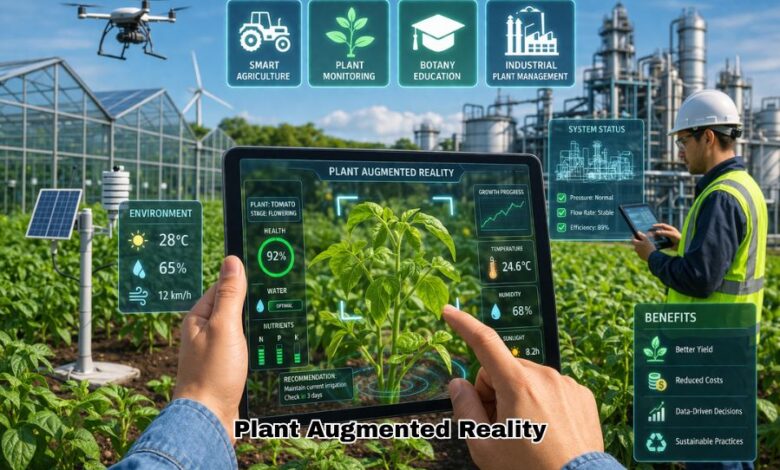
Plant Augmented Reality is rapidly becoming one of the most exciting innovations in the intersection of nature and digital technology. As people search for smarter ways to understand plant life, monitor agricultural systems, and improve industrial operations, this technology offers a powerful solution that feels both modern and practical. By overlaying digital content such as labels, growth data, health indicators, environmental readings, and 3D visual guides onto real-world plants or plant-based environments, augmented reality creates a richer and more useful experience for users. What once required technical manuals, separate dashboards, or expert interpretation can now be viewed directly in context through a smartphone, tablet, or AR glasses
The importance of Plant Augmented Reality lies in its ability to simplify complexity. Plants are living systems influenced by light, water, nutrients, pests, disease, climate, and human care. In industrial settings, plant operations such as greenhouses, food production systems, botanical laboratories, and processing facilities involve even more layers of data and decision-making. Instead of forcing users to switch between the physical world and digital reports, augmented reality combines both into one seamless visual experience. This makes information easier to understand, faster to act on, and more engaging for everyone from farmers and students to researchers and operations managers
What Is Plant Augmented Reality
At its core, Plant Augmented Reality refers to the use of augmented reality technology to display digital information over real-world plants, plant systems, or plant-related environments. A user points a device at a plant, field, greenhouse section, tree, irrigation setup, or industrial unit, and the screen presents extra layers of data on top of what is physically there. This may include plant species identification, moisture levels, nutrient deficiencies, growth stages, disease alerts, seasonal care instructions, harvest readiness, or maintenance information for industrial plant operations
What makes this technology so valuable is that it improves both visibility and understanding. Traditional data systems often separate information from the thing being observed. For example, a grower may need to look at one dashboard for soil data, another for irrigation status, and another for pest alerts. With Plant Augmented Reality, all of that can be connected visually to the actual crop or system in front of the user. This direct connection reduces confusion and increases confidence in decision-making. It also makes the experience more intuitive, especially for people who learn better through visuals than through spreadsheets or technical documentation
Why Plant Augmented Reality Matters Today
The modern world is placing increasing pressure on agriculture, environmental management, education, and industrial productivity. Farmers need to produce more with fewer resources. Educators want more interactive ways to teach science and botany. Researchers need efficient tools for observing living systems. Industrial facilities are expected to optimize performance while reducing waste and improving safety. In all of these areas, Plant Augmented Reality responds to real needs rather than offering technology for its own sake
One major reason this trend is growing is that users now expect information to be immediate and visually accessible. People no longer want to spend excessive time interpreting complicated reports when faster and more intelligent systems are possible. Augmented reality turns invisible patterns into visible insights. It can show where a crop row is under stress, highlight which leaves may be infected, or guide a technician through a greenhouse maintenance process step by step. This ability to make hidden data visible is exactly why Plant Augmented Reality has begun attracting attention across multiple industries
Plant Augmented Reality in Smart Agriculture
One of the strongest applications of Plant Augmented Reality is in smart agriculture. Farmers constantly deal with changing conditions, and even small differences in moisture, pests, sunlight, or nutrient balance can affect yield. AR tools help growers identify these variations more clearly and respond more precisely. When digital information is placed directly over specific crops or sections of land, the farmer can quickly see what needs attention without relying entirely on separate systems or guesswork
In precision farming, this can mean identifying which areas require irrigation, where fertilizer application should be adjusted, or which plants may be developing disease symptoms before they become widespread. Instead of treating the entire field uniformly, growers can make targeted decisions based on real visual feedback. This improves efficiency and reduces unnecessary use of water, chemicals, and labor. Plant Augmented Reality also helps with training farm workers by giving them visual instructions in real time, reducing mistakes and improving consistency in tasks such as planting, pruning, spraying, and harvesting
A Powerful Tool for Botany and Education
Education is another area where Plant Augmented Reality is having a meaningful impact. Traditional plant education often depends on textbooks, static diagrams, and memorization of species names or biological processes. While those methods still have value, they can feel limited when compared to interactive learning. AR allows students to scan a real plant and instantly view information about its anatomy, classification, photosynthesis process, growth cycle, root structure, ecological role, and care needs. This transforms learning from passive reading into active exploration
Students often understand scientific concepts more deeply when they can connect theory to something real in front of them. A leaf is no longer just a leaf. Through Plant Augmented Reality, it becomes a living visual lesson that can display its parts, explain how it functions, and show how environmental changes affect it. Botanical gardens, museums, and educational institutions can use this technology to create richer visitor experiences as well. Instead of simple labels beside plants, visitors can access immersive stories, visual animations, and guided learning journeys through their devices. This makes plant science more memorable, accessible, and engaging for different age groups
Improving Landscaping, Gardening, and Consumer Plant Care
Beyond agriculture and formal education, Plant Augmented Reality is also becoming useful in everyday gardening and landscaping. Many people love plants but are unsure how to care for them properly. They may not know the species, watering frequency, sunlight requirements, pruning schedule, or signs of poor health. AR applications can help by identifying the plant and overlaying care instructions in a simple and understandable format. This creates a more confident and informed experience for home gardeners, indoor plant owners, and landscaping professionals
In landscaping projects, augmented reality can also support planning and design. Users may visualize how certain plants will look in a space over time, how tall they will grow, how seasonal changes will affect appearance, and whether certain species are suitable for local conditions. This improves decision-making before money and labor are committed. For nurseries and plant retailers, Plant Augmented Reality can make shopping more interactive by allowing customers to scan plants for care tips, growth expectations, and placement suggestions. As a result, the customer experience becomes more educational and more likely to lead to successful long-term plant care
The Role of Plant Augmented Reality in Industrial Environments
The term “plant” can also refer to industrial plants and facilities, which opens another major dimension for Plant Augmented Reality. In industrial environments such as food processing plants, bio-manufacturing sites, water treatment systems, or greenhouse production facilities, operations can involve complicated equipment, safety procedures, and monitoring requirements. AR can overlay machine information, maintenance instructions, safety warnings, process data, and workflow steps directly onto the equipment or operational space
This is especially valuable because industrial systems often depend on speed, precision, and safety. Workers do not always have the time or convenience to stop and consult manuals or desktop dashboards. Plant Augmented Reality makes information available in the moment and in the location where action is needed. A technician may scan a unit and immediately see service history, temperature readings, pressure levels, inspection notes, or repair instructions. This reduces delays, improves maintenance accuracy, and supports better compliance with operational standards. It also helps in training new workers by guiding them visually through complex procedures in real time
Key Trends Shaping the Future of Plant Augmented Reality
Several important trends are pushing Plant Augmented Reality forward. One is the growing integration of AR with sensors, artificial intelligence, and Internet of Things systems. When AR is combined with real-time sensor data, users can do more than simply view information. They can understand live environmental conditions and respond immediately. Another trend is personalization, where AR systems adapt recommendations based on plant species, local climate, user goals, or operational context. This makes the technology more relevant and practical rather than generic
A second major trend is increased accessibility. In the past, advanced AR systems were associated with expensive equipment or specialized use cases. Today, many experiences can be delivered through ordinary smartphones and tablets, making Plant Augmented Reality more scalable and affordable. There is also a growing emphasis on visualization quality, where 3D models, animated overlays, and user-friendly interfaces make the experience more natural and attractive. As this improves, adoption is likely to expand across consumer, academic, and commercial settings
Challenges and Limitations to Consider
Although Plant Augmented Reality offers impressive advantages, it is not without challenges. Accurate AR experiences depend on reliable data, good image recognition, and well-designed software. If the system identifies plants incorrectly or displays misleading information, user trust can decline quickly. Environmental conditions such as poor lighting, crowded spaces, or device limitations can also affect performance. In agriculture and industrial settings, there may be additional concerns related to cost, staff training, connectivity, and system integration
Another issue is that technology should support human judgment rather than replace it completely. A grower’s experience, a botanist’s expertise, or an engineer’s understanding still matters greatly. Plant Augmented Reality works best when it enhances human observation and decision-making, not when it encourages overdependence on automated overlays. The future success of this field will depend on balancing innovation with accuracy, usability, and practical value
Conclusion
Plant Augmented Reality is more than a digital trend. It is a meaningful shift in how people see, interpret, and manage the living and operational systems around them. Whether used in smart farming, classroom learning, home gardening, landscape planning, or industrial plant operations, this technology brings information closer to the point of action. It transforms abstract data into visible guidance and makes plant-related knowledge easier to understand, apply, and remember
As devices become smarter and data systems become more connected, the role of Plant Augmented Reality will continue to expand. Its greatest strength lies in making complex environments feel understandable and actionable. In a world that increasingly depends on efficiency, sustainability, and better learning experiences, Plant Augmented Reality stands out as a practical innovation with long-term potential. It helps people not only see plants and plant systems more clearly, but also make better decisions based on what they see
(FAQs)
What is Plant Augmented Reality in simple words?
Plant Augmented Reality is a technology that adds digital information to real plants or plant-related environments through a phone, tablet, or AR glasses, making it easier to understand plant health, growth, and care
How is Plant Augmented Reality used in agriculture?
It is used to show crop conditions, moisture levels, pest warnings, nutrient needs, and other field data directly over plants or farmland, helping farmers make faster and smarter decisions
Can Plant Augmented Reality help students learn botany?
Yes, it can make botany more interactive by showing plant names, structures, life cycles, and biological processes directly on real plants, which helps students learn in a more visual and engaging way
Is Plant Augmented Reality only for farms and industries?
No, it can also be used by home gardeners, landscaping professionals, plant retailers, botanical gardens, schools, and museums to improve plant care, planning, and education
What is the future of Plant Augmented Reality?
The future of Plant Augmented Reality looks strong because it is becoming more accurate, more affordable, and more connected with AI, sensors, and real-time data systems that make plant management easier and more intelligent