Core Treasury System in 2026: The Digital Backbone of Smarter Treasury Operations

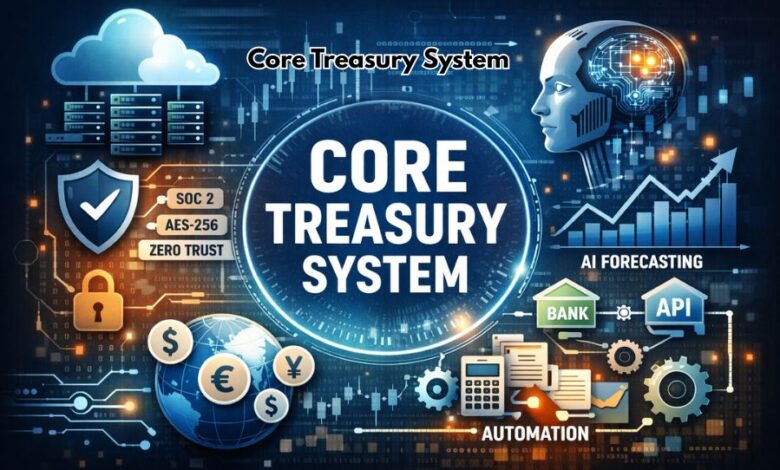
A Core Treasury System has become one of the most important platforms in modern finance. It is no longer just a tool for tracking balances or approving payments. In 2026, it sits at the center of treasury operations, helping organizations manage liquidity, monitor cash in real time, connect with banks, automate reconciliations, and make faster financial decisions. As finance teams face growing pressure to improve visibility, reduce manual work, and protect sensitive data, treasury technology is moving from a support function to a strategic one. Recent treasury research shows that modern treasury functions are increasingly focused on real-time information, cash forecasting, risk management, automation, and AI-enabled decision support. Deloitte also notes that treasury management systems remain central to modern treasury operations, while AI use cases such as cash forecasting, anomaly detection, fraud monitoring, and predictive analytics are becoming more important.
What Is a Core Treasury System?
A Core Treasury System is the main digital platform used by an organization to manage cash, liquidity, payments, bank connectivity, treasury controls, and reporting. Instead of relying on spreadsheets, separate banking portals, and disconnected workflows, companies use one system to centralize critical treasury activity. This gives treasury teams a clearer view of available cash, short-term obligations, incoming funds, and operational exposure. The value of that centralization is significant because treasury work depends on speed, accuracy, and control. When information is scattered across different tools, delays and errors become more likely. A strong treasury core reduces that fragmentation and creates a more controlled environment where decision-makers can act with better information. Deloitte describes treasury management systems as central to modern treasury because they streamline processes, reduce errors, and support compliance as complexity grows.
Why Treasury Teams Need More Than Traditional Systems
Traditional treasury operations often depended on batch updates, manual reconciliations, delayed statements, and limited visibility across multiple accounts and entities. That model is no longer enough. Treasury now has to respond to faster payment cycles, tighter liquidity management demands, and greater expectations from leadership. Businesses want treasury to provide insight, not just reporting. They want to know their cash position now, not tomorrow morning. They also want treasury to support working capital decisions, funding strategies, and financial resilience in a more proactive way. Deloitte’s 2024 global corporate treasury survey highlights that treasury-specific generative AI use cases are especially popular in areas such as cash flow forecasting, cash positioning, and market risk management, showing how the function is shifting toward more forward-looking, analytical work. In simple terms, the modern Core Treasury System is no longer just operational software. It is becoming a strategic intelligence layer for finance.
Cloud Architecture Is Changing the Treasury Model
One of the biggest reasons the Core Treasury System has evolved so quickly is the rise of cloud technology. Cloud-based treasury platforms give companies more flexibility, faster deployment, easier upgrades, and better scalability than older on-premise setups. This is especially valuable for multinational organizations or growing firms that need access across regions, legal entities, and banking partners. Cloud architecture also supports more frequent innovation because vendors can release improvements faster and integrate new services more easily. The U.S. Treasury’s report on cloud adoption in the financial services sector states that cloud services can help firms with resilience, security, and modernization when used responsibly, while Treasury’s 2024 release on cloud practices says the guidance is intended to help financial institutions pursue secure cloud adoption and operations. In treasury terms, this means the cloud is not only about convenience. It is about building a more agile and resilient treasury operating model.
Real-Time Cash Visibility and Smarter Forecasting
A leading reason organizations invest in a modern Core Treasury System is real-time cash visibility. Treasury teams need a live understanding of what cash is available, where it sits, what is restricted, and how positions may change over the coming hours or days. This becomes much easier when bank data, ERP information, and payment activity are brought together in one connected platform. On top of that, AI is making forecasting much stronger. Deloitte notes that AI in treasury is being used to improve cash forecasting, anomaly detection, payment fraud monitoring, and predictive analytics. That matters because treasury forecasting is not just a reporting exercise. It helps companies decide when to invest surplus cash, when to raise liquidity, and how to avoid unnecessary risk. A smarter Core Treasury System can help treasury move away from static historical assumptions and toward more dynamic, data-driven projections that improve confidence and speed in decision-making.
Bank APIs and Connected Treasury Workflows
Connectivity is one of the most important features of a modern Core Treasury System. Treasury cannot function efficiently if teams must log into multiple bank portals, download files manually, and wait for delayed updates. Bank APIs are helping solve that problem by allowing more direct communication between treasury systems and banks. JPMorgan explains that APIs are now part of modern treasury solutions delivering real-time data, while HSBC says treasury APIs provide real-time connectivity between bank and corporate systems and allow transaction data to move with greater speed and transparency. Treasury-focused connectivity guidance also describes bank connectivity as the central pillar of treasury operations because it brings banking information from various sources into one dataset that can be analyzed and managed. In practice, API connectivity makes treasury more responsive, reduces operational friction, and improves visibility across balances, transactions, and payment status.
Why Security Sits at the Heart of the Core Treasury System
Because treasury systems handle highly sensitive financial data, security is a defining requirement. A cloud-based Core Treasury System must protect balances, payment instructions, user access, approval workflows, and bank credentials. This is why terms such as SOC 2 Type II, AES-256 encryption, and zero-trust architecture are now commonly associated with serious treasury platforms. AICPA explains that a SOC 2 examination evaluates controls relevant to security, availability, processing integrity, confidentiality, and privacy. NIST’s AES standard specifies AES-128, AES-192, and AES-256 as approved encryption key sizes, and NIST’s zero trust architecture publication defines zero trust as a model focused on continuous verification and resource-based security rather than relying only on traditional network perimeters. For treasury teams, these are not just technical labels. They translate into stronger identity controls, tighter system segmentation, better auditability, and reduced risk when treasury data flows across cloud services, ERPs, and bank connections.
ISO 20022, Structured Data, and Better Automation
Another major improvement in the modern Core Treasury System is the use of richer financial data. SWIFT explains that ISO 20022 enables richer, better structured, and more granular data in payment messages, while also describing it as an open global standard for financial information. This matters because better data improves treasury operations in very practical ways. It supports cleaner reconciliation, more accurate reporting, better payment transparency, and fewer manual interventions. When structured data flows through connected treasury systems, automation becomes more reliable. That is especially useful for matching transactions, tracking payment details, and maintaining audit trails. In other words, smart treasury automation depends not just on software logic but also on the quality of the financial data flowing into the system. A strong Core Treasury System uses that richer data to make operations faster and more dependable.
Automation and the Shift From Manual Work to Strategic Work
Treasury teams have long spent too much time on repetitive work such as downloading statements, reconciling balances, reviewing transaction details, and preparing reports. Modern treasury systems are changing that. With connected data, workflow rules, AI support, and structured payment information, many of these tasks can now be automated or significantly reduced. The result is not that treasury professionals become less important. The opposite is true. Their time becomes more valuable because they can focus less on chasing information and more on liquidity planning, risk assessment, and supporting business decisions. Deloitte’s treasury analysis and survey findings both point to this broader transition: treasury is becoming more strategic as technology handles more of the manual burden. That shift is one of the clearest signs that the Core Treasury System is now central to financial transformation.
What Businesses Should Look for in a Core Treasury System
A business choosing a Core Treasury System should look beyond basic payment functionality. The best platforms offer centralized cash visibility, flexible bank connectivity, cloud scalability, AI-ready forecasting, strong audit controls, and security features aligned with modern standards. They should also support integration with ERP environments, automate routine workflows, and handle growth across currencies, entities, and jurisdictions. A good treasury platform is not simply a finance tool. It is an operating foundation that connects data, control, security, and intelligence. In 2026, businesses that modernize treasury successfully are usually the ones that treat treasury technology as a strategic investment rather than just a back-office expense.
Conclusion
The Core Treasury System has become the digital backbone of modern treasury operations. In 2026, it is shaping how companies manage cash, connect with banks, forecast liquidity, protect sensitive information, and automate complex workflows. Cloud technology is making treasury platforms more flexible, AI is making forecasts smarter, APIs are making connectivity faster, and stronger security models are making cloud treasury more trustworthy. At the same time, structured payment standards such as ISO 20022 are improving data quality and enabling deeper automation. Together, these changes are turning treasury into a faster, more intelligent, and more strategic function. For organizations still relying on fragmented tools and manual processes, upgrading the Core Treasury System is no longer optional. It is becoming essential for visibility, resilience, efficiency, and better financial control.
(FAQs)
What is a Core Treasury System?
A Core Treasury System is the main platform businesses use to manage cash, liquidity, payments, bank connectivity, treasury controls, and reporting in one place.
Why is a Core Treasury System important in 2026?
It is important because treasury now needs real-time visibility, stronger forecasting, better connectivity, and more secure automation than traditional systems can provide.
How does AI help a Core Treasury System?
AI helps by improving cash forecasting, anomaly detection, predictive analytics, and fraud monitoring, which supports faster and smarter treasury decisions.
What security features should a treasury platform have?
A strong platform should support controls aligned with SOC 2, strong encryption such as AES-256, and security models based on zero trust architecture.
What role do APIs play in a Core Treasury System?
APIs help connect treasury systems directly with banks and other platforms, improving real-time visibility, speed, and automation