Amflow PR Carbon vs Specialized Turbo Levo 4 Alloy: Which eMTB Is Right for You?

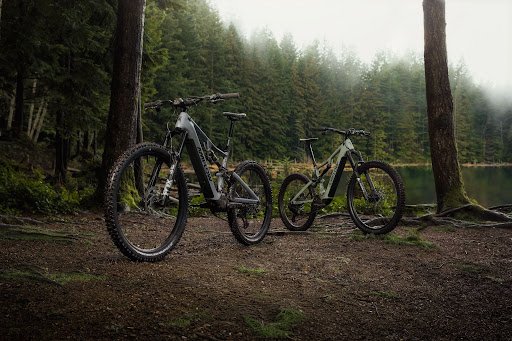
The Amflow PR Carbon combines a full-carbon frame with the Avinox M2 drive system, an 800Wh removable battery and electronic SRAM Transmission. The Turbo Levo 4 Alloy uses an M5 aluminium frame, Specialized 3.1 motor, 840Wh battery and mechanical SRAM Eagle 70 T-Type drivetrain.
For riders comparing these two eMTBs, the useful differences are not limited to torque or battery capacity. Frame construction, battery design, suspension, geometry adjustment, drivetrain and system controls all affect which bike better matches a particular setup and riding preference.
Amflow PR Carbon vs Turbo Levo 4 Alloy: Key Specs
| Specification | Amflow PR Carbon | Specialized Turbo Levo 4 Alloy |
| Frame | Full carbon | M5 aluminium |
| Motor | Avinox M2 | Specialized 3.1 |
| Motor torque | 110 N·m nominal, 125 N·m peak | 105 N·m |
| Published motor power | Not specified in the PR Carbon model-specific specification | 810 W |
| Battery | 800Wh removable | 840Wh |
| Display | 2-inch OLED | 2.2-inch colour MasterMind T3 |
| Fork | FOX AWL HD Sport, 160mm | Marzocchi Bomber Z1, 160mm on S2-S6, 150mm on S1 |
| Rear shock | FOX Float Rhythm, 210 × 55mm | Marzocchi Bomber Inline, 210 × 55mm |
| Drivetrain | SRAM S1000 Eagle Transmission | SRAM Eagle 70 T-Type |
| Shifting | Electronic | Mechanical |
| Cassette | 10-52T | 10-52T |
| Brakes | Tektro TKD173, 4-piston, 203mm rotors | SRAM DB8 Stealth, 4-piston, 220mm front / 200mm rear |
| Stock wheels | 29-inch front / 27.5-inch rear | 29-inch front / 27.5-inch rear |
| Geometry adjustment | Headset, bottom bracket and chainstay adjustment | Head angle, bottom bracket and chainstay adjustment |
The table shows why this comparison should not be reduced to one specification. Both use a mixed-wheel layout and adjustable geometry, but the frame material, motor system, battery design and drivetrain differ substantially.
Carbon vs Alloy: What Changes Between the Two Frames?
The PR Carbon uses a full-carbon frame, while the Turbo Levo 4 Alloy is built around Specialized’s M5 aluminium frame.
For the PR Carbon, Amflow specifies 40 theoretical geometry configurations and compatibility with either a 27.5-inch or 29-inch rear wheel. Its stock wheelset is a mullet setup, with a 29-inch front alloy rim and 27.5-inch rear alloy rim. The distinction matters: rear-wheel compatibility describes what the frame can support, while 29/27.5 inches describes how the standard bike is supplied.
The Turbo Levo 4 Alloy also comes as a mixed-wheel bike, pairing a 29-inch front wheel with a 27.5-inch rear wheel. Its M5 aluminium frame incorporates 150mm of rear-wheel travel, geometry adjustment and internal SWAT storage.
Frame material alone does not establish which bike will feel better on the trail. It does, however, create a clear purchasing distinction for riders deciding specifically between a carbon-frame and aluminium-frame electric mountain bike.
Motor Performance: Avinox M2 vs Specialized 3.1
The two motor specifications use different published metrics, so they should be compared without treating every number as directly equivalent.
Torque and Power
The Avinox M2 fitted to the PR Carbon is specified at 110 N·m nominal torque and 125 N·m peak torque.
The Specialized 3.1 is specified at 105 N·m of torque and 810 W of power.
That gives the PR Carbon the higher published maximum torque figure. However, Amflow’s model-specific PR Carbon specification does not provide a corresponding peak-wattage figure for the M2. A direct comparison between an Amflow peak-power number and Specialized’s 810 W would therefore require data that is not supplied for this configuration.
This distinction is important because Amflow’s broader PR materials also reference the higher-output Avinox M2S. Those M2S figures should not be attributed to the standard PR Carbon configuration listed with the M2.
Torque figures also do not describe the complete response of an electric mountain bike. Assistance depends on factors such as cadence, rider input, selected mode and system calibration.
Motor Controls
The PR Carbon integrates the Avinox M2 with a 2-inch OLED control display and left and right wireless controllers.
The Turbo Levo 4 Alloy uses the MasterMind T3, a 2.2-inch high-resolution colour display that works with the Specialized app. The Levo system also includes Micro Tune and Dynamic Micro Tune for adjusting assistance.
For riders comparing the two systems, the distinction is therefore both mechanical and digital: one uses the Avinox control architecture, while the other is built around Specialized’s MasterMind and app ecosystem.
Battery and Range: 800Wh vs 840Wh
The Turbo Levo 4 Alloy has 840Wh of standard battery capacity, compared with 800Wh for the PR Carbon. The 40Wh difference is 5% of the PR Carbon’s battery capacity.
Battery Design
Amflow specifies the PR Carbon with an 800Wh removable Avinox battery.
The Turbo Levo 4 Alloy comes with an 840Wh battery as part of Specialized’s configurable Levo 4 battery system.
For buyers, these are two separate considerations. Capacity tells you how much energy the battery stores. Removability describes how the battery is integrated into the bike. Neither figure alone establishes actual trail range.
Why the Published Range Claims Are Not Directly Comparable
Amflow reports a 158 km test result for the PR Carbon with its 800Wh battery, but the conditions are highly specific: a flat paved road, an 80 kg rider, Eco assistance, 65 rpm cadence and 21 km/h speed. Amflow states that actual range varies with conditions.
Specialized describes the Levo 4 system as offering up to five hours of range with the 840Wh battery.
Kilometres from one test protocol cannot be compared directly with hours from another. On an actual mountain-bike ride, elevation gain, surface, rider input, assistance setting and riding speed can change energy consumption substantially.
For that reason, the defensible comparison here is 800Wh versus 840Wh battery capacity and the different battery architectures, not a claimed range winner.
Suspension and Wheel Setup
Both bikes use 160mm forks on their main frame sizes and stock 29-inch front / 27.5-inch rear wheel configurations, but their suspension components differ.
The PR Carbon uses a FOX AWL HD Sport fork with 160mm travel and a FOX Float Rhythm 210 × 55mm air shock. Amflow specifies a RAIL 2.0 damper with Sweep and low-speed rebound adjustment on the fork, and low-speed rebound adjustment on the rear shock.
Its stock Amflow XMA-30 wheelset uses a 29-inch front and 27.5-inch rear alloy rim, both with 30mm internal width and tubeless-ready construction. Maxxis Assegai 29 × 2.50 and DHR II 27.5 × 2.50 tyres are fitted front and rear respectively.
The Turbo Levo 4 Alloy uses a Marzocchi Bomber Z1 fork, with 160mm travel on S2-S6 and 150mm on S1. At the rear is a Marzocchi Bomber Inline 210 × 55mm shock working with the frame’s 150mm rear-wheel travel. Its stock wheelset is also 29 inches at the front and 27.5 inches at the rear.
A 210 × 55mm shock dimension should not be confused with rear-wheel travel. It describes shock eye-to-eye length and stroke, while frame kinematics determine the resulting wheel travel. Amflow’s supplied PR Carbon specification lists the shock dimensions but does not state a rear-wheel travel figure in the same model specification, so no equivalent rear-travel number is assumed here.
Geometry: How Much Can Each eMTB Be Adjusted?
Both bikes provide geometry adjustment, but Amflow documents a particularly broad combination of settings for the PR Carbon.
The PR Carbon offers:
- Five headset angle settings
- Two bottom bracket height settings
- Four chainstay length settings
Amflow states that these can theoretically create up to 40 geometry configurations.
Its standard geometry lists a 64.5-degree head tube angle, while chainstay length can be set to 440 or 452mm. The adjustment system allows riders to change several aspects of the chassis rather than being locked to one geometry configuration.
The Turbo Levo 4 Alloy also provides an adjustable head tube angle, bottom bracket and chainstay. Specialized describes this as part of the Levo 4’s adjustable chassis design.
The practical value of these systems depends on whether a rider intends to tune the bike. Head angle affects steering geometry, bottom bracket position changes ground clearance and rider position, and chainstay adjustment changes the rear-centre dimension.
The key distinction is not adjustable versus non-adjustable. Both are adjustable. Amflow simply publishes a larger documented set of possible combinations for the PR Carbon.
Drivetrain and Brakes
The clearest drivetrain difference is electronic shifting on the PR Carbon versus mechanical shifting on the Turbo Levo 4 Alloy.
The PR Carbon uses:
- SRAM S1000 Eagle Transmission derailleur
- SRAM AXS Pod controller
- SRAM XS-1270 10-52T cassette
- SRAM Eagle 70 Transmission Flattop chain
- Avinox M2 Series electronic rear-derailleur power cable
This configuration integrates the derailleur into the bike’s electronic system rather than relying on a conventional mechanical shift cable.
The Turbo Levo 4 Alloy uses a SRAM 70 trigger shifter with an Eagle 70 T-Type derailleur and the same 10-52T cassette range.
Braking hardware also differs. The PR Carbon uses Tektro TKD173 four-piston hydraulic brakes with 203mm × 2.3mm Tektro Sensor rotors.
The Levo 4 Alloy uses SRAM DB8 Stealth four-piston brakes, with a 220mm front rotor and 200mm rear rotor.
These specifications give both bikes four-piston hydraulic braking systems while using different callipers and rotor configurations.
Displays, Navigation and Integrated Features
The PR Carbon’s digital system extends beyond assistance control.
The 2-inch OLED Avinox display works with wireless handlebar controllers. Amflow also states that the PR supports GPX, FIT and TCX route-file imports. Offline navigation currently displays the route track without an offline map. Apple Find My is supported on Amflow PR models.
The Turbo Levo 4 Alloy centres its rider interface on the MasterMind T3 display and Specialized app, which provide motor management, ride data and assistance tuning. The frame also includes internal SWAT downtube storage.
These are not directly equivalent feature sets. The relevant consideration is whether the rider places more value on Avinox’s integrated display, navigation and control functions or Specialized’s MasterMind and app environment.
Amflow PR Carbon or Turbo Levo 4 Alloy: Which Suits Your Priorities?
The choice becomes clearer when the bikes are matched to specific requirements.
The Amflow PR Carbon is suited to riders prioritising:
- A full-carbon frame
- Avinox M2 with 110 N·m nominal and 125 N·m peak torque
- An 800Wh removable battery
- Electronic SRAM Transmission shifting
- A stock mullet wheel setup with the option to configure the frame for a 29-inch rear wheel
- Extensive headset, bottom bracket and chainstay adjustment
- Avinox display, navigation and integrated controls
The Turbo Levo 4 Alloy is suited to riders prioritising:
- Specialized’s M5 aluminium Levo chassis
- The Specialized 3.1 motor with 105 N·m and 810 W
- An 840Wh standard battery
- A stock 29/27.5-inch mixed-wheel setup
- Mechanical SRAM Eagle 70 T-Type shifting
- MasterMind T3 and Specialized app integration
- Internal SWAT storage
Neither specification sheet reduces the decision to a single number. The PR Carbon differentiates itself through its carbon chassis, removable battery, electronic drivetrain and broad geometry configuration. The Turbo Levo 4 Alloy combines its aluminium Levo chassis with a slightly larger standard battery and Specialized’s 3.1 system.
For an electric mountain bike that will be ridden across varied terrain, the most useful comparison is therefore which complete system matches the rider’s preferred frame construction, battery management, drivetrain and chassis setup.
Frequently Asked Questions
Does the Amflow PR Carbon come with a 29-inch rear wheel?
No. The standard PR Carbon specification uses a 29-inch front wheel and 27.5-inch rear wheel. Its frame is also compatible with a 29-inch rear wheel, so stock configuration and frame compatibility should not be confused.
Does the Amflow PR Carbon use the 150 N·m Avinox M2S motor?
The standard PR Carbon configuration in Amflow’s model-specific specification uses the Avinox M2, rated at 110 N·m nominal and 125 N·m peak torque. The higher-output M2S figures should not be applied to this configuration.
Can the range figures for the two bikes be compared directly?
Not reliably. Amflow’s 158 km figure comes from a defined flat-road Eco-mode test, while Specialized expresses Levo 4 range as up to five hours. Different test methods prevent a like-for-like range comparison.